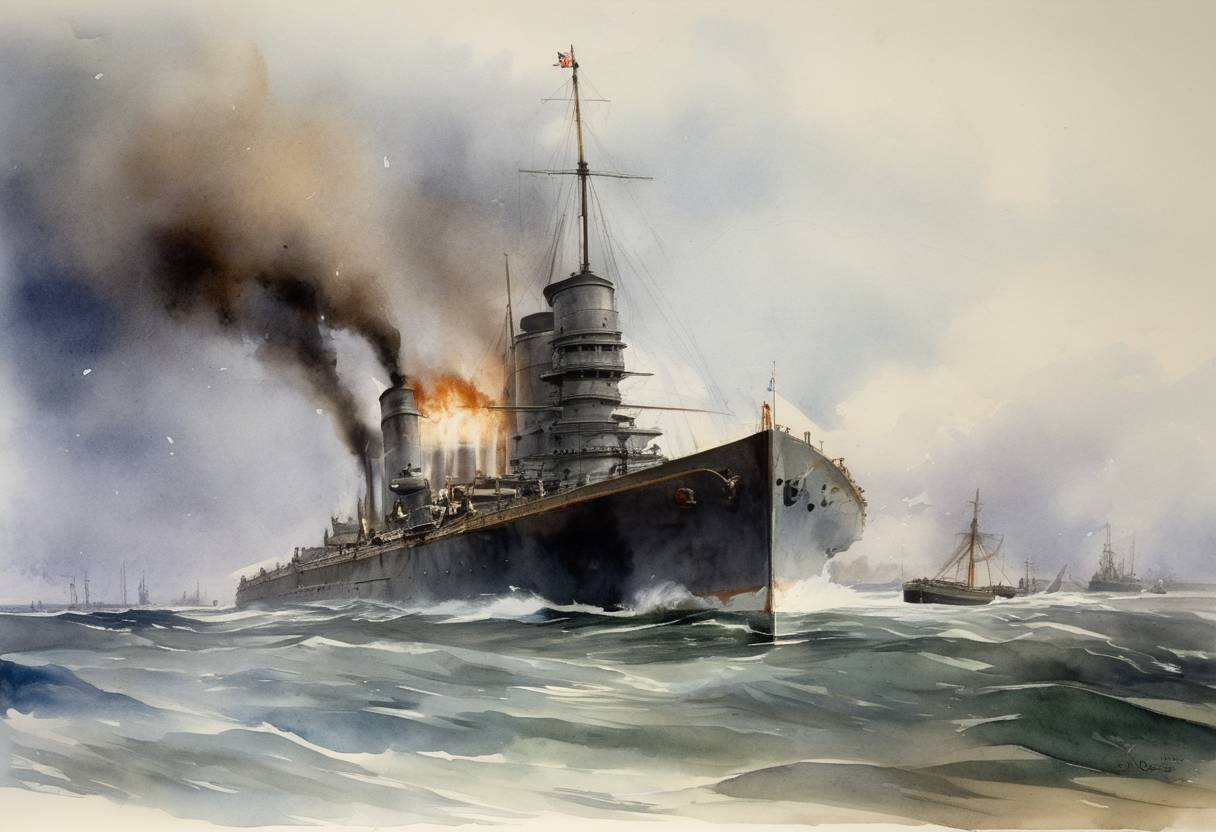
Launch of HMS Dreadnought
On February 10, 1906, the British Royal Navy launched the HMS Dreadnought, a revolutionary battleship that dramatically transformed naval warfare and ship design. This event marked the beginning of a new era in naval architecture, as the vessel incorporated groundbreaking innovations that rendered previous battleships obsolete.
Design and Features
All-Big-Gun Armament: Unlike its predecessors, the HMS Dreadnought was equipped with an ‘all-big-gun’ armament, featuring ten 12-inch guns. This configuration allowed for more concentrated firepower and greater range, as the uniformity of the guns simplified targeting and loading procedures.
Steam Turbine Propulsion: The Dreadnought was the first battleship to utilize steam turbine propulsion, providing superior speed and efficiency. This advancement enabled the ship to reach speeds of up to 21 knots, making it the fastest battleship of its time.
Innovative Design: The ship’s design emphasized enhanced armor protection and greater firepower. Its layout supported efficient operation of the massive guns, with advanced fire control systems that increased accuracy.
Impact and Consequences
Naval Arms Race: The launch of HMS Dreadnought triggered a naval arms race among world powers, notably Germany, eager to match the technological advancements of Britain’s navy. This competition led to a rapid increase in battleship construction, as nations sought to develop their own ‘dreadnoughts.’
Obsolescence of Existing Fleets: The revolutionary design made existing battleship fleets nearly obsolete overnight. Naval powers had to rethink their strategies and shipbuilding programs to remain competitive in naval dominance.
World War I Influence: The technological advancements inspired by the Dreadnought would shape naval engagements during World War I, as fleets equipped with ‘dreadnoughts’ played pivotal roles in sea battles.
The HMS Dreadnought not only represented a milestone in naval engineering but also exemplified the dynamic interplay of military innovation and geopolitical strategy in the early 20th century. Its legacy is reflected in the extensive redesigning of naval fleets globally, setting standards that influenced battleship construction for decades to follow.