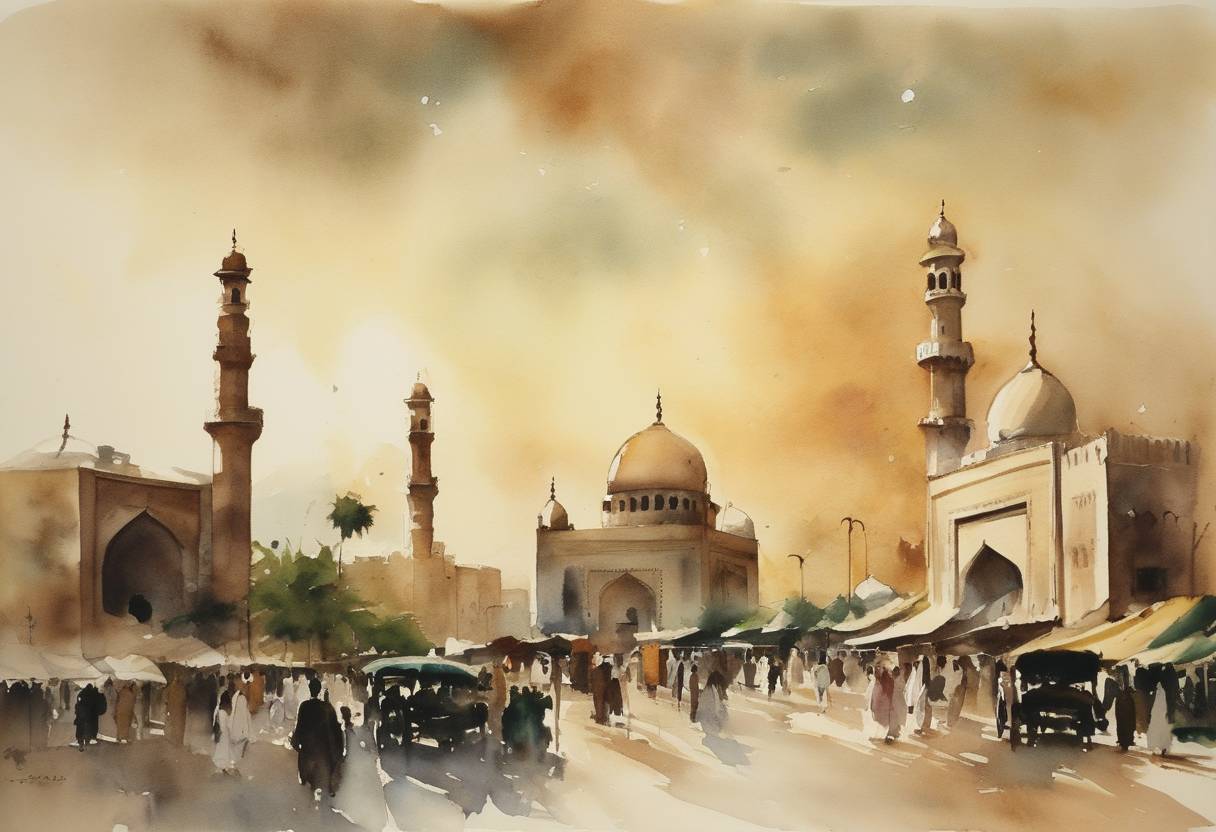
Pakistan Becomes the First Islamic Republic
On March 23, 1956, Pakistan took a monumental step by declaring itself the first Islamic republic in the world. This transformation was marked by the adoption of its first constitution, which officially named the country the “Islamic Republic of Pakistan.” This significant event came nearly a decade after Pakistan gained independence from British rule and was established as a sovereign state separate from India on August 14, 1947.
Context and Leading Events
The seeds for this historic shift were sown during the independence movement led by the All-India Muslim League, which called for a separate nation for Muslims in the Indian subcontinent. The creation of Pakistan was envisaged as a homeland where Islam could be practiced freely and where Muslims could exercise political authority.
In the years following independence, there was a strong nationalistic and religious sentiment to frame the country’s governance in accordance with Islamic principles. Initially, Pakistan operated under the Government of India Act 1935 as an interim constitution, while discussions and efforts were underway to draft a formal constitution. This process was a challenging endeavor characterized by debates over the role of religion in state affairs, provincial autonomy, and the balance of powers.
Key Features of the 1956 Constitution
Islamic Principles: The 1956 Constitution declared Islam the state religion and sought to align national laws with Islamic values. It was an emblematic move to reflect the aspirations of Pakistan’s majority Muslim population, emphasizing the integration of Islamic tenets in governance and legal frameworks.
Parliamentary System: The new constitution established a parliamentary form of government with a President as the head of state and a Prime Minister as the head of government. This structure was intended to ensure democracy and reflect the political ambitions of its time.
Federal Structure: It provided for a federal system with a central government and autonomy for the provinces, aiming to balance regional interests with national unity.
Fundamental Rights: The document guaranteed certain fundamental rights to its citizens, including freedom of speech, religion, and assembly, and laid down principles to ensure social justice and economic equity.
Aftermath and Historical Significance
The promulgation of the 1956 Constitution and Pakistan’s transformation into an Islamic republic were momentous in cementing its identity both domestically and on the international stage. The new political landscape highlighted Pakistan’s intention to be the forefront leader in unifying Islamic countries and solidifying its position in the Muslim world.
However, Pakistan’s journey as an Islamic republic faced subsequent political challenges and constitutional upheavals. The 1956 Constitution was abrogated following a military coup in 1958, which led to a period of martial law. Despite this, March 23 remains a significant date in Pakistani history, commemorated as Pakistan Day, in honor of both the Lahore Resolution of 1940 and the country’s transition into an Islamic republic.
Pakistan’s initial steps served as a model for other Muslim-majority nations considering similar constitutional frameworks, impacting the geopolitical dynamics of the post-colonial era and the broader discourse on the role of Islam in modern governance.