Croatia Adopts the Euro and Joins the Schengen Area
2023 · Zagreb, Croatia
Croatia adopts the euro as its official currency and joins the Schengen Area, marking significant milestones in its European integration.
May 12, 0988
The first recorded mention of the city of Zagreb in medieval documents called 'Zagreb's Assembly.'
Zagreb, Croatia | none
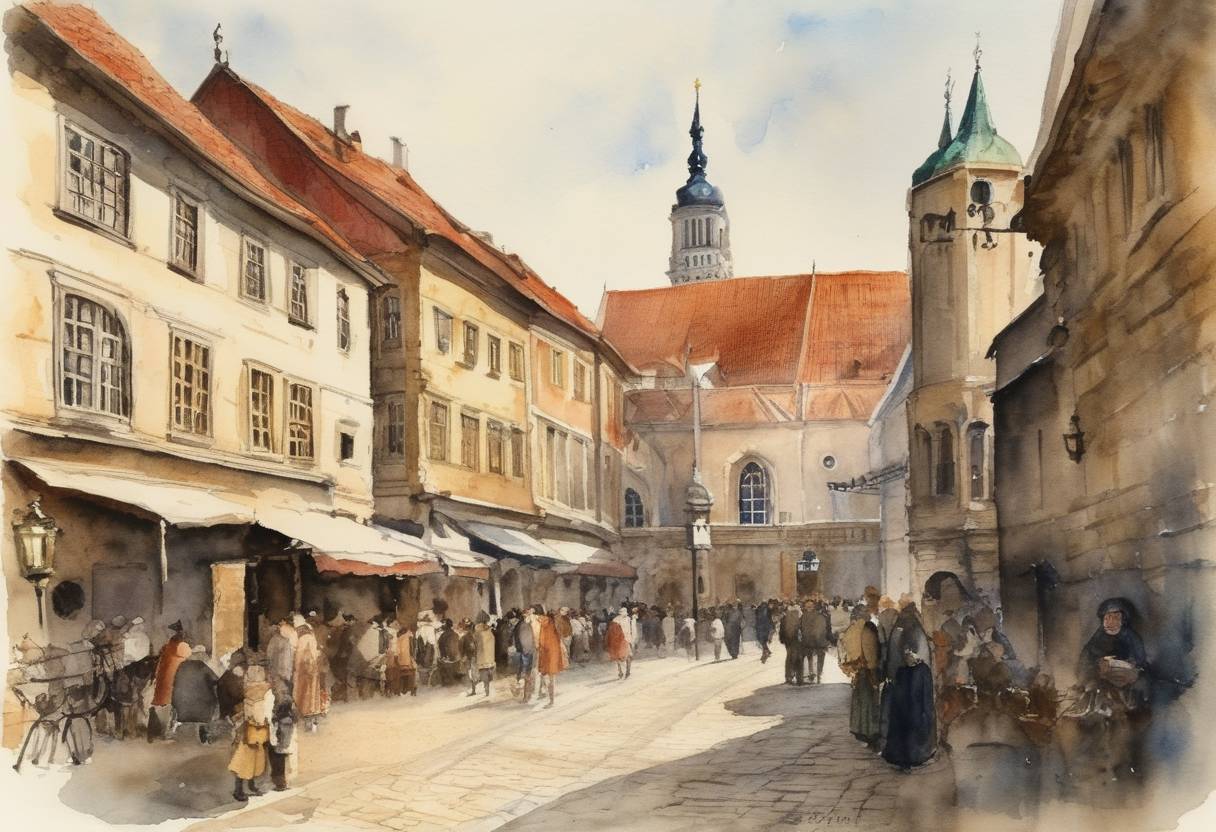
On May 12, 988, the city of Zagreb was first mentioned in historical medieval documents that pertained to an event known as “Zagreb’s Assembly.” These documents serve as the earliest written record of the city’s name, providing crucial evidence of Zagreb’s existence and significance during the medieval period.
The mention of Zagreb in 988 occurs within a crucial era in the history of what is today Croatia. During this period, the region was experiencing a complex interplay of influences from both the Western Roman Church and the Byzantine Empire. The development of local Slavic cultures was also occurring under the broader scope of the Hungarian and Croatian kingdoms. These cultural and political dynamics played vital roles in forming the social and economic life of future Croatian cities, including Zagreb.
The document mentioning Zagreb is said to discuss an ecclesiastical assembly. Such gatherings were typical for addressing administrative and religious issues of the time, indicating Zagreb’s importance even in the early stages of its development. As with many medieval records, the specifics of these documents are sparse, and much is inferred from contextual information known by historians about the era.
This early mention of Zagreb is significant as it establishes the city not only as a geopolitical entity in the early medieval Croatian state but also highlights its likely role as a center for governance or ecclesiastical organization. The recognition of Zagreb in this context set the stage for its later development, eventually becoming the capital city of Croatia.
Over centuries following this first mention, Zagreb gained prominence, aided by its strategic position along major trade routes and its central role in both ecclesiastical and political developments. In 1094, for instance, the Diocese of Zagreb was established, further emphasizing its importance within the Catholic Church and solidifying its status as a key city in the region.
The documented reference from 988 thus serves as a valuable point of reference for historians tracing the development of Central Europe’s urban centers and the complex history of the region that eventually became modern-day Croatia.
Source: en.wikipedia.org