The Landing of the Pilgrims at Plymouth Rock
1620 · Plymouth, British America (now United States)
The Pilgrims on board the Mayflower land at Plymouth Rock, Massachusetts.
November 21, 1620
The Mayflower Compact is signed by Pilgrims at Cape Cod.
Cape Cod, Plymouth Colony (now USA)
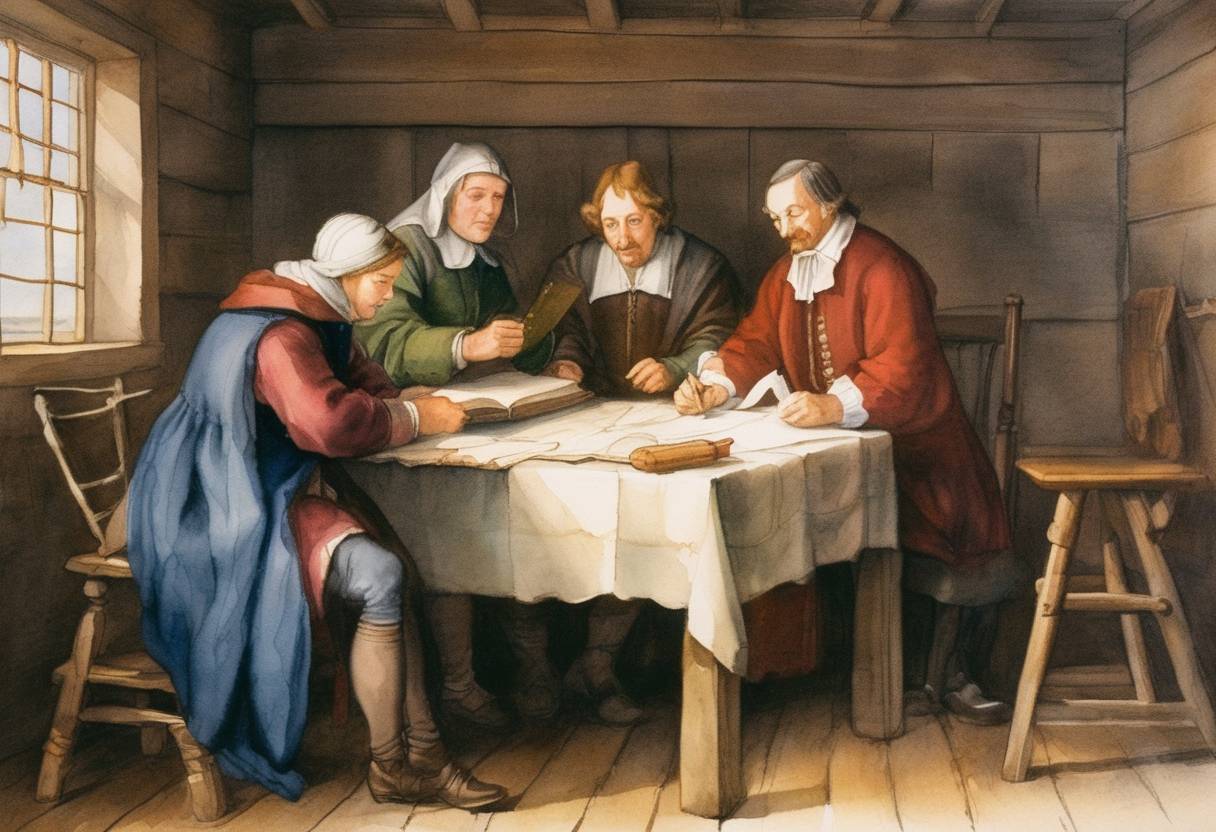
On November 21, 1620, the Mayflower Compact was signed by 41 male passengers of the Mayflower ship while anchored at Cape Cod, in present-day Provincetown Harbor, Massachusetts. This document is considered a foundational act for the establishment of a government by the Pilgrims in the New World and is often hailed as an early step in the development of democratic governance in America.
The passengers, known as the Pilgrims, were fleeing religious persecution in England and seeking the freedom to worship according to their beliefs. Originally, they aimed to settle near the Hudson River, within the bounds of the Virginia Company’s jurisdiction. However, treacherous seas and navigational errors brought them north to Cape Cod.
Faced with the realization that they were outside the bounds of the Virginia Company’s authority, some passengers began to express doubts about the governance of the new colony. To prevent dissent and maintain order, the leaders of the group drafted the Mayflower Compact.
The Mayflower Compact was a brief but profound document establishing a “civil body politic” for the general good of the colony, with laws, ordinances, acts, and constitutions to be established under the agreed governance. The Compact’s wording reflects the Pilgrims’ intent to create unity and ensure that each member abides by the decisions of the majority within this newly formed community.
Following the signing of the Compact, the Pilgrims established Plymouth Colony, where they faced numerous challenges related to survival, Native American relations, and governance. Despite harsh conditions, the frameworks laid out in the Mayflower Compact helped the settlers maintain order and work together to build their new society.
The enduring legacy of the Mayflower Compact lies in its embodiment of consensual governance and the cooperative spirit that it signified among the settlers. It set a precedent for future colonial charters and has been celebrated as an enduring symbol of the pursuit of liberty, justice, and self-determination in American history.
Source: en.wikipedia.org