The First Recorded Lottery in England: January 11, 1569
1569 · London, England
The first recorded lottery in England was drawn in St. Paul's Cathedral.
July 7, 1753
The British Museum was established by an Act of Parliament.
London, England | British Museum
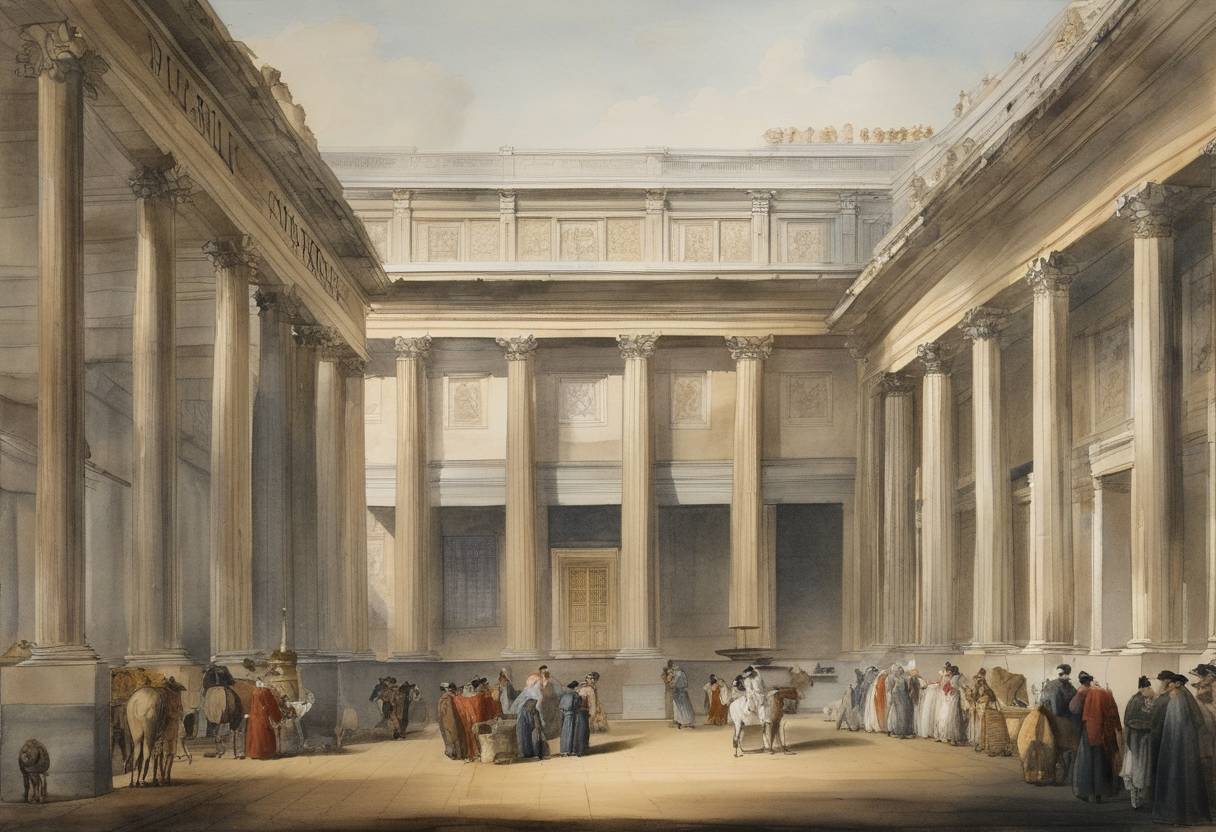
On July 7, 1753, the British Museum was officially established by an Act of Parliament, marking a significant development in the cultural and educational landscape of Britain. This was the first national public museum in the world, and its creation was rooted in the Enlightenment ideals of knowledge sharing and public education.
The foundation of the British Museum was largely made possible by the bequest of Sir Hans Sloane, a prominent physician and collector. Upon his death, Sloane’s extensive collection of over 71,000 items—including manuscripts, drawings, antiquities, and natural history specimens—was offered to King George II for the nation. The acquisition was contingent on the government paying Sloane’s heirs the sum of £20,000, a considerable amount for the time.
The Act of Parliament that established the British Museum was titled “An Act for the purchase of the Museum or Collection of Sir Hans Sloane and of the Harleian Collection of Manuscripts, and for Providing One General Repository for the Better Reception and More Convenient Use of the Said Collection; and of the Cottonian Library, and of the Additions Thereto.” This legislation facilitated the purchase of Sloane’s collection, as well as the Harleian and Cottonian Libraries, laying the groundwork for what would become a comprehensive depository of human history and culture.
The British Museum opened to the public on January 15, 1759, in Montagu House, in Bloomsbury, London. It was revolutionary in its open-door policy, making its collections accessible to the public free of charge, a clear departure from the private collections of the aristocracy. This democratic approach to education and knowledge dissemination was aligned with burgeoning intellectual movements and the values of the Enlightenment.
The establishment of the British Museum set a precedent for public museums worldwide, pioneering a model that emphasized accessibility to cultural and educational resources for all societal levels. Over the centuries, the British Museum has continually expanded its collections and influence, becoming one of the most significant institutions of its kind, known for its vast and diverse collections that span every continent and era of recorded history.
Today, the museum plays a crucial role in cultural preservation and education, while also being a center of academic research. Its origins on July 7, 1753, represent a pivotal moment in the evolution of cultural institutions designed for the public good.
Source: www.britishmuseum.org