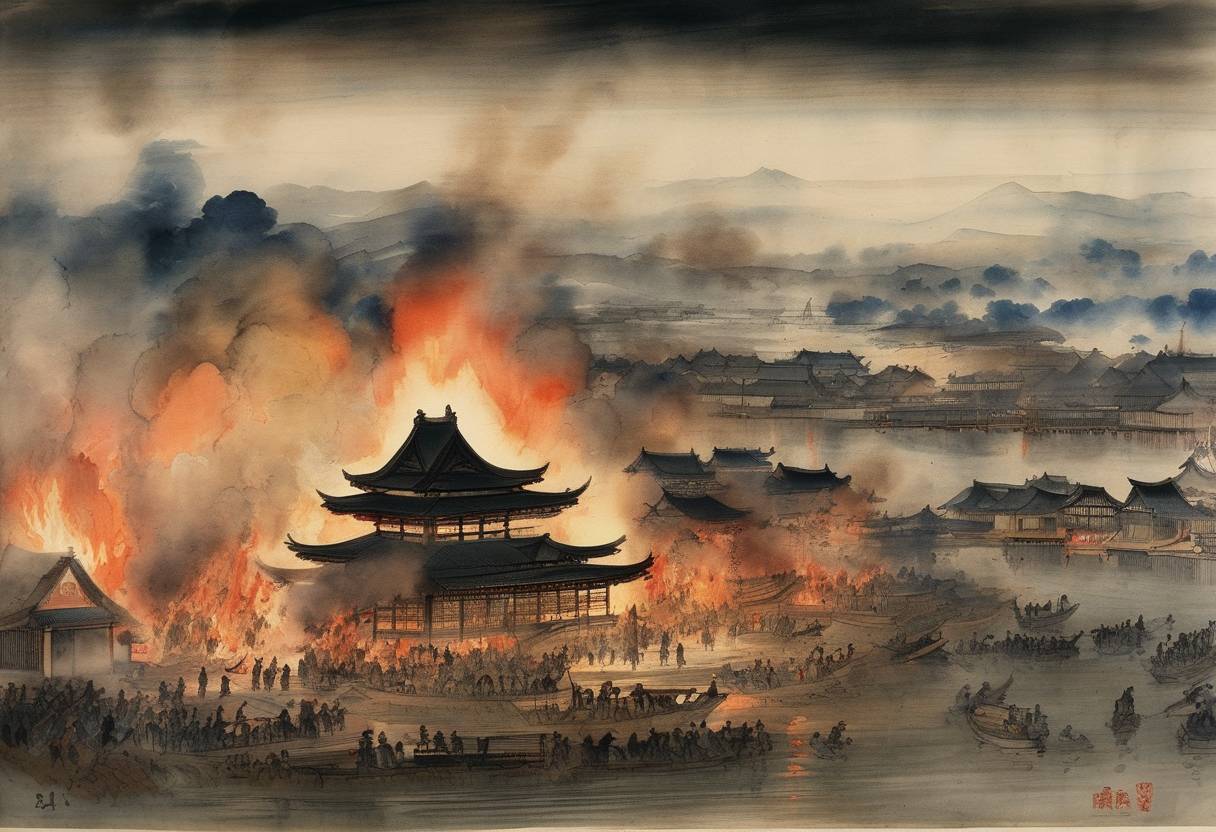
The Great Fire of Meireki: March 2, 1657
Background
In the mid-17th century, Edo (now Tokyo) was a burgeoning city under the Tokugawa shogunate, characterized by its dense wooden architecture and narrow, winding streets. This setting, combined with common use of open flames for heating and cooking, created an environment predisposed to fires. Edo was particularly vulnerable during the dry, windy months of winter, when fires were most likely to spread rapidly.
The Fire’s Outbreak
On March 2, 1657, the Great Fire of Meireki began, reportedly starting in a Buddhist temple called Hongō-in, located in today’s Yushima. The fire was allegedly sparked by an ill-managed incense burner. The weather that day was dry and windy, which facilitated the rapid spread of flames throughout the city.
Devastation in Edo
The inferno raged across Edo for three days, consuming everything in its path. Due to the tightly packed buildings and the predominantly wooden construction, the fire spread quickly and unchecked. The city’s infrastructure, ill-equipped to control such a massive blaze, was soon overwhelmed. Approximately 60-70% of Edo was destroyed, including the Edo Castle, the home of the shogun, as well as temples, shrines, and thousands of homes.
Casualties and Impact
The disaster claimed the lives of an estimated 100,000 people, though exact figures are difficult to confirm due to the scale of the destruction. The aftermath left tens of thousands homeless, creating a humanitarian crisis. This tragedy underscored the need for improved urban planning and fire prevention measures.
Aftermath and Reconstruction
In response to the destruction, the Tokugawa shogunate initiated significant rebuilding efforts. Edo was reconstructed with measures that included wider streets and designated firebreaks to prevent future disasters of similar magnitude. The city’s rebuilding process lasted several years and involved both governmental resources and contributions from citizens, profoundly reshaping Edo’s urban landscape.
Historical Significance
The Great Fire of Meireki remains a pivotal event in Japanese history. It highlighted the vulnerabilities of urban areas to fire and triggered changes in architecture and city planning that influenced not only Edo’s development but also urban management practices in other parts of Japan. The lessons learned from the fire laid foundational principles for disaster preparedness that bore implications even beyond Japan.
The Great Fire of Meireki serves as a historical testament to the dangers posed by fire in a rapidly urbanizing world, emphasizing the importance of resilient infrastructure and effective emergency response systems.