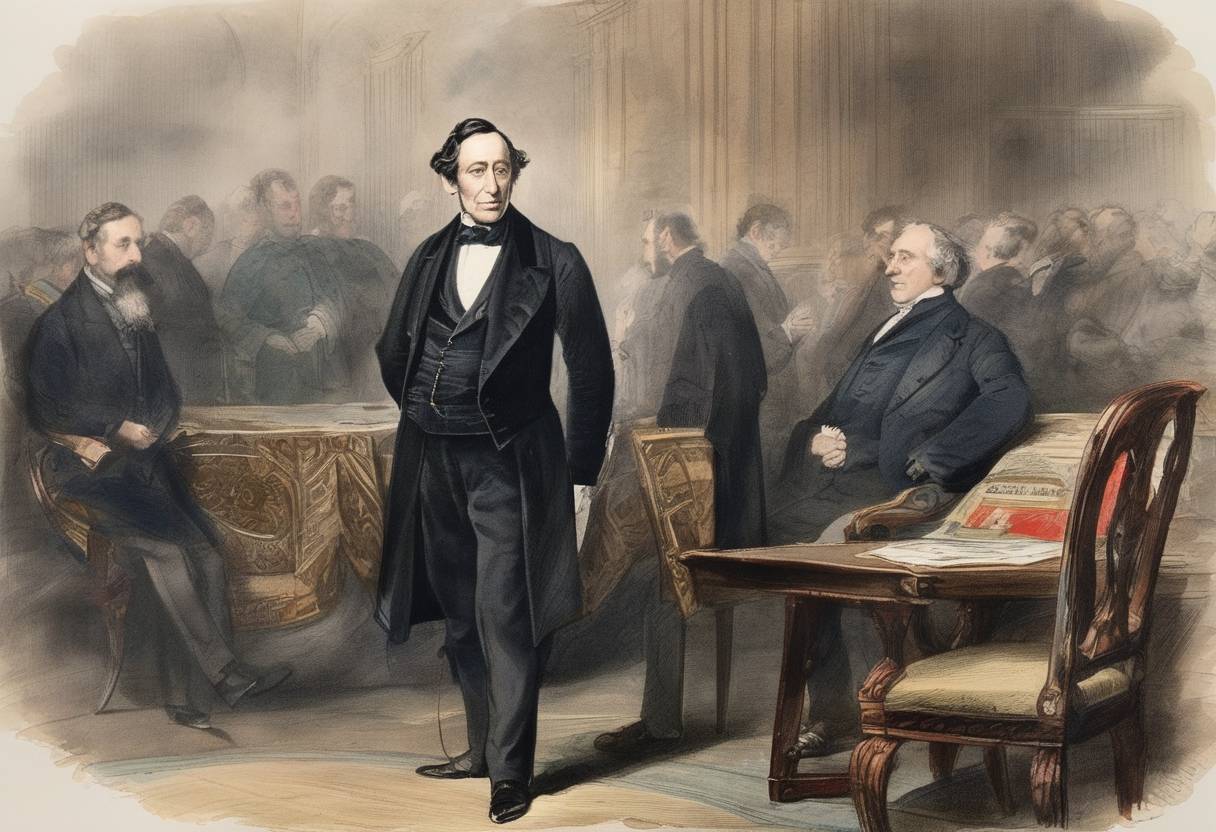
Benjamin Disraeli Becomes Chancellor of the Exchequer
Background
Benjamin Disraeli, a prominent figure in British politics and leader of the Conservative Party, served as Chancellor of the Exchequer multiple times during his political career. In the 19th century, he played a crucial role in shaping the economic policies and political landscape of Britain.
Event on February 29, 1868
On February 29, 1868, Benjamin Disraeli assumed the role of Chancellor of the Exchequer under Prime Minister Edward Smith-Stanley, the 14th Earl of Derby. This marked a pivotal moment in his career as he was entrusted with managing Britain’s financial affairs in a period marked by economic and colonial challenges.
Context
Disraeli’s prior experience as Chancellor, alongside his tenure as Leader of the House of Commons, equipped him with the knowledge and political acumen necessary for the role. During this period, Britain faced numerous financial challenges, including debates over trade policies, tax reforms, and public spending. Disraeli was known for his abilities to manage these complex issues with a blend of pragmatism and political vision.
Aftermath and Significance
Although Disraeli’s term as Chancellor of the Exchequer in 1868 was relatively brief, as he soon transitioned to the role of Prime Minister later that year, his policies and leadership style had a lasting impact on the Conservative Party and British politics. His economic policies, characterized by a cautious yet progressive approach, helped lay the groundwork for several reforms that addressed social and economic issues in Britain.
Disraeli’s influence extended beyond economics, as he was a key architect of the “One Nation” Conservative philosophy, advocating for a paternalistic approach to governance and emphasizing unity and social responsibility.
Disraeli’s legacy as a statesman is considerable, as he balanced political adversities with adept diplomacy, both at the domestic level and in Britain’s imperial endeavors. His leadership style and policies continue to be studied for their historical significance and as a testament to his enduring influence on British conservatism.