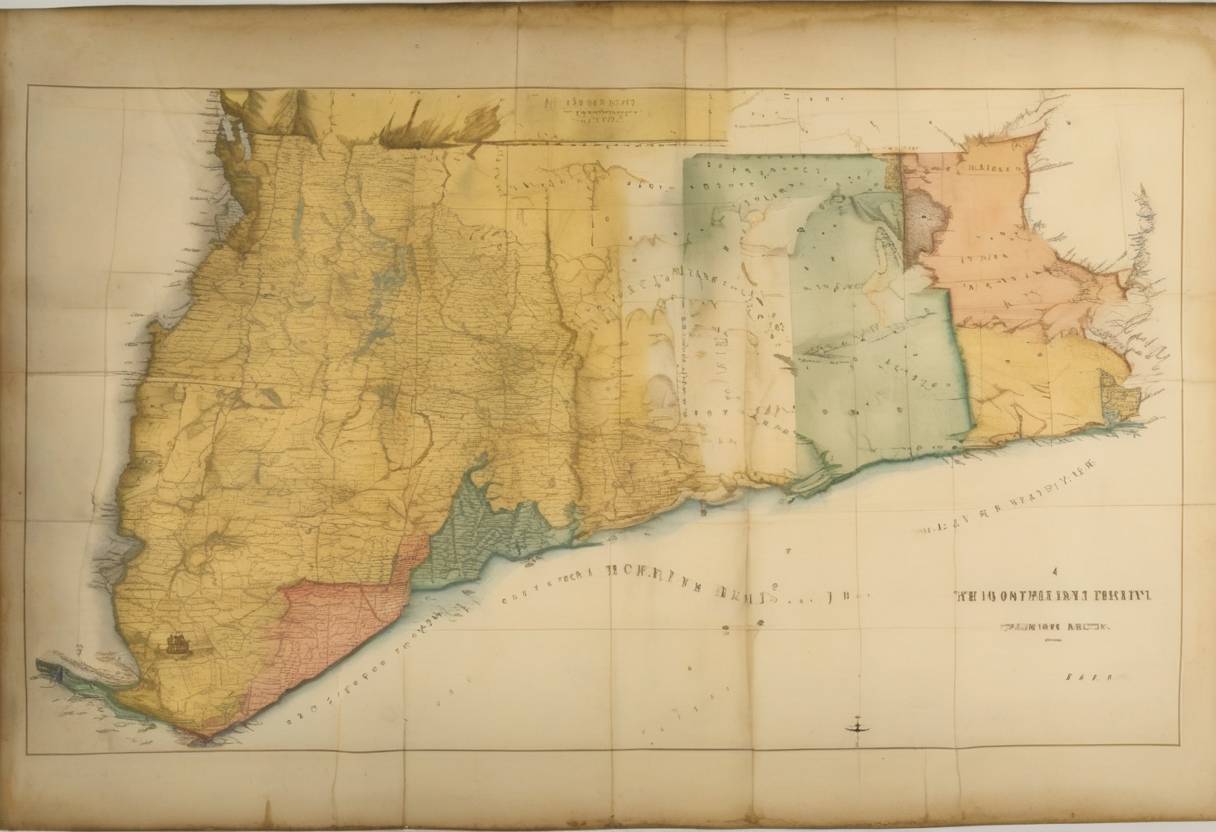
The Oregon Treaty of 1846
The Oregon Treaty was a pivotal agreement signed on June 15, 1846, between the United Kingdom and the United States. It effectively settled the Oregon boundary dispute by establishing the 49th parallel as the boundary between British North America (present-day Canada) and the United States in the Pacific Northwest.
Historical Context
The Oregon boundary dispute arose from competing British and American claims to the Pacific Northwest of North America. The region, referred to as the Oregon Country, was rich in resources and became more desirable as westward expansion continued. Both countries sought to capitalize on the lucrative fur trade and the strategic value of the region.
Events Leading to the Treaty
Joint Occupation: The Convention of 1818 allowed for joint control of the Oregon Country by the United States and Great Britain, as both nations agreed to the free and equal access for a ten-year period, a term that was subsequently extended indefinitely.
Manifest Destiny: By the 1840s, the concept of Manifest Destiny fueled American expansionism, and pressure mounted within the United States to claim the entire Oregon Territory up to the latitude line of 54°40′, which formed the southern boundary of Russian America (now Alaska). This led to the slogan “Fifty-Four Forty or Fight!”, referring to the desire of expanding U.S. claims.
British Interests: Meanwhile, the British were focused on maintaining access to lucrative fur trading routes and protecting their interests in Canada, making them more inclined to negotiate rather than provoke conflict.
Key Provisions
Boundary Established: The treaty set the boundary between U.S. and British territories at the 49th parallel from the Rocky Mountains to the middle of the channel separating Vancouver Island from the continent, and then south through the channel to the Strait of Juan de Fuca.
Navigation Rights: The treaty ensured that both U.S. and British vessels maintained navigation rights to the Puget Sound and the Grand Banks for fishing.
Aftermath and Significance
Peaceful Resolution: The Oregon Treaty is considered a triumph of diplomacy as it peacefully resolved tensions that had the potential to erupt into war.
Expansion of Territory: The agreement allowed the United States to continue its westward expansion without conflict and contributed to the shaping of the continental United States.
Impulse for Further Expansion: The resolution of the dispute encouraged further American settlement and development in the Pacific Northwest, pushing the frontier forward.
The Oregon Treaty stands out as an example of compromise and negotiation, illustrating how diplomatic efforts can settle territorial disputes amicably. Its signing is a testament to the peaceful resolution of international conflicts during a period marked by significant territorial expansion and national growth.