Bill Clinton's Second Inauguration
1997 · Washington, D.C., United States
Bill Clinton is inaugurated for his second term as the 42nd President of the United States.
January 20, 1993
Bill Clinton is inaugurated as the 42nd President of the United States.
Washington, D.C., United States | United States Government
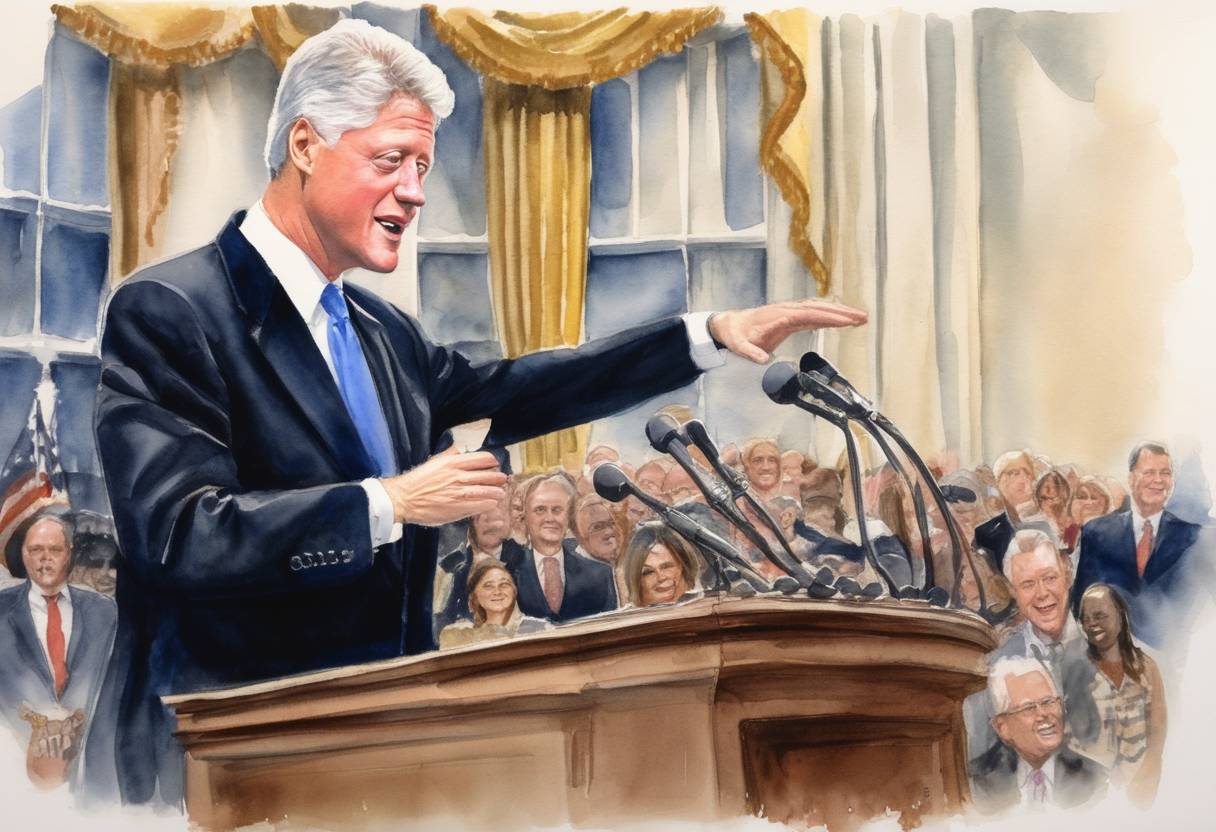
On January 20, 1993, William Jefferson Clinton was inaugurated as the 42nd President of the United States. The inauguration marked the commencement of the first four-year term of Bill Clinton as president and Al Gore as vice president. This event was significant as it represented a generational shift in American politics, moving from the leadership styles of George H. W. Bush and the Reagan era conservatives to the more centrist, New Democratic ideology promoted by Clinton.
Bill Clinton, a Democrat and former Governor of Arkansas, was elected following the 1992 presidential election. The election was notable for the economic concerns facing the country, including a recession and high unemployment rates, which Clinton capitalized on with his campaign emphasis on the economy. His slogan “It’s the economy, stupid” became a defining message during the election cycle. Clinton’s charisma and ability to connect with younger voters, along with his focus on domestic issues, helped him secure a decisive victory over the incumbent, George H. W. Bush, and independent candidate Ross Perot.
The inauguration ceremony was held on the steps of the United States Capitol in Washington, D.C. As the inaugural ceremony proceeded, Bill Clinton took the oath of office administered by Chief Justice William Rehnquist. As customary, Clinton’s hand rested on a family Bible during the oath. Following the oath, Clinton delivered his inaugural address, emphasizing themes of optimism, unity, and an agenda to reform the economy, healthcare, and other critical issues affecting the American populace.
The inaugural parade that followed featured delegations from all 50 states, showcasing various aspects of American culture and heritage. In the evening, inaugural balls were held, celebrating the new administration’s entry into office.
Bill Clinton’s inauguration as president was a symbol of change and a shift towards a more centrist Democratic platform that aimed to appeal across the political spectrum. His presidency would later be marked by efforts to implement welfare reform, an expansion of the Earned Income Tax Credit, and addressing budget deficits. Clinton’s leadership style and policy priorities during his presidency contributed to significant political and economic developments in the 1990s.
Source: en.wikipedia.org