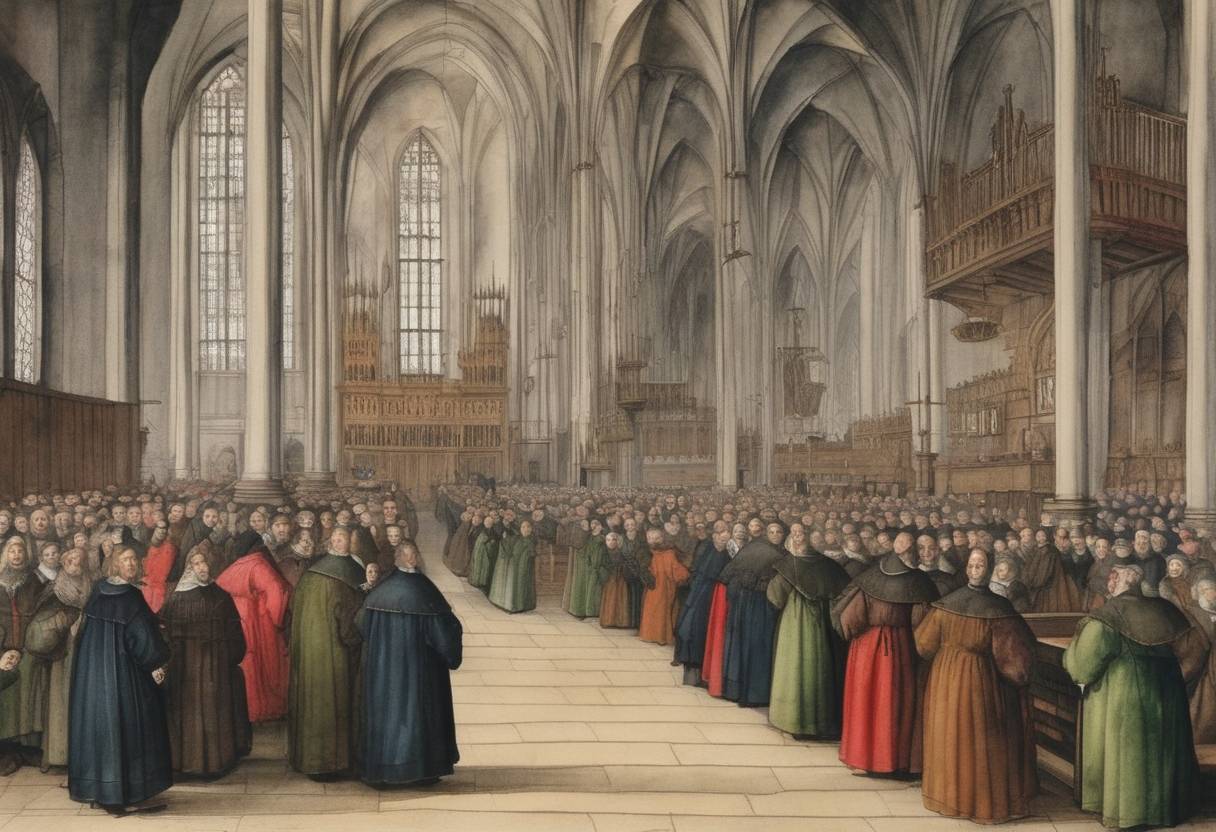
Conclusion of the Synod of Emden: 1571
The Synod of Emden, which concluded on October 13, 1571, not June 1, 1571, was a critical assembly in the history of the Reformed Church in the Netherlands. This synod laid the foundations for the establishment and organization of the Dutch Reformed Church, a major Protestant denomination that would play a significant role in the religious and cultural history of the Netherlands.
Historical Context
By the late 16th century, the Netherlands was embroiled in political and religious turmoil. Under the rule of the Spanish Habsburgs, the spread of Calvinism faced fierce resistance, leading to tensions between Protestant reformers and the Catholic authorities. This period was marked by the onset of the Eighty Years’ War, which began in 1568 as the Dutch struggled for independence from Spanish rule.
Events at the Synod
The Synod of Emden convened from October 4 to October 13, 1571, in Emden, a city in the north of present-day Germany, which provided a safer environment for religious reformers fleeing persecution. This synod was the first major assembly of Reformed leaders from Dutch, German, and Walloon areas, reflecting the collective goal of establishing a coherent ecclesiastical structure.
Key outcomes of the Synod included:
Formulation of Church Governance: The assembly established a presbyterian polity, which meant that churches were governed by assemblies of elders. This system opposed hierarchical structures like the episcopacy.
Adoption of Doctrinal Standards: Participants agreed upon the Belgic Confession and the Heidelberg Catechism as key doctrinal standards, which helped unify various Reformed congregations under shared beliefs.
Framework for Church Order: Detailed guidelines were set concerning church office jobs, synodal meetings, discipline, and internal church governance, which were foundational for the Reformed Church’s systemic and legal structure.
Consequences and Significance
The Synod of Emden was pivotal in transitioning the Reformed movement in the Netherlands from a clandestine group into an organized church capable of playing a substantial role in the socio-political landscape. Its establishment of governance structures influenced Reformed communities beyond the Netherlands and set a precedent for the organization of other Protestant churches in Europe.
By institutionalizing the Reformed faith, the synod helped sustain the Dutch Reformed Church through the religious conflicts of the 16th and 17th centuries, strengthening its role in the Dutch struggle for independence and laying the groundwork for its future expansion and influence.