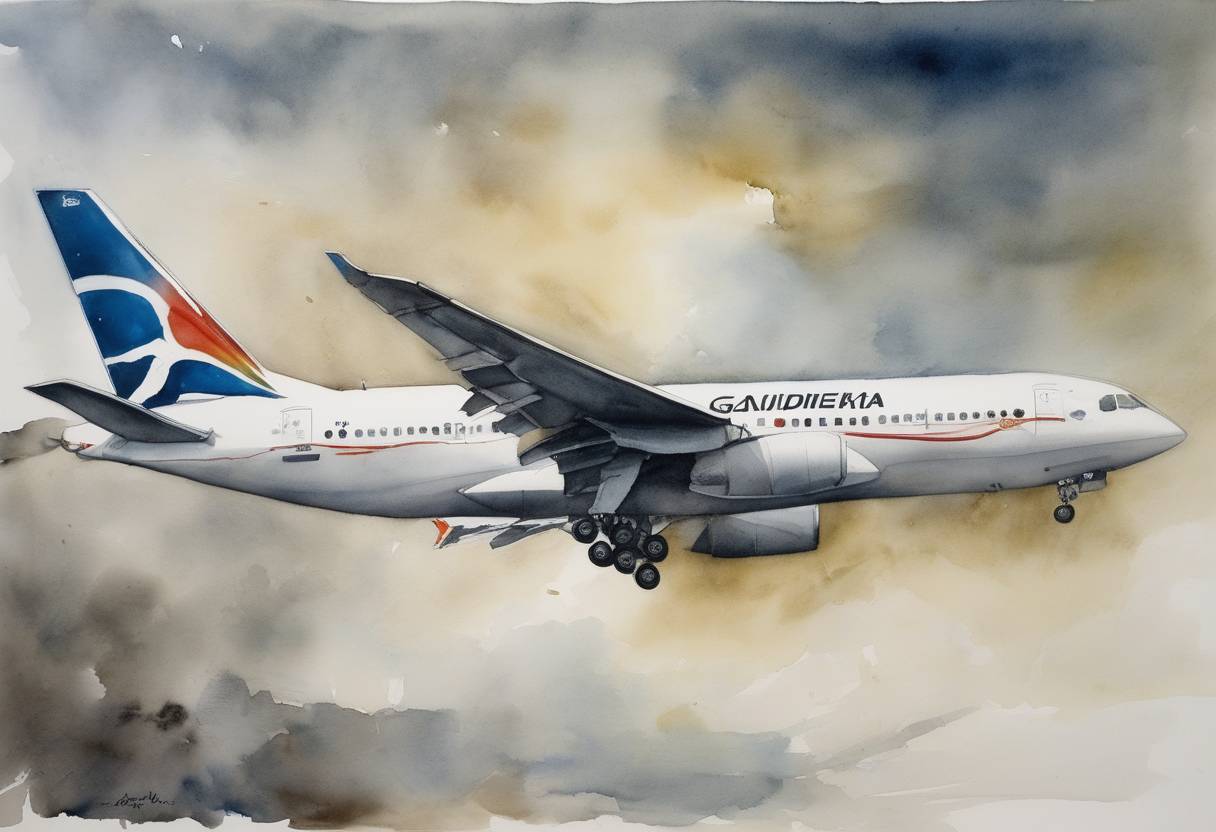
Garuda Indonesia Flight 200 Crash on March 7, 2007
Overview
On March 7, 2007, Garuda Indonesia Flight 200, a domestic flight operating from Jakarta to Yogyakarta, experienced a catastrophic crash upon landing at Adisutjipto International Airport. The Boeing 737-400 aircraft, carrying 133 passengers and 7 crew members, failed to safely come to a stop on the runway and ended tragically. The accident resulted in the death of 21 individuals, including both passengers and crew, while 112 others sustained injuries.
Flight Details
- Airline: Garuda Indonesia
- Aircraft Type: Boeing 737-400
- Flight Number: 200
- Origin: Soekarno–Hatta International Airport, Jakarta
- Destination: Adisutjipto International Airport, Yogyakarta
- Date: March 7, 2007
Crash Details
Upon approach to Yogyakarta, the aircraft faced significant issues in landing. Two main factors contributed to the mishap:
Excessive Speed: The investigation found that the aircraft was descending at a higher speed than recommended. This factor reduced the pilots’ ability to properly manage the landing sequence and alignment.
Inadequate Landing Procedures: The flight crew’s approach and landing procedures deviated from acceptable standards. Notably, the decision to continue the landing despite strong warning signals and calls for a go-around, along with a failure to fully deploy the spoilers, which are crucial for decelerating post-touchdown, aggravated the situation.
Investigation and Aftermath
Following the accident, an inquiry was initiated by Indonesia’s National Transportation Safety Committee (NTSC). The investigation emphasized human error as a critical component of the crash, particularly highlighting the performance of the cockpit crew.
Human Factors: The dominant causative factors noted were pilot error and decision-making issues, compounded by insufficient crew resource management. The crew’s inadequate response to alarms and failure to execute a go-around when warranted were key determinants.
Safety Recommendations: As a result of the findings, a series of safety recommendations were issued. These encompassed enhanced training protocols for flight crews focusing on cockpit decision-making, stringent adherence to approach speeds, and improved communication procedures within cockpit operations.
The crash of Garuda Indonesia Flight 200 underscored the importance of rigorous adherence to aviation safety standards, prompting measures to enhance pilot training and operational protocols within the airline industry in Indonesia and beyond.