Battle of Wagram: July 6, 1809
1809 · Wagram, Austria
A combined Franco-Polish army, led by Napoleon, won the Battle of Wagram against the Austrian Empire near Vienna, ending in a significant French victory.
April 21, 1809
Two Austrian armies merge under Archduke Charles in Bavaria during the War of the Fifth Coalition, continuing their campaign against Napoleon's forces.
Bavaria, Bavaria (now Germany) | Austrian Empire
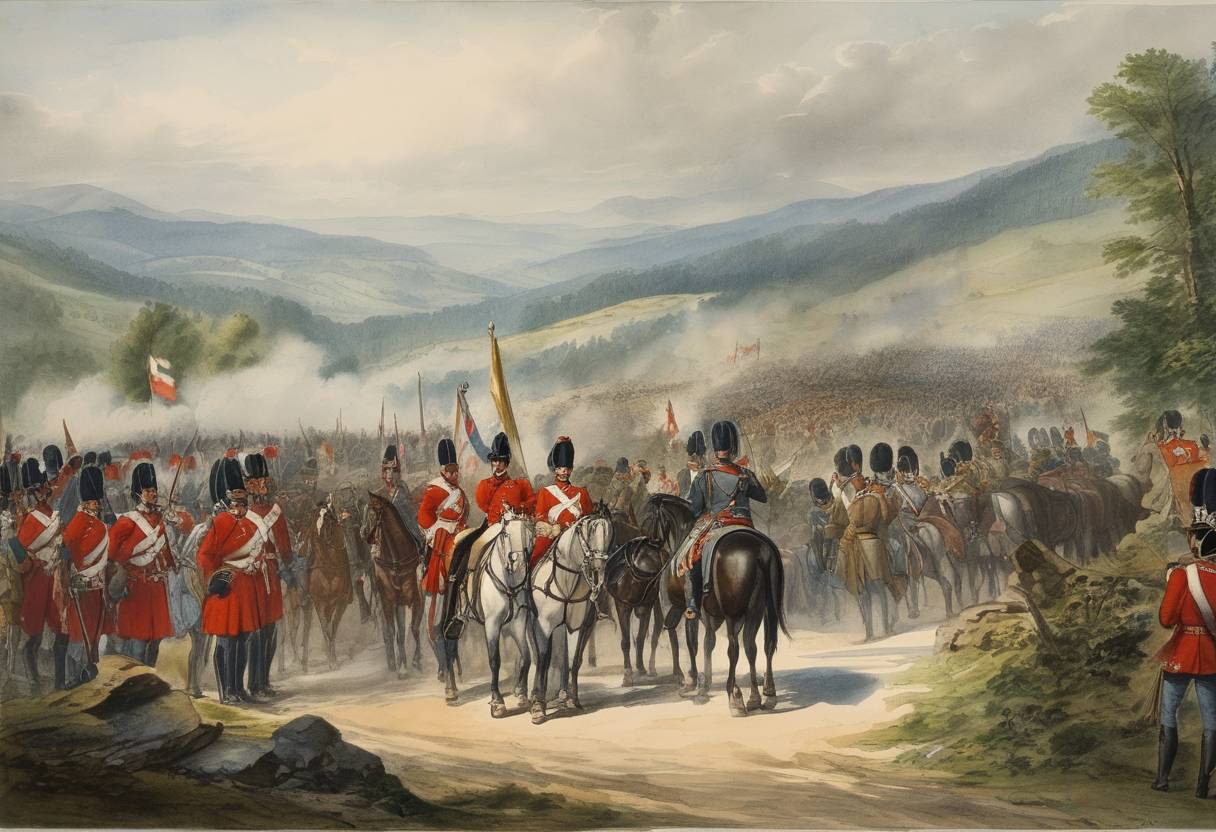
On April 21, 1809, during the War of the Fifth Coalition, two Austrian armies under the command of Archduke Charles successfully merged in Bavaria. This strategic consolidation was a significant move in Austria’s campaign against Napoleon Bonaparte’s forces.
The War of the Fifth Coalition (1809) was part of the broader Napoleonic Wars, a series of conflicts involving Napoleon’s French Empire against varying European coalitions. Following Austria’s defeat in the War of the Third Coalition and its exclusion from the Fourth Coalition, tensions simmered as Austrian leadership sought to challenge Napoleon’s dominance in Europe.
In early 1809, Austria, under Emperor Francis I, launched another campaign against France, hoping to capitalize on the diversion of French forces due to the Peninsular War in Spain.
Leadership and Forces: Archduke Charles, a capable military leader, commanded the Austrian army. His forces were divided into multiple army corps to cover strategic positions. The two armies’ merger aimed to strengthen their offensive capacity against the French.
Objectives: The primary objective was to engage Napoleon’s army in Bavaria, a crucial theater in the confrontation between Austria and France. The consolidation aimed to facilitate coordinated operations, increase morale, and strengthen front-line resistance against French forces.
Tactical Advantage: The merging of armies under Archduke Charles sought to enhance the Austrians’ tactical advantage in the region. This was meant to provide a unified front against the superior logistical and military efficiency of Napoleon’s troops.
Consequences: Although initially successful, the larger Austrian force faced several challenges, including supply issues and the need to maintain momentum against the agile and experienced French military.
Aftermath: The consolidation set the stage for the Battle of Eckmühl, fought over April 21-22, 1809, where Archduke Charles faced off against Napoleon himself. Despite the Austrian forces’ determined efforts, the battle ultimately ended in a strategic victory for Napoleon, showcasing his military prowess once more.
The events of April 21, 1809, reflect a pivotal moment in the War of the Fifth Coalition, illustrating the complexities and fluid nature of coalition warfare during the Napoleonic era. Archduke Charles’ attempt to unify and strengthen Austrian forces was a key tactical decision in the broader scope of the conflict.
Source: www.napoleon-series.org