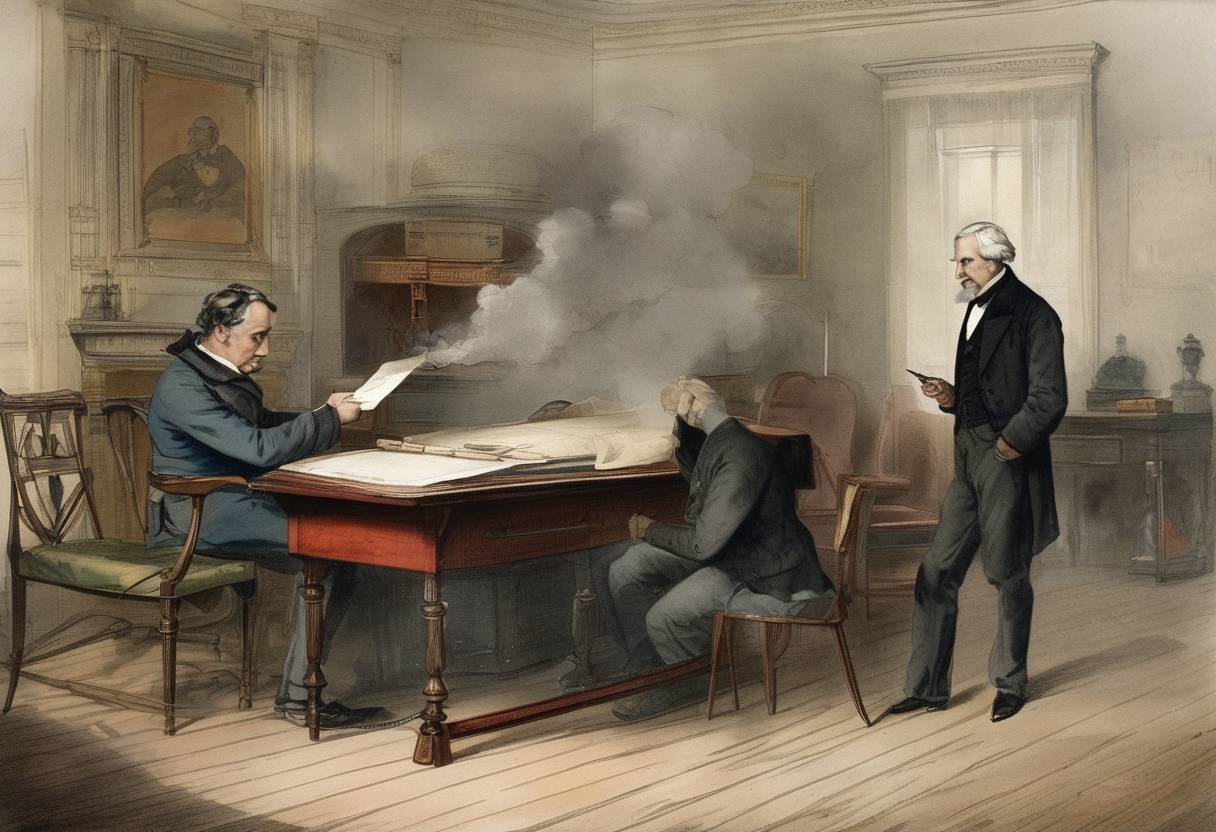
The First Electric Telegraph: Samuel Morse’s Historic Achievement
The first electric telegraph message using Samuel Morse’s system was sent by him on May 24, 1844, not August 8. This landmark event marked a critical advancement in communication technology. The message was transmitted between Washington, D.C., and Baltimore, Maryland.
Context and Development
- Samuel Morse: An American inventor and artist, Morse was inspired to develop the telegraph following a conversation during a sea voyage in 1832. He worked extensively over the next decade to refine his system and the Morse code, a series of dots and dashes representing letters and numbers.
- Collaboration with Alfred Vail: Morse collaborated with Alfred Vail, who contributed significantly to the invention with his technical expertise and improvements to the design.
The Historic Message
- Location and Distance: The first official message was sent from the United States Capitol in Washington, D.C., to the B&O Railroad Depot in Baltimore, a distance of about 37 miles.
- The Message: The words transmitted were “What hath God wrought,” a phrase from the Bible (Numbers 23:23), selected by Annie Ellsworth, the daughter of a friend of Morse.
Significance and Impact
- Revolutionizing Communication: This successful demonstration proved that messages could be sent instantly across long distances, fundamentally changing communication. It laid the groundwork for the global telegraph network that followed in the subsequent decades.
- Impact on Society: The telegraph enabled faster business transactions, more immediate news dissemination, and better coordination during events such as wars. It played a pivotal role in the acceleration of industrialization and globalization.
Aftermath
- Expansion: Following the successful demonstration, telegraph lines rapidly expanded in the United States and globally. By the end of the 19th century, a vast network of telegraph cables spanned continents and oceans.
- Legacy: Samuel Morse’s invention paved the way for future innovations in communication, including the telephone, and remains a foundational technology in the history of modern communication systems.
The telegraph was a monumental leap forward in how humans communicated, heralding the start of the electronic communication era.