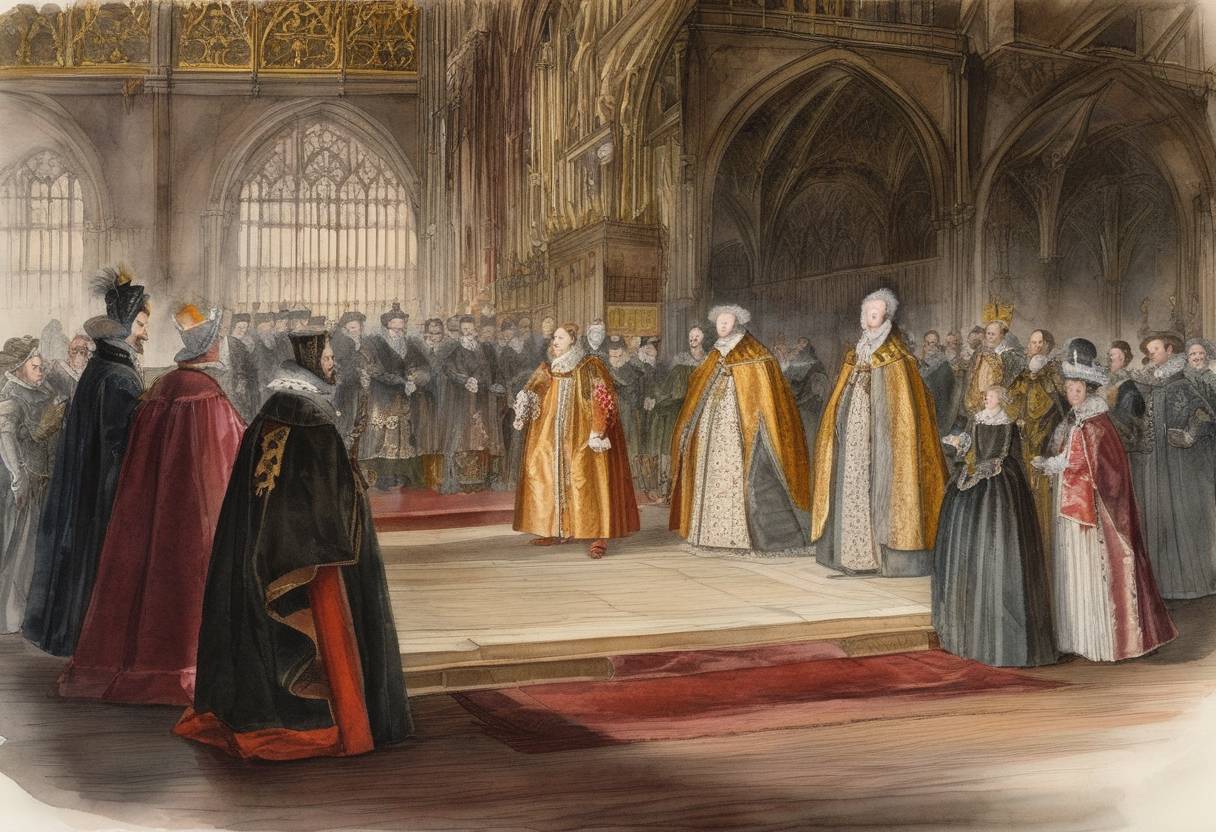
Elizabeth I and the Title ‘Supreme Governor of the Church of England’
On April 4, 1588, a significant event occurred in the religious and political landscape of England when Queen Elizabeth I was formally conferred the title of ‘Supreme Governor of the Church of England’ by the British Parliament. This designation had profound implications for both the monarchy and the church, aligning with the broader framework of the Elizabethan Religious Settlement.
Historical Context
After the tumultuous reigns of her predecessors, Elizabeth I ascended to the throne in 1558 following the death of her half-sister, Mary I. Mary’s reign had been marked by a brief return to Roman Catholicism, leading to persecution of Protestants, and earning her the moniker “Bloody Mary”. Elizabeth’s accession ushered in a period of stability and reform, restoring and reinforcing Protestantism as the state religion.
The Establishment of the Church of England
The role of the ‘Supreme Governor of the Church of England’ was integral to the Elizabethan Religious Settlement, which reasserted the Church of England’s independence from papal authority. Initially framed by her father, Henry VIII, in the early 1530s through the Act of Supremacy, this position of supreme leadership had been held by the reigning monarch. However, theological disputes and factional tensions required a redefining and formal acknowledgment of this role under Elizabeth’s reign.
While the Act of Supremacy in 1559 had already reinstated the monarch’s role in church governance, the 1588 parliamentary acknowledgment reaffirmed Elizabeth’s leadership, particularly amid external threats from Catholic powers in Europe, notably Spain under King Philip II. The formal conferral was synchronized with the strategic necessity to consolidate Elizabeth’s authority, both to unite the nation under a single religious doctrine and to counteract Catholic opposition.
Impact and Legacy
The redefinition of church governance solidified the monarch’s role as not just a ceremonial head but as a pivotal figure in church administration and doctrinal enforcement. This move helped prevent foreign influence in English religious matters and cemented Elizabeth’s stature both as a political leader and as a spiritual symbol.
This strengthening of the Church of England under secular leadership contributed to a broader sense of national identity and religious distinctiveness, which played a crucial role in shaping the future of the British Isles. Elizabeth’s governance set a precedent for her successors and influenced the religious landscape of England, leading to subsequent developments in religious thought and tolerance within the kingdom.
Elizabeth I’s reign, characterized by her diplomatic skill and religious moderation, left an enduring impression on English history, with the conferral of the title ‘Supreme Governor’ marking both a personal and national milestone.