Exile of Aleksandr Solzhenitsyn - February 13, 1974
1974 · Moscow, Soviet Union
Aleksandr Solzhenitsyn, Russian novelist and critic of Soviet totalitarianism, was exiled from the Soviet Union.
January 31, 1929
The Soviet Union exiled Leon Trotsky, a key figure in the Russian Revolution, marking a critical point in Joseph Stalin's consolidation of power.
Moscow, Soviet Union | Soviet Government
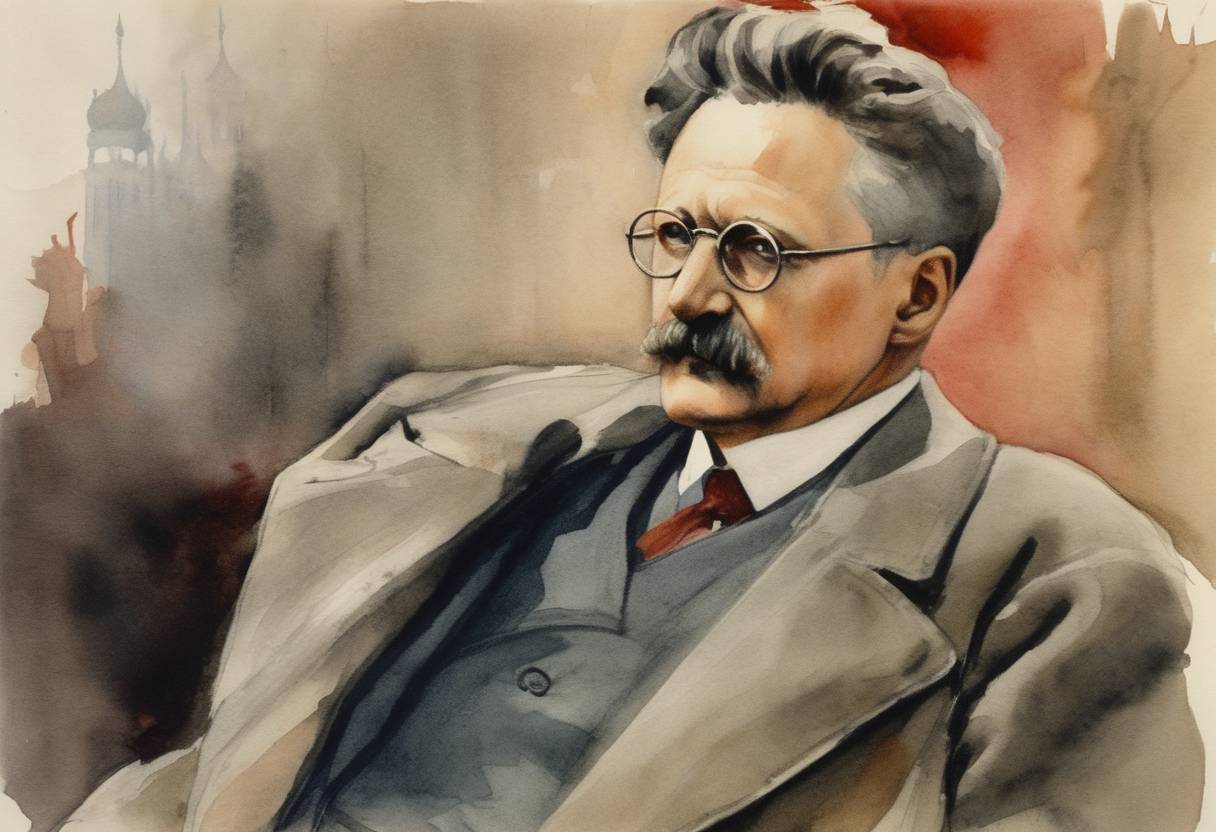
On January 31, 1929, Leon Trotsky, a pivotal leader of the Russian Revolution and one of the primary architects of the Soviet state, was exiled by Joseph Stalin. This act was a significant milestone in Stalin’s consolidation of power and the transformation of the political landscape in the Soviet Union.
Leon Trotsky was a key figure in the Bolshevik Party and the Russian Revolution of 1917. Known for his role as the founder and commander of the Red Army, Trotsky was second only to Vladimir Lenin in the early Soviet hierarchy. However, after Lenin’s death in 1924, a power struggle ensued between Trotsky and Joseph Stalin, among others, over the direction and leadership of the Soviet Party.
Stalin, who had been steadily amassing power, emerged as a formidable political operator, leveraging his position as General Secretary of the Communist Party. His strategic maneuvering, political acumen, and use of alliances enabled him to outmaneuver his rivals, including Trotsky.
By 1927, Stalin had effectively eliminated Trotsky’s influence within the party. Trotsky’s views, which were perceived as increasingly at odds with Stalin’s vision of “Socialism in One Country,” made him a target. In 1927, Trotsky was expelled from the Communist Party, and in January 1928, he was exiled to Alma-Ata, in Kazakhstan.
On January 31, 1929, in a further move to isolate him, Soviet authorities expelled Trotsky to Turkey. This marked a definitive end to his presence in Soviet politics and symbolized the triumph of Stalin’s ideology and leadership within the Soviet Union.
The expulsion of Trotsky was more than just the removal of a single political opponent. It signified the eradication of open political discourse within the Communist Party, setting a precedent for Stalin’s future authoritarian governance. The exile was part of a broader purge of those who had supported Trotsky, strengthening Stalin’s unchallenged control over the Soviet state.
Trotsky continued to influence international socialism from abroad, writing extensively on Marxism and criticizing the Soviet regime under Stalin. However, his physical absence from Soviet politics left Stalin free to pursue policies unopposed, culminating in the horrific Great Purges and collectivization policies of the 1930s.
Trotsky’s exile marked a critical point in Stalin’s consolidation of power. It reshaped the governance of the Soviet Union, leading to centralized, autocratic rule that would define the USSR under Stalin.
The exile also underlined broader themes in the history of the early Soviet Union, such as the fragility of revolutionary ideals in the face of autocratic power struggles, and the tragic consequences of political purges on both a personal and historical scale.
Source: www.britannica.com