Ascension of Edward III to the English Throne
1328 · London, England
Edward III of England is declared King of England after his father Edward II is deposed.
February 13, 1689
William and Mary were proclaimed co-rulers of England, Scotland, and Ireland, marking the beginning of the Glorious Revolution.
London, England | English Monarchy
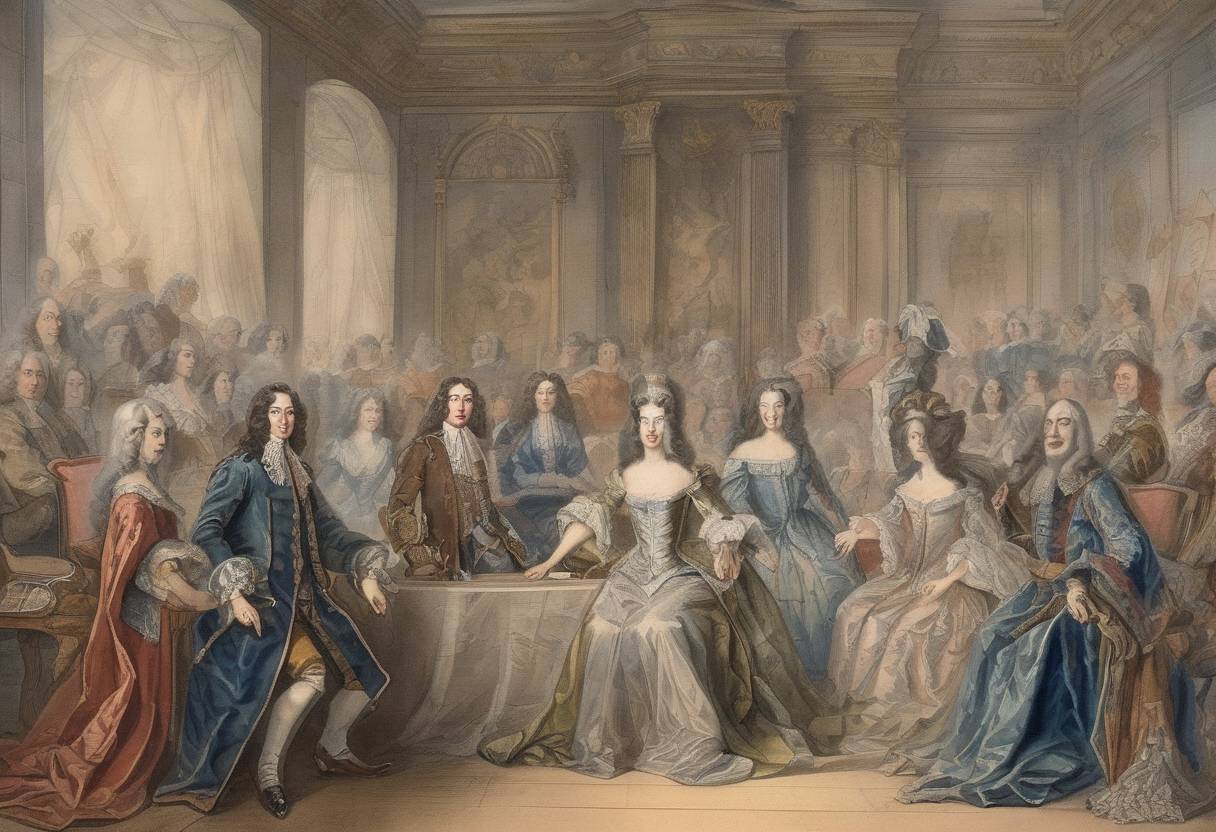
On February 13, 1689, William of Orange and his wife Mary were proclaimed co-rulers of England, Scotland, and Ireland, marking a pivotal moment in British history known as the Glorious Revolution. This event signified the end of the reign of James II and the establishment of a constitutional monarchy, fundamentally altering the political landscape of the British Isles.
James II’s Reign: James II, a Catholic monarch, ascended to the throne in 1685. His attempts to promote Catholicism and his disregard for parliamentary authority led to widespread discontent among his predominantly Protestant subjects and the political elite.
Invitation to William: In 1688, a group of English nobles, known as the “Immortal Seven,” invited William of Orange, a Protestant and the husband of James II’s Protestant daughter Mary, to intervene and assume the English throne. This invitation was motivated by fears of a Catholic succession and James II’s perceived absolutist tendencies.
William’s Invasion: William landed in England in November 1688 with a substantial force, an event often referred to as the “Glorious Revolution” due to its relatively bloodless nature. James II, facing little resistance and losing support, fled to France in December 1688.
Convention Parliament: In January 1689, a Convention Parliament was convened to address the political crisis. After extensive debates, it declared that James II had effectively abdicated by fleeing the country and that the throne was vacant.
Declaration of Rights: On February 13, 1689, William and Mary were formally offered the crown by Parliament. They accepted the Declaration of Rights, which later became the Bill of Rights 1689, outlining the constitutional and civil rights of the people and limiting the powers of the monarchy.
Coronation: William and Mary were crowned as joint sovereigns on April 11, 1689, solidifying their rule and the constitutional changes that had been set in motion.
Constitutional Monarchy: The Glorious Revolution established the precedent that the monarchy could not govern without the consent of Parliament, laying the foundation for a constitutional monarchy and parliamentary democracy in Britain.
Religious Toleration: The revolution also led to the Toleration Act of 1689, which granted freedom of worship to non-Anglican Protestants, though Catholics and non-Christians were still excluded from full civil rights.
Impact on the Colonies: The changes in England had significant repercussions in the American colonies, influencing their political development and contributing to the evolving relationship between the colonies and the British crown.
The proclamation of William and Mary as co-rulers marked a turning point in British history, ensuring the supremacy of Parliament over the monarchy and setting the stage for modern democratic governance.
Source: en.wikipedia.org