The Siege of Sarajevo: April 5, 1992
1992 · Sarajevo, Bosnia and Herzegovina
Bosnian Serbs began the siege of Sarajevo, marking the start of the Bosnian War, which resulted in significant loss of life and destruction.
March 1, 1992
Bosnia and Herzegovina declared independence from Yugoslavia, leading to the Bosnian War, a conflict marked by ethnic violence and genocide.
Sarajevo, Bosnia and Herzegovina | none
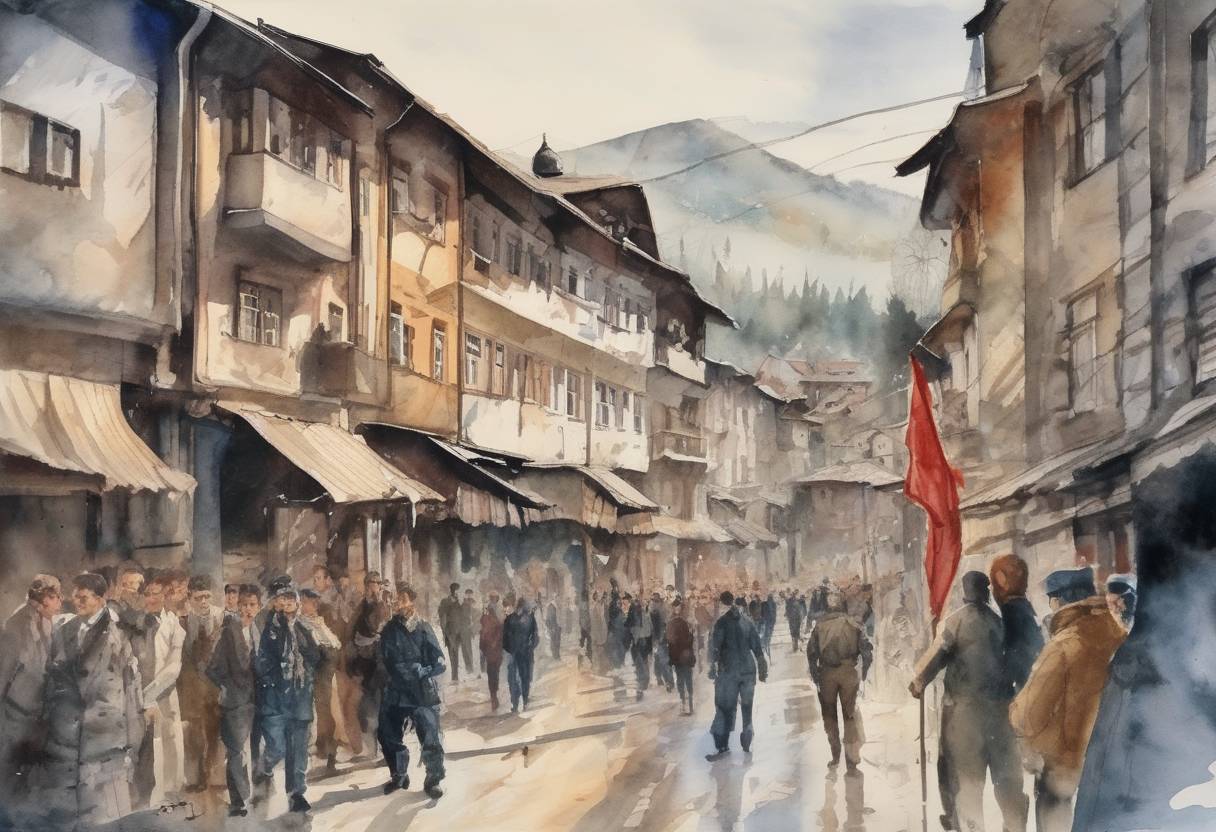
The disintegration of Yugoslavia in the early 1990s was marked by a series of declarations of independence by its constituent republics. Bosnia and Herzegovina, a republic characterized by its ethnically diverse population of Bosniaks (Bosnian Muslims), Serbs, and Croats, was one of the republics seeking independence. The political landscape was tense, as ethnic nationalism surged across the region, fueled by the collapse of communist regimes in Eastern Europe.
On March 1, 1992, Bosnia and Herzegovina held a referendum on independence from Yugoslavia. The referendum, boycotted by the majority of the Bosnian Serbs, resulted in a 99.7% vote in favor of independence, with a voter turnout of about 63.4%. The European Community (now the European Union) and the United States recognized Bosnia and Herzegovina’s independence shortly thereafter.
The declaration of independence led to the outbreak of the Bosnian War, which lasted from 1992 to 1995. The war was characterized by its ethnic violence, as Bosnian Serb forces, supported by the Yugoslav People’s Army, opposed the independence move. The conflict involved three main ethnic groups:
The war concluded with the signing of the Dayton Accords in December 1995. The agreement, brokered by the United States in Dayton, Ohio, established Bosnia and Herzegovina as a single sovereign state composed of two entities: the Federation of Bosnia and Herzegovina (mainly Bosniak and Croat) and the Republika Srpska (mainly Serb).
The Bosnian War resulted in the deaths of approximately 100,000 people and the displacement of over two million. It highlighted the complexities of ethnic nationalism and the challenges of post-communist transitions in Eastern Europe. The war’s legacy continues to influence the political and social landscape of the Balkans, with ongoing efforts towards reconciliation and integration into European structures.
The conflict underscored the importance of international intervention in preventing ethnic violence and set precedents for future humanitarian interventions. The International Criminal Tribunal for the former Yugoslavia (ICTY) was established to prosecute war crimes committed during the conflict, contributing to the development of international criminal law.
Source: en.wikipedia.org