Pope Leo X Confers the Title 'Defender of the Faith' on King Henry VIII
1521 · Rome, Italy
Pope Leo X conferred the title 'Defender of the Faith' on King Henry VIII of England for his defense of the seven sacraments against Martin Luther.
July 11, 1533
Pope Clement VII excommunicated King Henry VIII of England for his marriage to Anne Boleyn, which was a pivotal moment in the English Reformation.
Rome, Italy | Catholic Church
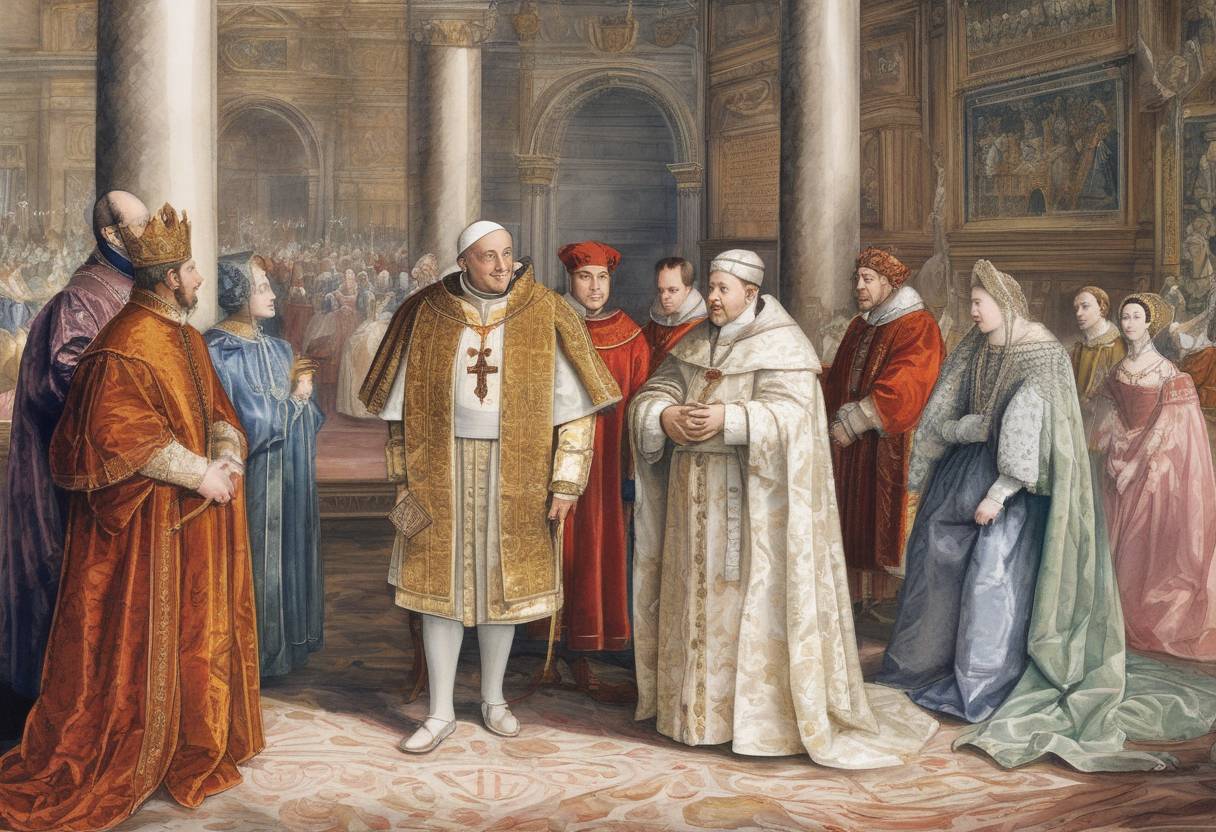
On July 11, 1533, Pope Clement VII excommunicated King Henry VIII of England, marking a pivotal moment in the English Reformation. This event was the culmination of a series of conflicts between the English monarchy and the papacy, primarily centered around Henry VIII’s desire to annul his marriage to Catherine of Aragon and marry Anne Boleyn.
Henry VIII’s Marital Issues: King Henry VIII was initially married to Catherine of Aragon, but their marriage failed to produce a male heir, which Henry saw as essential for the Tudor dynasty’s continuation. By the late 1520s, Henry sought an annulment, claiming that his marriage was invalid due to Catherine’s previous marriage to his brother, Arthur.
Papal Refusal: The Pope, under pressure from Catherine’s nephew, Charles V, Holy Roman Emperor, refused to annul the marriage. This refusal set Henry on a collision course with the Catholic Church.
Anne Boleyn: Anne Boleyn, a lady-in-waiting to Catherine, had caught Henry’s eye, and he became determined to marry her. In January 1533, Henry secretly married Anne, who was already pregnant.
Archbishop of Canterbury’s Role: In May 1533, Thomas Cranmer, the Archbishop of Canterbury, declared Henry’s marriage to Catherine null and void and validated his marriage to Anne Boleyn.
Act of Supremacy: In 1534, the English Parliament passed the Act of Supremacy, declaring Henry the Supreme Head of the Church of England, effectively severing ties with the Roman Catholic Church.
Papal Reaction: Pope Clement VII, seeing these actions as a direct challenge to papal authority, issued a bull of excommunication against Henry on July 11, 1533. This decree formally expelled Henry from the Catholic Church.
English Reformation: The excommunication was a critical step in the English Reformation, leading to the establishment of the Church of England and significant religious, political, and social changes in England.
Dissolution of Monasteries: Following the break with Rome, Henry initiated the Dissolution of the Monasteries, redistributing their wealth and lands to strengthen his political power.
Long-term Impact: The excommunication and subsequent religious reforms laid the groundwork for centuries of religious conflict in England, influencing the country’s religious landscape and contributing to the broader Protestant Reformation across Europe.
This moment in history underscores the complex interplay between personal desires, political power, and religious authority, illustrating how individual actions can have far-reaching consequences.
Source: en.wikipedia.org