The Battle of Ourique: July 26, 1139
1139 · Ourique, Portugal
The Battle of Ourique took place, where Portuguese forces led by Afonso I defeated the Almoravid Moors, marking a significant step towards Portuguese independence.
August 4, 1578
The Battle of Alcácer Quibir occurs, where the Portuguese forces led by King Sebastian are defeated by the Moroccan army, leading to the death of Sebastian and a succession crisis in Portugal.
Ksar-el-Kebir, Morocco | Portuguese forces
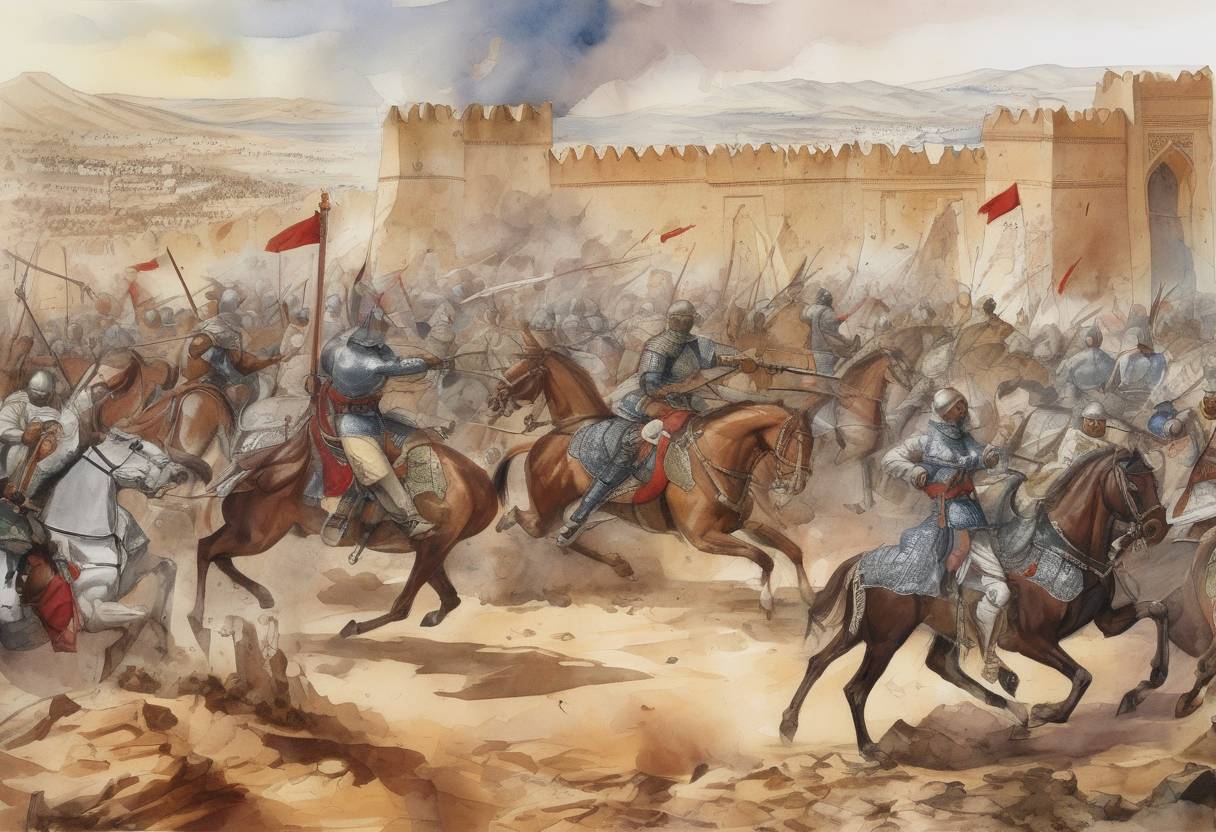
The Battle of Alcácer Quibir, also known as the Battle of the Three Kings, was a significant military engagement that took place on August 4, 1578, near the town of Ksar el-Kebir in northern Morocco. This battle was pivotal in shaping the future of both Portugal and Morocco, with far-reaching consequences.
The battle was primarily driven by King Sebastian of Portugal’s ambition to expand his influence and spread Christianity in North Africa. Sebastian, who ascended to the throne at a young age, was determined to revive the crusading spirit and sought to intervene in Moroccan affairs. At the time, Morocco was embroiled in a dynastic struggle between Sultan Abd al-Malik and his uncle, Sultan Abu Abdallah Mohammed II, also known as “King Muley Molucco.”
Sebastian allied himself with Abu Abdallah, who had been deposed by Abd al-Malik, and saw an opportunity to assert Portuguese dominance in the region. The campaign was also motivated by the desire to control the lucrative trade routes and to counter the growing influence of the Ottoman Empire in North Africa.
The Portuguese forces, numbering around 23,000 men, included a mix of Portuguese soldiers, foreign mercenaries, and a contingent of supporters from Abu Abdallah. They faced a well-prepared Moroccan army led by Sultan Abd al-Malik, who had the support of the Ottoman Empire, providing him with artillery and experienced troops.
The battle commenced on the plains near Alcácer Quibir. Despite initial confidence, the Portuguese forces were outmaneuvered and overwhelmed by the larger and more strategically adept Moroccan army. The terrain, the heat, and the lack of adequate supplies further disadvantaged the Portuguese.
The battle resulted in a catastrophic defeat for the Portuguese. King Sebastian was killed, and his body was never conclusively identified, leading to a myth that he would one day return, known as Sebastianism. The defeat led to a severe loss of manpower and resources for Portugal.
The death of Sebastian without an heir precipitated a succession crisis in Portugal. This crisis eventually led to the Iberian Union, where the Spanish King Philip II claimed the Portuguese throne in 1580, uniting the two crowns under Spanish rule for 60 years.
For Morocco, the victory solidified Abd al-Malik’s rule, although he died during the battle, reportedly from illness. His brother, Ahmad al-Mansur, succeeded him and became one of Morocco’s most illustrious sultans, ushering in a period of prosperity and cultural flourishing.
The Battle of Alcácer Quibir had profound implications for both Portugal and Morocco. It marked the decline of Portuguese influence in North Africa and contributed to the end of Portugal’s period of maritime expansion. The battle also highlighted the shifting power dynamics in the region, with the Ottomans playing a crucial role in supporting their allies.
In Portugal, the loss and subsequent political turmoil weakened the nation, leading to a period of Spanish dominance. The battle remains a poignant reminder of the risks of overreaching ambition and the complexities of international alliances.
Source: en.wikipedia.org