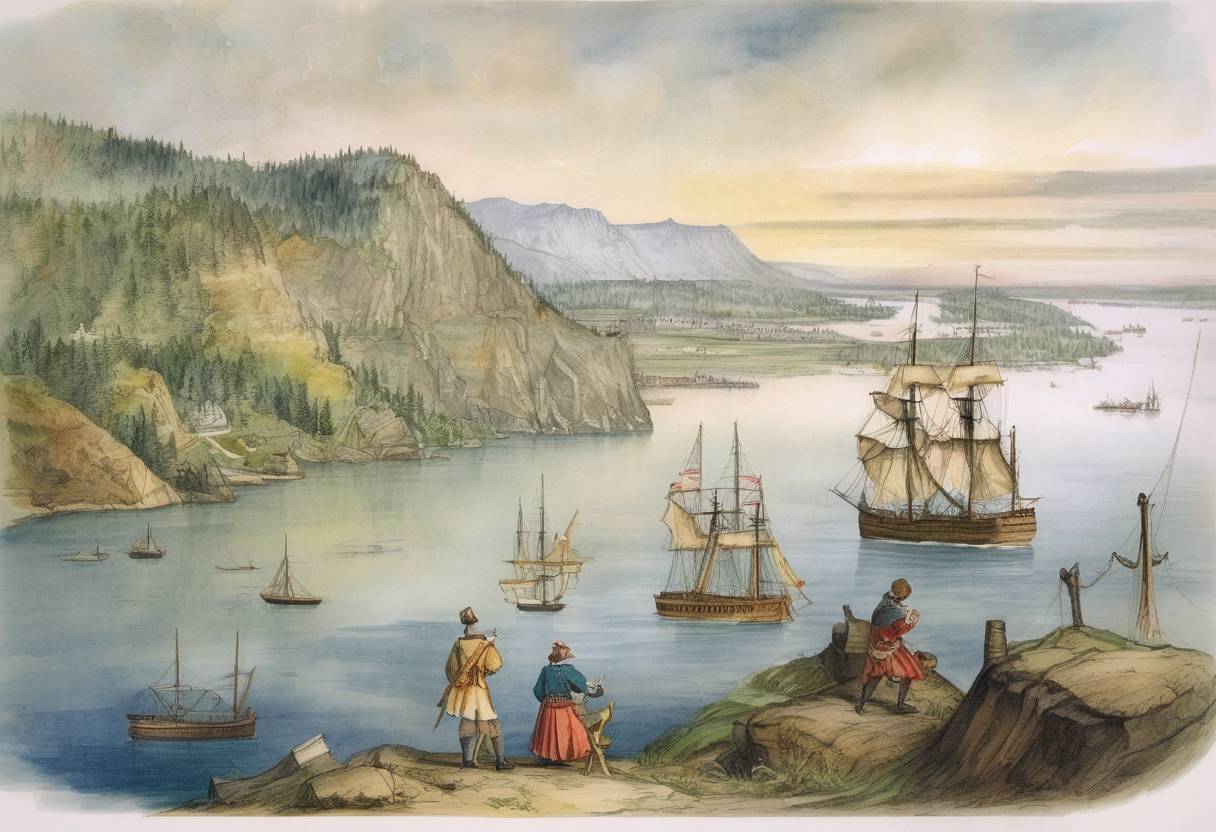
Jacques Cartier and the Mapping of the Saint Lawrence River
On June 9, 1534, the French explorer Jacques Cartier became the first European to describe and map the Saint Lawrence River. This significant event marked a pivotal moment in the exploration of North America and laid the groundwork for future French claims in the New World.
Background
Jacques Cartier was commissioned by King Francis I of France to explore the northern lands of the Americas in search of a passage to Asia and to claim new territories for France. Cartier’s journey was part of a broader European effort during the Age of Exploration to discover new trade routes and expand territorial claims.
The Voyage
Cartier set sail from Saint-Malo, France, in April 1534 with two ships and a crew of 61 men. His mission was to explore the western lands and find a passage to the Pacific Ocean. After crossing the Atlantic, Cartier reached the coast of Newfoundland and began exploring the Gulf of Saint Lawrence.
Discovery of the Saint Lawrence River
On June 9, 1534, Cartier entered the mouth of the Saint Lawrence River. He was the first European to document this vast waterway, which he initially believed might be the long-sought passage to Asia. Cartier’s exploration of the river included interactions with the indigenous peoples, notably the St. Lawrence Iroquoians, who inhabited the region.
Mapping and Description
Cartier’s detailed descriptions and maps of the Saint Lawrence River were crucial for future explorations. His accounts provided valuable information about the geography, resources, and peoples of the region. The maps he created during his voyages were among the first to depict parts of what is now Canada.
Aftermath and Significance
Cartier’s exploration of the Saint Lawrence River had several important consequences:
French Claims: His voyages laid the foundation for French claims to territories in North America, which would later become part of New France.
Further Exploration: Cartier’s work paved the way for subsequent explorers, including Samuel de Champlain, who would establish the first permanent French settlements in the region.
Cultural Exchange: Cartier’s interactions with indigenous peoples marked the beginning of a complex history of cultural exchange, trade, and conflict between Europeans and Native Americans.
In summary, Jacques Cartier’s exploration and mapping of the Saint Lawrence River on June 9, 1534, was a landmark event in the history of North American exploration. It not only expanded European knowledge of the continent but also set the stage for future colonization and cultural interactions.