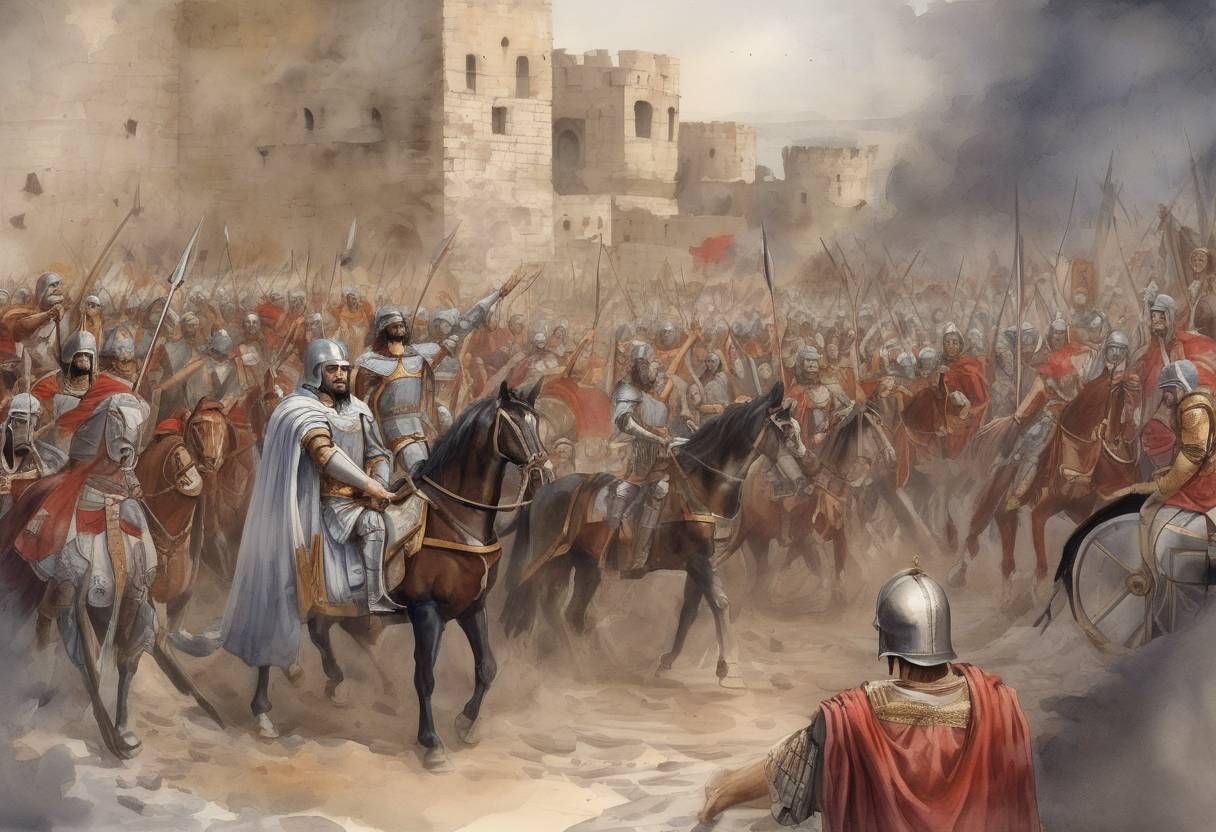
The Surrender of Vitiges: The End of the Siege of Rome
On March 12, 538, a significant event unfolded during the Gothic War (535–554) between the Byzantine Empire and the Ostrogothic Kingdom: the Ostrogothic king Vitiges surrendered to the Byzantine general Belisarius, effectively ending the Siege of Rome. This event marked a pivotal moment in the protracted conflict aimed at restoring the former territories of the Western Roman Empire under Byzantine control.
Context and Background
The Gothic War was initiated by the Byzantine Emperor Justinian I, whose ambition was to reclaim the western provinces of the Roman Empire, which had fallen into the hands of various Germanic tribes following the collapse of the Western Roman Empire in 476 AD. The Ostrogoths, under King Theodoric the Great, had established a powerful kingdom in Italy, but after his death, internal strife weakened their hold.
Belisarius, one of Justinian’s most capable generals, was tasked with leading the campaign in Italy. His military prowess had already been demonstrated in the successful reconquest of North Africa from the Vandals.
The Siege of Rome
The Siege of Rome began in 537 when Vitiges, seeking to reclaim the city from Byzantine control, laid siege to it with a substantial Ostrogothic force. Belisarius, however, was well-prepared and fortified the city, employing both strategic acumen and innovative defensive tactics to withstand the siege.
Despite being outnumbered, Belisarius’s forces managed to hold the city through a combination of defensive fortifications, effective use of the city’s walls, and strategic sorties against the besieging Ostrogoths. The siege dragged on for over a year, with both sides suffering from the hardships of prolonged warfare.
The Surrender
The turning point came when Belisarius received reinforcements from Constantinople, bolstering his position. The Ostrogoths, unable to breach the defenses and facing dwindling supplies and morale, found themselves in a precarious situation. Recognizing the futility of continuing the siege, Vitiges opted to negotiate a surrender.
On March 12, 538, Vitiges surrendered to Belisarius, effectively ending the siege. The terms of the surrender allowed Vitiges and his remaining forces to retreat, while the Byzantines solidified their control over Rome.
Aftermath and Significance
The surrender of Vitiges and the lifting of the siege marked a crucial victory for the Byzantines in their campaign to reclaim Italy. It demonstrated Belisarius’s military genius and furthered Justinian’s goal of restoring the Roman Empire’s former glory.
However, the Gothic War would continue for several more years, with the Ostrogoths regrouping under new leadership. The conflict would eventually lead to the near-total destruction of the Ostrogothic Kingdom and the temporary re-establishment of Byzantine rule over Italy.
The events surrounding the Siege of Rome and the broader Gothic War had lasting implications for the region, contributing to the eventual fragmentation and transformation of Italy in the centuries that followed.