The Announcement of the Daguerreotype Process by the French Academy of Sciences
1839 · Paris, France
The French Academy of Sciences announced the Daguerreotype photography process.
August 19, 1839
The French government announces that Louis Daguerre's photographic process is a gift "free to the world."
Paris, France | French Government
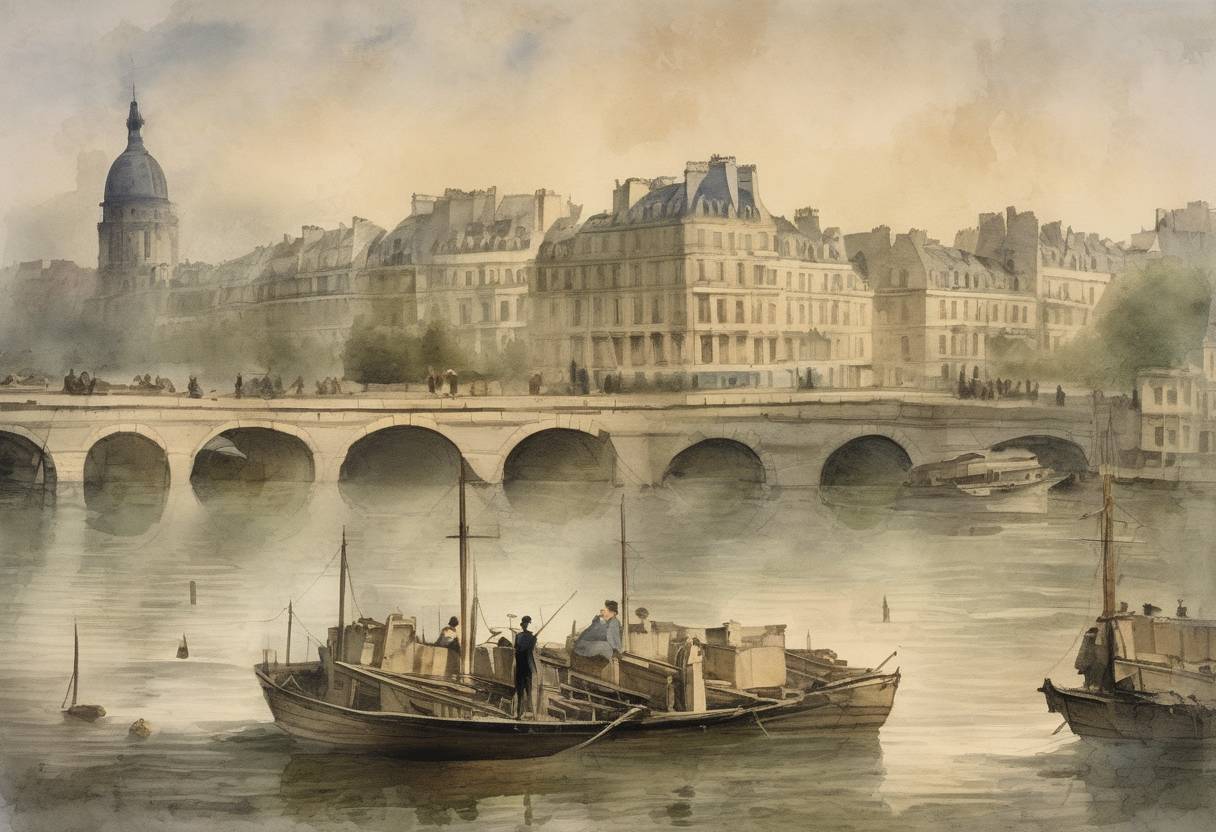
On August 19, 1839, the French government made a landmark announcement that would forever change the landscape of visual documentation and art. The government declared that the photographic process developed by Louis Daguerre, known as the daguerreotype, was to be a gift “free to the world.” This pivotal moment marked the official public introduction of photography as a new medium.
Louis Daguerre, a French artist and chemist, had been working on capturing images through chemical processes since the 1820s. He initially collaborated with Nicéphore Niépce, who had created the first permanent photograph in 1826. After Niépce’s death in 1833, Daguerre continued to refine the process, eventually developing the daguerreotype, which produced a highly detailed image on a silvered copper plate.
The announcement took place at a joint meeting of the French Academy of Sciences and the Académie des Beaux-Arts in Paris. François Arago, a prominent French scientist and politician, played a crucial role in advocating for Daguerre’s invention. He presented the process to the academies, emphasizing its potential for scientific, artistic, and practical applications.
The French government, recognizing the significance of this invention, decided to purchase the rights to the daguerreotype process from Daguerre and Isidore Niépce (Nicéphore’s son) in exchange for lifetime pensions. By declaring the process free to the world, France aimed to position itself as a leader in scientific and cultural advancements.
The announcement had profound implications:
Global Spread: The daguerreotype process quickly spread across the globe, with photographers adopting the technique in Europe, the Americas, and beyond. It democratized image-making, allowing people from various backgrounds to capture and preserve moments in time.
Cultural Shift: The ability to capture realistic images had a significant impact on art, science, and journalism. It influenced portraiture, landscape art, and documentation of historical events, altering how people perceived and interacted with the world.
Technological Advancements: The daguerreotype spurred further innovations in photography, leading to the development of new techniques and technologies, such as the calotype and eventually modern film and digital photography.
Historical Documentation: The process allowed for the documentation of historical figures, events, and everyday life with unprecedented accuracy, providing future generations with a visual record of the 19th century.
The French government’s decision to release the daguerreotype process as a gift to the world was a visionary act that underscored the importance of sharing knowledge and innovation. It laid the foundation for the development of photography as a crucial tool for communication, art, and historical preservation, impacting countless aspects of society and culture.
Source: www.britannica.com