678 · Rome, Italy
Saint Agatho becomes Pope, succeeding Pope Donus.
July 31, 0432
Pope Sixtus III begins his papacy.
Rome, Italy | Catholic Church
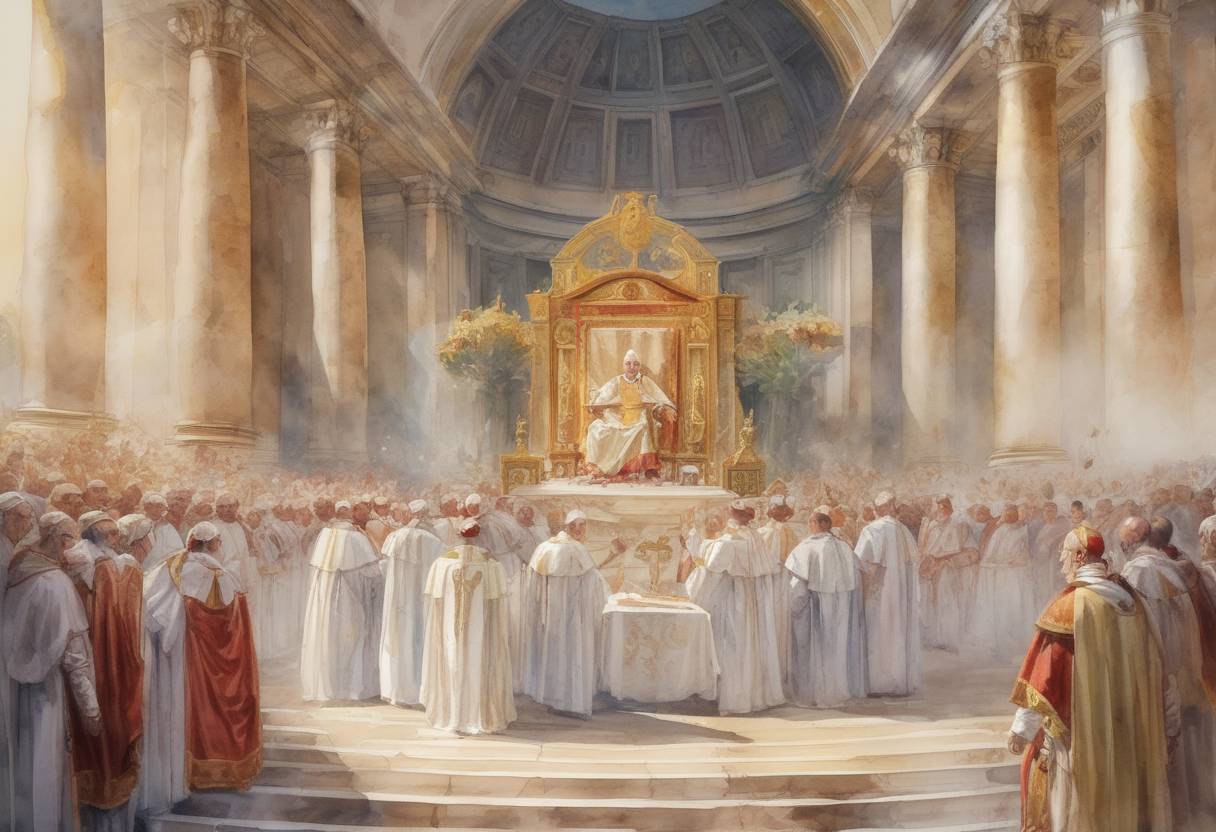
On July 31, 432, Sixtus III ascended to the papacy, marking the beginning of a significant period in the history of the early Christian Church. His papacy, which lasted until his death in 440, was characterized by efforts to maintain unity within the Church and to address theological disputes that were prevalent during this era.
The early 5th century was a tumultuous time for the Christian Church, marked by theological debates and the aftermath of the Council of Ephesus in 431. This council had addressed the Nestorian controversy, which revolved around the nature of Christ and the title of Mary as Theotokos, or “God-bearer.” The council’s decisions had significant implications for the unity of the Church, and Sixtus III’s papacy was largely defined by his efforts to reconcile differing factions.
Reconciliation Efforts: Sixtus III was known for his diplomatic skills and worked tirelessly to heal the rift between the supporters of the Council of Ephesus and those who were aligned with Nestorian views. He sought to maintain the unity of the Church by emphasizing common beliefs and fostering dialogue among differing theological perspectives.
Construction and Restoration Projects: Sixtus III is credited with initiating several significant construction projects in Rome. Notably, he oversaw the restoration of the Basilica of Santa Maria Maggiore, one of the oldest and most important churches dedicated to the Virgin Mary. This project underscored the Church’s commitment to the veneration of Mary, a central issue in the theological debates of the time.
Relations with the Eastern Church: Sixtus III maintained a cautious yet diplomatic relationship with the Eastern Church. His papacy coincided with a period of relative peace between the Western and Eastern branches of Christianity, which was crucial for maintaining the Church’s influence across the Roman Empire.
Pope Sixtus III’s tenure is remembered for its emphasis on unity and reconciliation within the Church. His diplomatic approach helped to stabilize the Church during a period of doctrinal conflict and laid the groundwork for future theological developments. The construction projects he initiated, particularly the enhancement of Santa Maria Maggiore, left a lasting architectural and cultural legacy.
Sixtus III’s papacy is a testament to the challenges faced by early Church leaders in navigating theological disputes while striving to maintain the cohesion of the Christian community. His efforts to promote unity and his contributions to the Church’s infrastructure have cemented his legacy as a significant figure in the history of the papacy.
Source: en.wikipedia.org