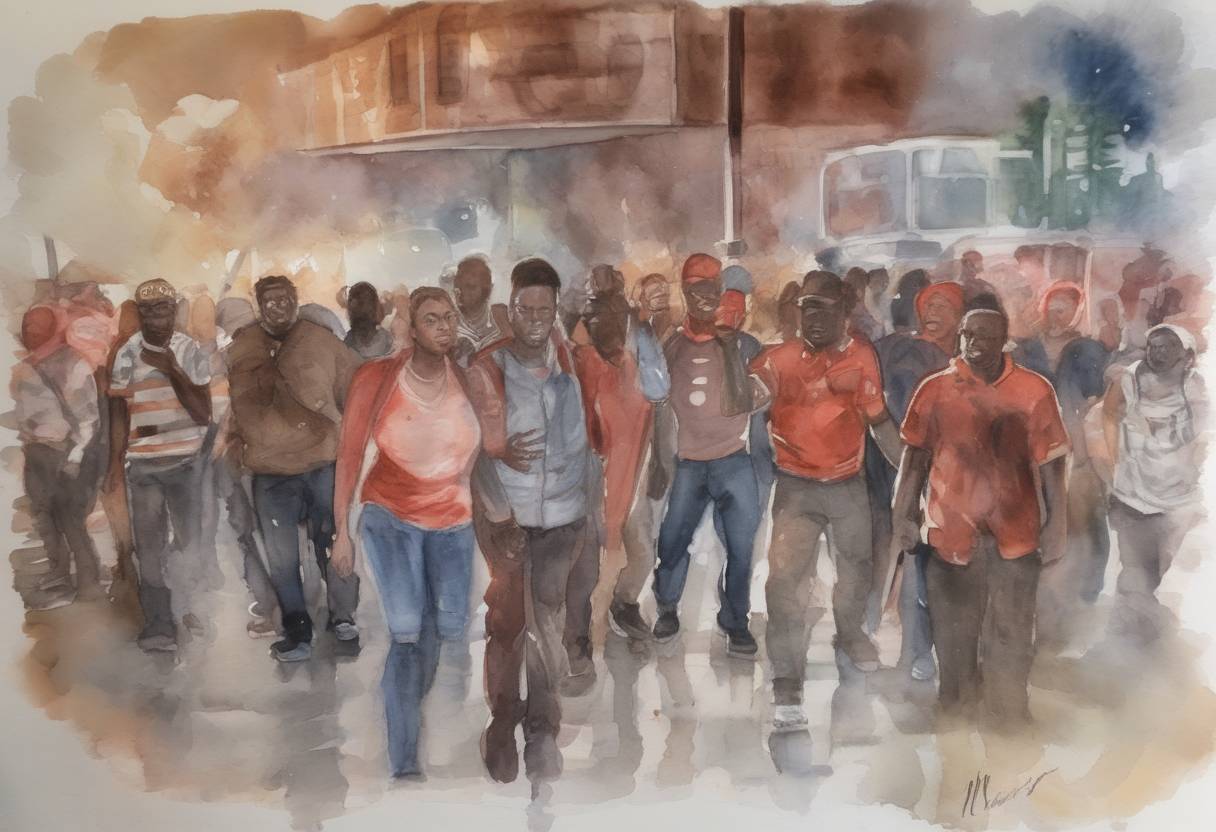
The Shooting of Michael Brown on August 9, 2014
On August 9, 2014, Michael Brown, an 18-year-old African American, was fatally shot by Darren Wilson, a white police officer, in Ferguson, Missouri. This incident became a pivotal moment in the United States, sparking widespread protests and igniting a national debate on race relations and policing practices.
Context and Background
Ferguson, a suburb of St. Louis, Missouri, had a population with a significant African American majority but a predominantly white police force. Tensions between the community and law enforcement had been simmering due to perceived racial profiling and police misconduct.
The Incident
On the afternoon of August 9, 2014, Michael Brown and his friend Dorian Johnson were walking down the middle of Canfield Drive when they were approached by Officer Darren Wilson in his patrol car. Accounts of what transpired next vary significantly:
Police Account: Officer Wilson claimed that Brown reached into his patrol car and struggled for his gun, leading to the initial gunshot inside the vehicle. Wilson stated that Brown then fled, and when he turned back towards the officer, Wilson fired the fatal shots.
Witness Accounts: Some witnesses reported that Brown had his hands up in a gesture of surrender when he was shot, a claim that became central to the protests and the “Hands up, don’t shoot” slogan.
Aftermath and Protests
The shooting led to immediate protests in Ferguson, which were met with a heavy police response, including the use of tear gas and rubber bullets. The situation escalated over the following days and weeks, drawing national and international attention.
Grand Jury Decision: In November 2014, a St. Louis County grand jury decided not to indict Officer Wilson, citing insufficient evidence to charge him with a crime. This decision further fueled protests and unrest.
Federal Investigation: The U.S. Department of Justice conducted its own investigation, concluding in March 2015 that there was no evidence to charge Wilson with civil rights violations. However, a separate DOJ report found systemic racial bias in the Ferguson Police Department.
Broader Impact
The shooting of Michael Brown and the subsequent events had a profound impact on the United States:
Black Lives Matter Movement: The incident galvanized the Black Lives Matter movement, which had begun a year earlier after the acquittal of George Zimmerman in the shooting of Trayvon Martin. The movement gained momentum, focusing on issues of racial inequality and police violence.
National Debate: The events in Ferguson sparked a national conversation about race, policing, and justice in America. It led to increased scrutiny of police practices and calls for reforms, including the use of body cameras and changes in police training.
Cultural and Political Influence: The Ferguson protests influenced cultural discourse and political agendas, highlighting the need for addressing systemic racism and inequality.
The shooting of Michael Brown remains a significant event in recent American history, symbolizing broader issues of racial injustice and the relationship between law enforcement and African American communities.