The Establishment of the Tetrarchy: March 1, 293
293 · Nicomedia, Roman Empire
Diocletian and Maximian appoint Constantius Chlorus and Galerius as Caesars, marking the beginning of the Tetrarchy in the Roman Empire.
July 21, 0285
Diocletian appoints Maximian as Caesar, effectively making him co-emperor of the Roman Empire.
none, Roman Empire | Roman Empire
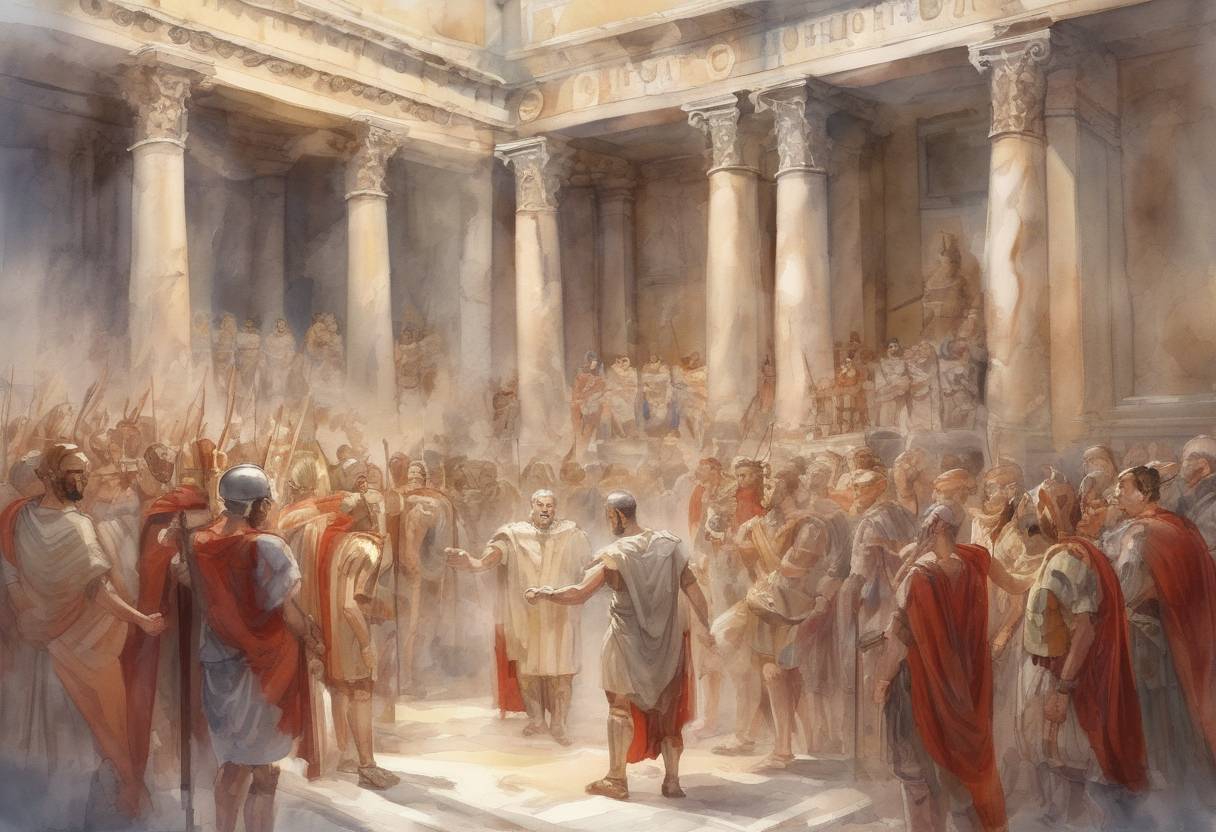
On July 21, 285, a significant event in Roman history unfolded when Emperor Diocletian appointed Maximian as Caesar, effectively making him co-emperor of the Roman Empire. This decision marked the beginning of a new political structure known as the Tetrarchy, which aimed to bring stability to an empire plagued by internal strife and external threats.
Crisis of the Third Century: Prior to Diocletian’s reign, the Roman Empire experienced a period of severe instability known as the Crisis of the Third Century (235-284 AD). This era was characterized by frequent changes in leadership, economic turmoil, and military defeats.
Diocletian’s Rise to Power: Diocletian became emperor in 284 AD after the assassination of Emperor Numerian. Recognizing the challenges of governing such a vast empire, Diocletian sought to implement reforms to restore order and efficiency.
Maximian’s Background: Maximian was a trusted military commander and ally of Diocletian. His loyalty and military prowess made him an ideal candidate to share the burdens of imperial rule.
Role as Caesar: By appointing Maximian as Caesar, Diocletian effectively divided the responsibilities of governance. Maximian was tasked with managing the western provinces of the empire, while Diocletian focused on the eastern regions.
Division of Power: The appointment of Maximian laid the groundwork for the Tetrarchy, a system where the Roman Empire was divided into four regions, each governed by a ruler. This system was fully realized in 293 AD when Diocletian further divided the empire by appointing two additional Caesars, Galerius and Constantius Chlorus.
Stabilization Efforts: The Tetrarchy aimed to address the empire’s vast size and diverse challenges by decentralizing power. This allowed for more localized and efficient governance, particularly in responding to military threats and administrative needs.
Short-term Success: Initially, the Tetrarchy brought a period of relative stability and improved administrative efficiency. It allowed for more effective military responses and better management of resources.
Long-term Challenges: Despite its initial success, the Tetrarchy eventually faltered due to internal conflicts and power struggles among the rulers. The system collapsed after Diocletian’s abdication in 305 AD, leading to renewed civil wars.
Historical Impact: The Tetrarchy is remembered as a bold attempt to reform the Roman Empire’s governance structure. It highlighted the challenges of ruling a vast and diverse empire and influenced future administrative practices.
In summary, Diocletian’s appointment of Maximian as Caesar on July 21, 285, was a pivotal moment in Roman history. It marked the beginning of the Tetrarchy, an innovative but ultimately temporary solution to the empire’s governance challenges.
Source: en.wikipedia.org