Earthquake in the Hindu Kush Region - October 25, 2015
2015 · Hindu Kush, Afghanistan
A magnitude 7.5 earthquake strikes the Hindu Kush region in Afghanistan, affecting several countries and causing widespread damage and loss of life.
February 8, 2010
A freak storm in the Hindu Kush mountains triggered a series of avalanches that buried over 200 people in the Salang Pass, Afghanistan, resulting in at least 172 deaths.
Salang Pass, Afghanistan | Afghan National Army
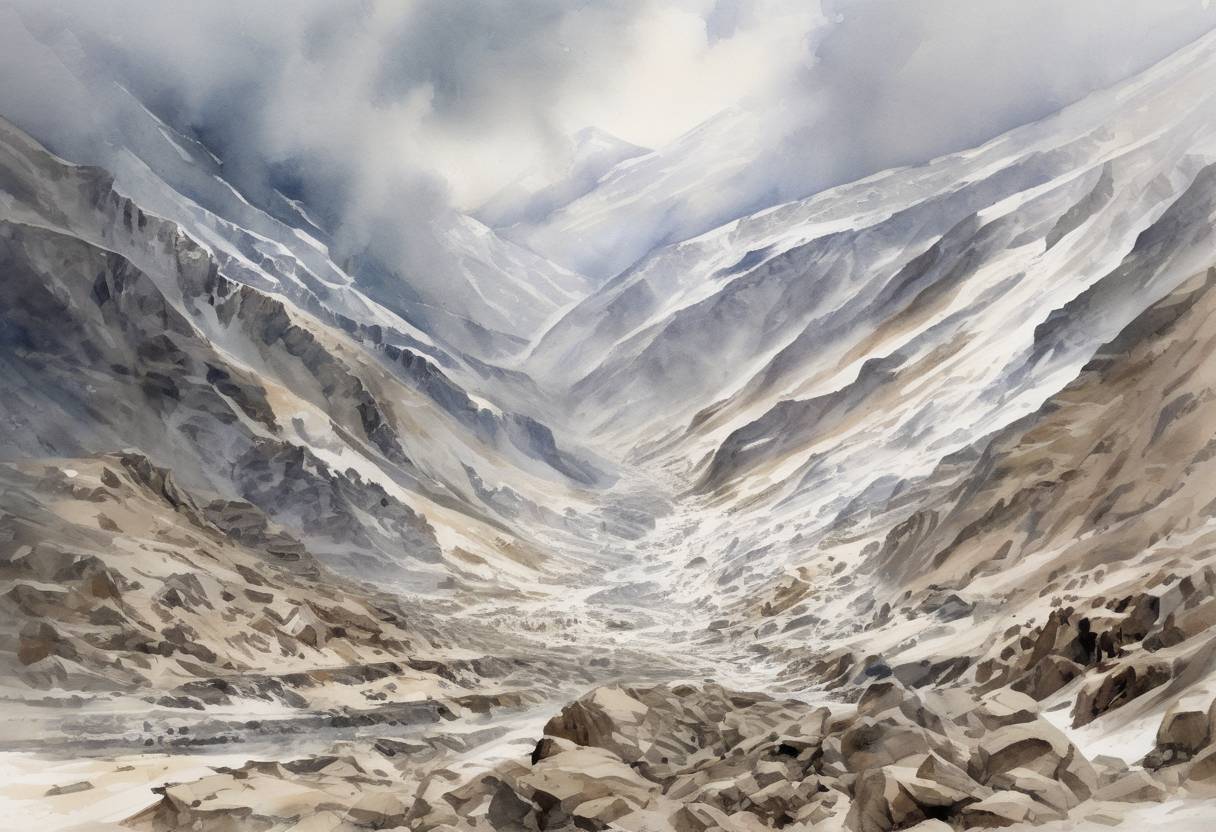
On February 8, 2010, a catastrophic series of avalanches struck the Salang Pass in the Hindu Kush mountains of Afghanistan. This tragic event resulted in the deaths of at least 172 people and left over 200 individuals buried under snow and debris.
The Salang Pass is a critical mountain pass that connects the northern and southern regions of Afghanistan. It is part of the Salang Tunnel, a vital transportation route that facilitates the movement of goods and people across the rugged terrain of the Hindu Kush. The pass is known for its harsh weather conditions, especially during winter months, making it susceptible to natural disasters such as avalanches.
On the day of the disaster, a freak storm swept through the region, triggering multiple avalanches along the Salang Pass. The avalanches were sudden and powerful, burying vehicles and travelers under tons of snow. The pass, which is situated at an elevation of approximately 3,400 meters (11,200 feet), became a scene of chaos and devastation.
In the aftermath of the avalanches, Afghan authorities, along with international aid organizations, launched a massive rescue operation. Despite the challenging weather conditions and the remote location, rescuers worked tirelessly to reach survivors. They used heavy machinery and manual labor to dig through the snow and debris.
The Afghan National Army, police forces, and local volunteers played crucial roles in the rescue efforts. Helicopters were deployed to airlift the injured to medical facilities, while ground teams continued to search for survivors and recover bodies.
The avalanches in the Salang Pass highlighted the vulnerability of Afghanistan’s infrastructure to natural disasters. The event underscored the need for improved disaster preparedness and response mechanisms in the region. The tragedy also drew international attention, prompting humanitarian aid and support for the affected communities.
In the broader context, the disaster served as a reminder of the challenges faced by Afghanistan due to its mountainous geography and the impact of severe weather conditions on its population.
The February 8, 2010, avalanches in the Salang Pass were a devastating natural disaster that claimed numerous lives and disrupted a critical transportation route in Afghanistan. The event emphasized the importance of enhancing infrastructure resilience and disaster response capabilities in regions prone to such natural calamities.
Source: www.bbc.com