The Abdication of Charles V: Division of the Habsburg Empire
1556 · Brussels, Belgium
Charles V, Holy Roman Emperor, abdicated his throne, leading to the division of the Habsburg Empire between his brother Ferdinand I and his son Philip II.
May 25, 1522
Emperor Charles V visits England accompanied by Henry VIII.
London, England | Holy Roman Empire
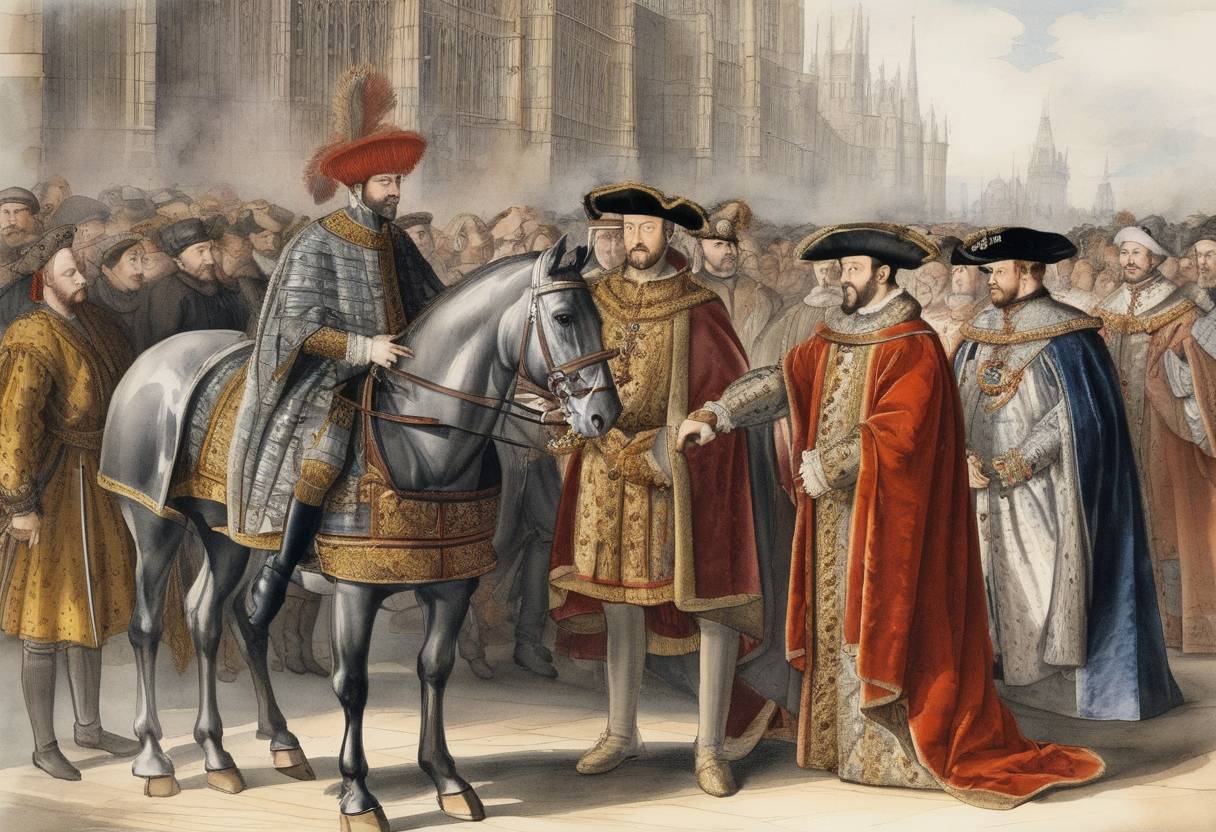
On May 25, 1522, Emperor Charles V of the Holy Roman Empire made a significant visit to England, underscoring the intricate web of European political alliances in the early 16th century. This visit came at a time when Europe was rife with power struggles, primarily between Charles V, King Francis I of France, and King Henry VIII of England.
Charles V, ruling over the expansive territories of the Holy Roman Empire and the Spanish Empire, was a dominant figure in European politics. His lineage as the grandson of Ferdinand and Isabella of Spain, and through his maternal side, Maximilian I, Holy Roman Emperor, positioned him at the center of dynastic and territorial disputes, especially against France.
Henry VIII, King of England, had his own interests. The English Crown was eager to assert influence in continental affairs and counterbalance French power. The marriage of Charles V’s aunt, Catherine of Aragon, to Henry VIII added a familial dimension to their political alliance.
Charles V’s visit to England was a diplomatic maneuver intended to solidify relations with Henry VIII amidst ongoing hostilities with France. This visit was part of Charles V’s broader strategy to secure allies against Francis I. Charles and Henry had already proclaimed a pact, the Treaty of Windsor, earlier in 1522, aligning themselves against France.
The meeting also held personal significance. Charles V aimed to maintain and strengthen his bond with his English aunt, Catherine of Aragon, still Henry’s wife at the time, before Henry’s notorious shift in marital preferences and eventual split with the Catholic Church.
Diplomatic Relations: The meeting reinforced the Treaty of Windsor, outlining military assistance against France and a proposed marriage alliance between Charles and Henry’s daughter, Princess Mary. Although this marriage did not come to fruition, it indicated mutual intentions of deeper alliance.
Military Alliances: An outcome of the visit was an agreement to recruit forces against the French, highlighting the military aspect of their alliance.
Cultural Exchange: The visit allowed for the exchange of ideas and cultural practices between two of Europe’s leading courts, which often facilitated broader diplomatic and economic interactions.
Long-term Implications: Though temporarily aligned, Henry VIII’s eventual annulment of his marriage to Catherine of Aragon contributed to the dissolution of the close relations with Charles V. This schism played a role in England’s religious and political shifts during the Reformation.
The alliance forged during Charles V’s visit ultimately proved fragile. Over the following decades, changing political landscapes, religious upheavals, and personal ambitions led to shifts in alliances. However, this 1522 meeting remains a significant episode in the intricate dance of European diplomacy during the Renaissance period, illustrating the blend of personal relationships and political strategy at play in shaping history.
Source: en.wikipedia.org