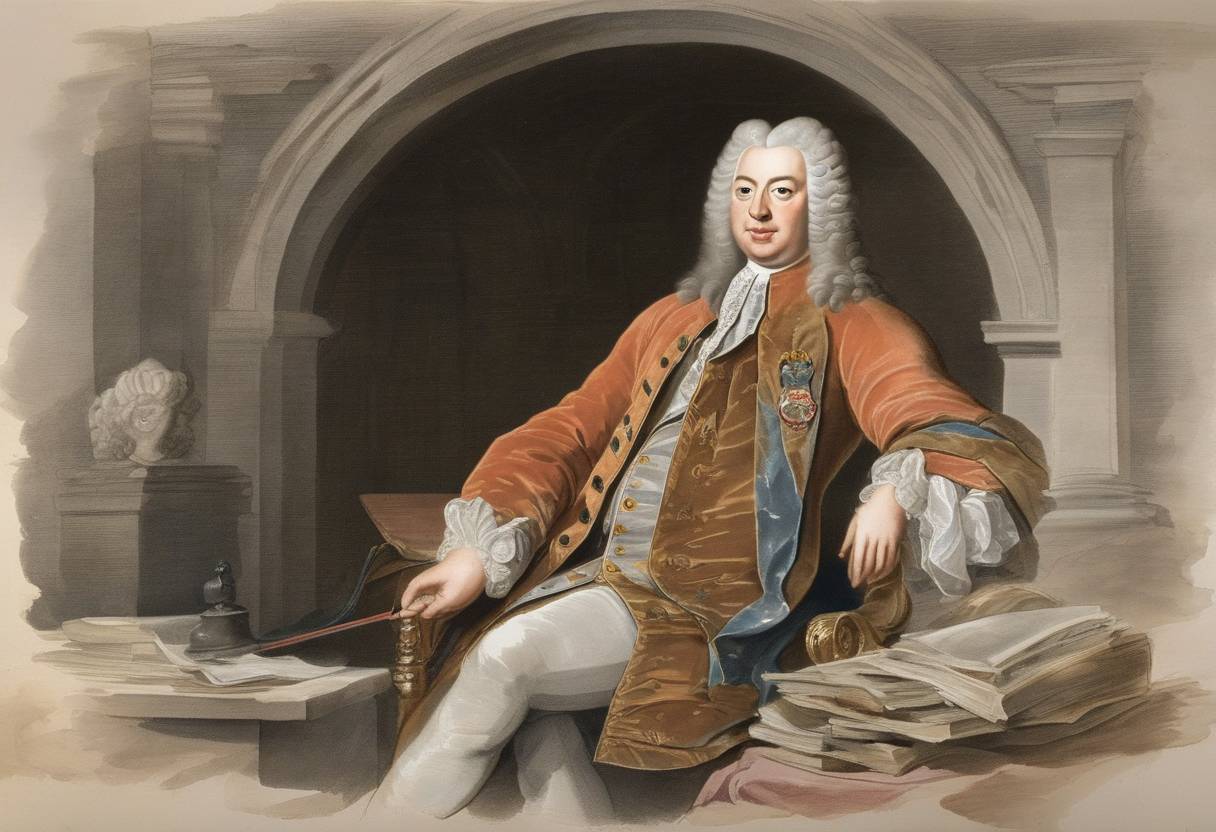
Robert Walpole: Ascension to Leadership
On April 3, 1721, Robert Walpole effectively became the first Prime Minister of Great Britain, although the formal title was not established at the time. His leadership began when he assumed the roles of First Lord of the Treasury, Chancellor of the Exchequer, and Leader of the House of Commons. These positions gave him the preeminent control over the Cabinet, allowing him to shape government policy in a manner akin to that of a modern prime minister.
Context and Background
The political environment before Walpole’s rise was tumultuous. The South Sea Bubble, a disastrous financial speculative crisis that peaked in 1720, had shaken the stability of the British government and public confidence. Many government officials were implicated in the fallout, leading to a demand for more stable leadership. Walpole, known for his fiscal acumen and political tact, was perceived as someone who could restore stability and trust.
Walpole’s Path to Power
Born in 1676, Robert Walpole entered politics as the Whig Member of Parliament for Castle Rising in 1701, later representing King’s Lynn. He gained reputation as a skilled politician and financier, serving as Secretary of War from 1708 to 1710 and Treasurer of the Navy before being appointed to the Treasury. When troubles arose from the South Sea scandal, Walpole’s previous governmental experience and relatively untarnished record made him an ideal candidate for leadership. He became the government’s leading figure on April 3, 1721, when he was effectively entrusted with managing the nation’s finances and government policies.
Governing Philosophy and Achievements
Walpole’s tenure was marked by efforts to heal the economic wounds inflicted by the South Sea Bubble. He implemented policies aimed at fiscal recuperation, reducing the national debt and stabilizing the economy. His motto, “Let sleeping dogs lie,” reflected his approach to governance—aiming to maintain peace and avoid controversial issues. Walpole steered Britain through internal and external challenges by promoting peace, particularly in foreign policies, and strengthening trade.
Legacy and Historical Significance
Walpole served as the de facto prime minister until 1742, making him the longest-serving holder of the position in British history. His leadership set precedent for the office of Prime Minister, shaping the political landscape of Britain. He established the principle of Cabinet solidarity and the concept that the leader of the government could come from the House of Commons, rather than the more traditionally powerful House of Lords. Robert Walpole’s governance effectively laid the foundations of the modern system of government in Britain, and his influence is recognized in the establishment of the office of Prime Minister.