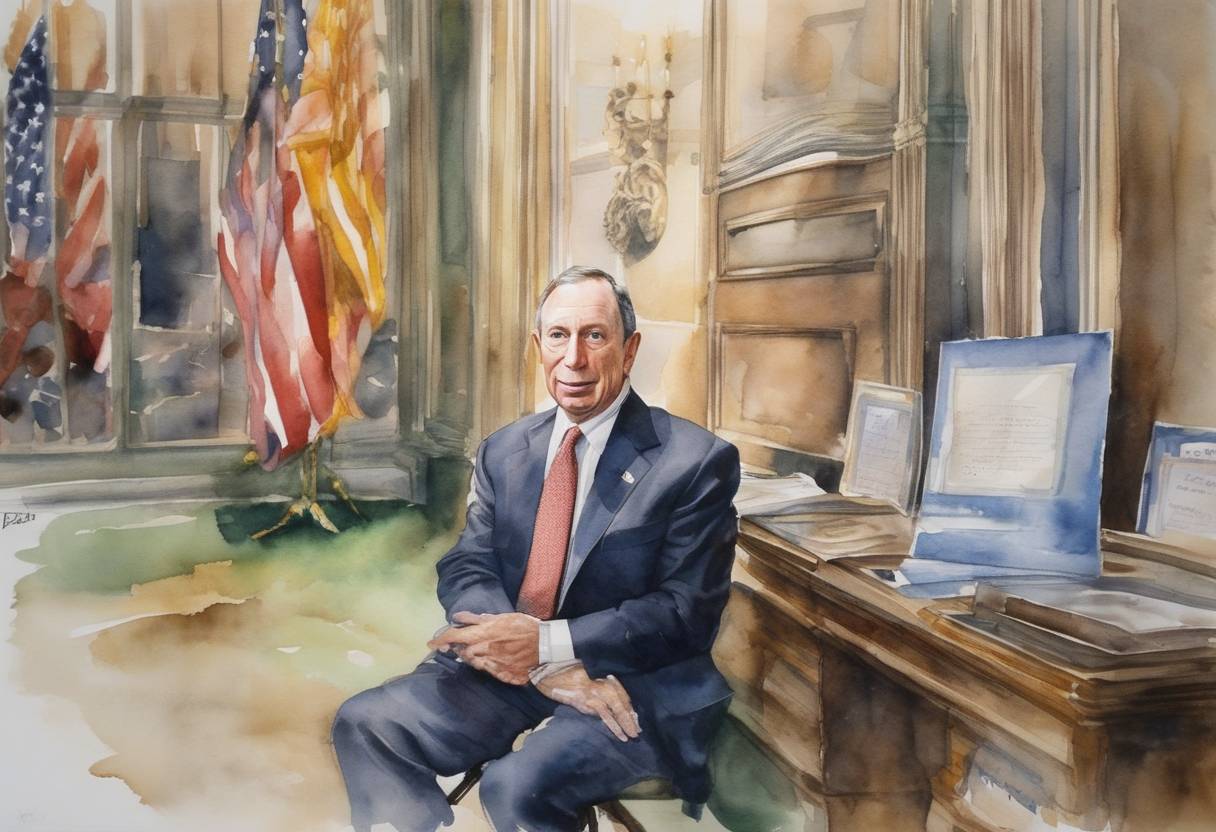
Michael Bloomberg Elected 108th Mayor of New York City
On November 6, 2001, Michael Bloomberg was elected as the 108th Mayor of New York City, marking the beginning of a significant era in the city’s governance. While the election took place on November 6, rather than October 30 as noted, Bloomberg’s victory would lead to a transformative period for the city.
Context and Background
- Aftermath of 9⁄11: The election occurred in the shadow of the September 11 attacks, an event that had profoundly impacted New York City. The terrorist attacks had left the city in need of strong leadership to navigate its recovery, both economically and socially.
- Predecessor: Bloomberg succeeded Rudy Giuliani, who had gained significant attention for his leadership following the 9⁄11 attacks.
Election Details
- Political Affiliation: Initially a lifelong Democrat, Bloomberg registered as a Republican in 2001 to enter the mayoral race. His candidacy was supported by his successful career as a businessman, particularly his role in founding the financial services and media company, Bloomberg L.P.
- Opponents: Bloomberg ran as a Republican, defeating Democratic candidate Mark Green in a closely contested race.
Significance of Bloomberg’s Tenure
- Three-Term Tenure: Although New York City mayors traditionally serve two terms, Bloomberg successfully campaigned for a term limit extension, allowing him to serve three consecutive terms from 2002 to 2013.
- Policy Initiatives: His administration focused on numerous initiatives, including public health improvements, education reform, and urban development projects. Bloomberg is notably recognized for his efforts to enhance the city’s public health, such as implementing the smoking ban in bars and restaurants and advocating for healthier food options.
- Economic Growth: Under Bloomberg’s leadership, New York City experienced significant economic growth and urban development, though his policies often sparked debates regarding their impacts on different communities.
Legacy
- Impact on New York City: Bloomberg’s terms in office left a lasting imprint on New York City’s infrastructure, economic policies, and public health regulations. His leadership style, which emphasized data-driven decision-making and pragmatism, has influenced subsequent city administrations. His tenure is often reviewed with regard to its long-term effects on the city’s economic and social landscape.
Conclusion
Bloomberg’s election as mayor symbolized a period of transition and modernization for New York City post-9⁄11. His business-minded approach to leadership and focus on urban renewal positioned the city on a path of resilience and growth amidst challenges.