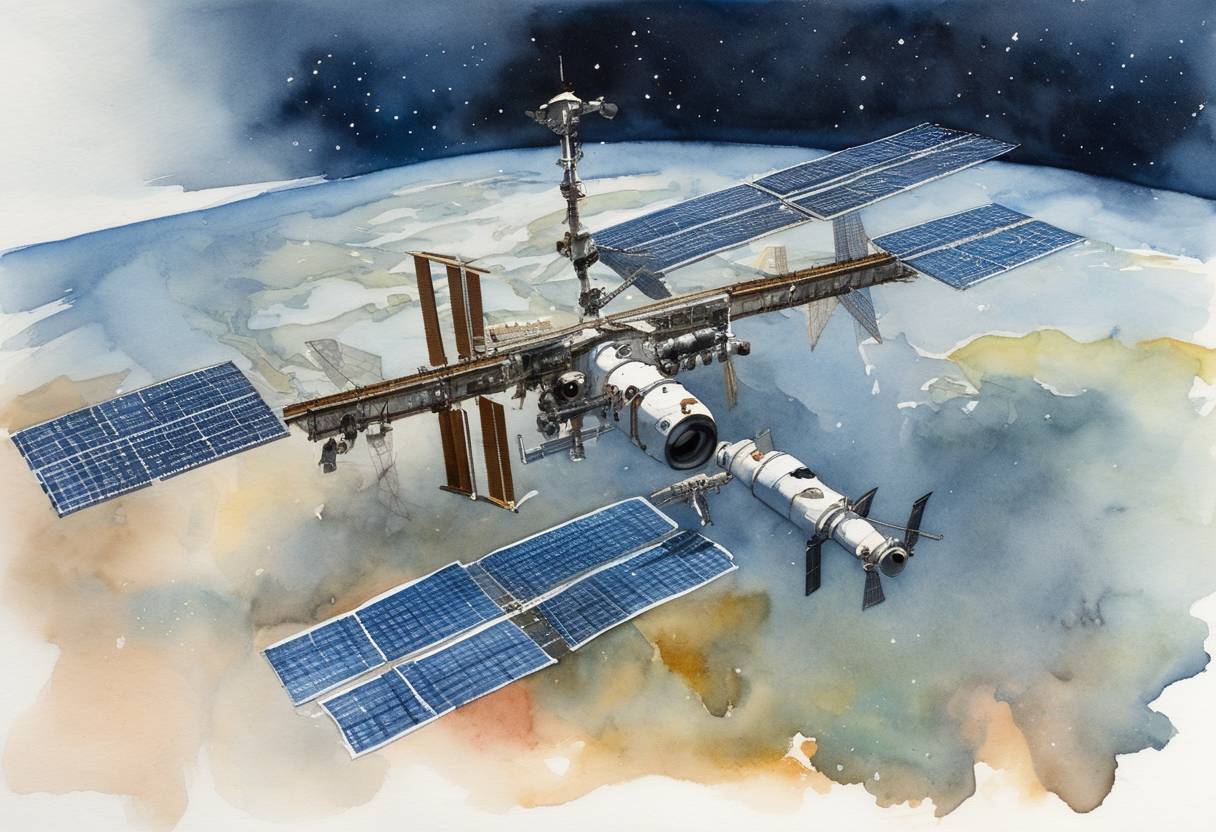
International Space Station Milestone: 57,361 Orbits
On October 22, 2010, the International Space Station (ISS) achieved a remarkable milestone by completing 57,361 orbits around the Earth since its first component was launched in 1998. The ISS represents a monumental achievement in human space exploration and international cooperation, bringing together space agencies from the United States, Russia, Europe, Japan, and Canada.
Historical Context
Launch and Assembly: The ISS began its journey on November 20, 1998, with the launch of the Zarya module by a Russian Proton rocket. This module served as the first building block of the station’s complex assembly in orbit.
International Partnership: The ISS construction was made possible through collaboration among the National Aeronautics and Space Administration (NASA), Roscosmos, the European Space Agency (ESA), the Japan Aerospace Exploration Agency (JAXA), and the Canadian Space Agency (CSA).
Key Features of the ISS
Research Capabilities: The ISS serves as a unique laboratory for scientific research across a wide range of disciplines, including biology, human biology, physics, astronomy, and meteorology.
Human Presence: The station has been continuously occupied since November 2000, providing a permanent human presence in space for scientific research and international cooperation.
Technological Innovations: The ISS has facilitated advances in technology related to long-duration human spaceflight, which are crucial for future deep-space missions.
Significance of the Milestone
The completion of 57,361 orbits by the ISS by this date is indicative of its solid construction and the seamless international collaboration that has maintained its operation. Each orbit of approximately 90 minutes demonstrates the rigorous capabilities of the station to function effectively in the harsh environment of space. This milestone underscores the success of collective human endeavors in pushing the boundaries of exploration and science beyond Earth.
Impact and Legacy
Inspirational Value: The continuous operation of the ISS serves as a beacon of international scientific cooperation, demonstrating what collective effort can achieve in peaceful exploration.
Future Endeavors: The knowledge gained from the ISS supports future missions aimed at Moon bases, Mars exploration, and deeper space destinations, providing crucial data on the effects of long-term space travel on the human body.
Overall, reaching such a significant number of orbits highlights the ISS’s enduring legacy as a platform for scientific advancement and a symbol of unity among the world’s leading space agencies.