Dissolution of the League of Nations
1946 · Geneva, Switzerland
The League of Nations officially dissolved, transferring most of its functions to the newly established United Nations.
March 5, 1912
The first International Opium Convention, aimed at combating the opium trade and drug addiction, comes into effect.
The Hague, Netherlands | League of Nations
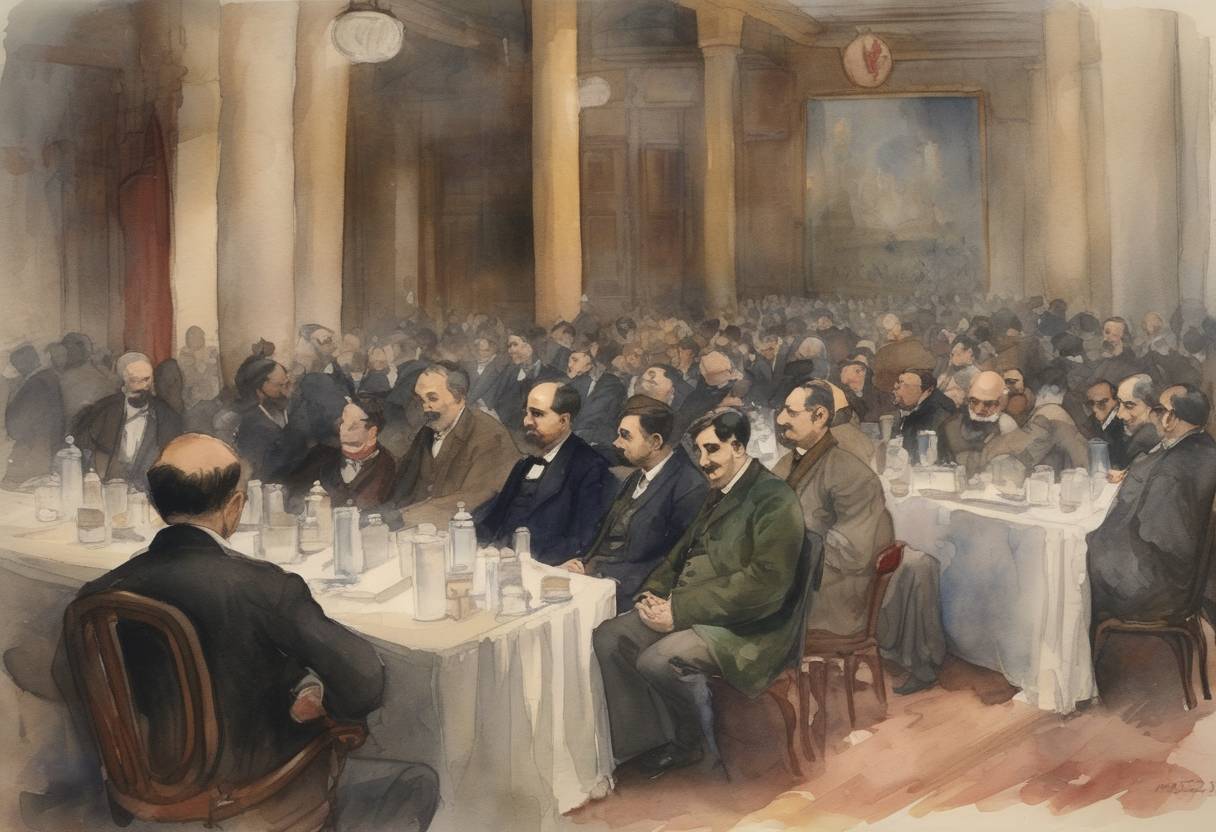
The International Opium Convention that came into effect on March 5, 1912, was a landmark treaty that marked the world’s first international attempt to control narcotic drugs. This agreement, concluded on January 23, 1912, in The Hague, Netherlands, was initiated in response to growing concerns over the widespread use and trade of opium and other drugs, and it represented an early step toward the establishment of international drug control.
During the late 19th and early 20th centuries, the global opium trade was proliferating, contributing to significant social and health issues across the world. In parts of Asia, especially China, opium addiction became a severe public health crisis. Western nations, including colonial powers that cultivated or traded opium, increasingly recognized both the ethical and practical implications of the drug trade, leading to internal discussions about international cooperation to address these problems.
The need for regulatory control became evident, not only to improve public health but also to address the opium-related issues impacting international relations and colonial administration.
The 1912 Convention laid the foundation for international legal measures to limit the manufacture, distribution, and use of opium and its derivatives, including morphine and heroin. Its primary objectives included:
Regulation of the Opium Trade: Countries agreed to enact measures to curtail the production and distribution of opium and its derivatives. The focus was on reducing the non-medical and non-scientific use of these substances.
International Cooperation: Signatory countries committed to cooperate in controlling the opium traffic, setting an important precedent for future international drug control efforts.
Framework for Monitoring: Although the convention did not establish an enforcement mechanism, it laid the groundwork for future international monitoring and regulation of narcotic drugs.
The implementation of the International Opium Convention in 1912 paved the way for subsequent international treaties aimed at drug control, such as the 1925 and 1931 conventions, eventually leading to the establishment of comprehensive international drug control machinery administered by the United Nations.
This initial agreement signaled the start of a global effort to coordinate drug policy and set an enduring precedent for international cooperation on combating illicit drug trade and addiction. The treaty highlighted the need for international legal frameworks to address transnational issues that impact global health and security and laid down principles that continue to inform contemporary drug policy debates and enforcement strategies.
While the 1912 International Opium Convention marked a modest beginning, its coming into effect reflected a significant shift in international consensus towards acknowledging and addressing the complexities of narcotics control. The legacy of this convention can be seen in today’s still ongoing efforts to manage drug production, trafficking, and consumption, as well as the continuing challenges faced by nations in combating the illicit drug problem.
Source: en.wikipedia.org