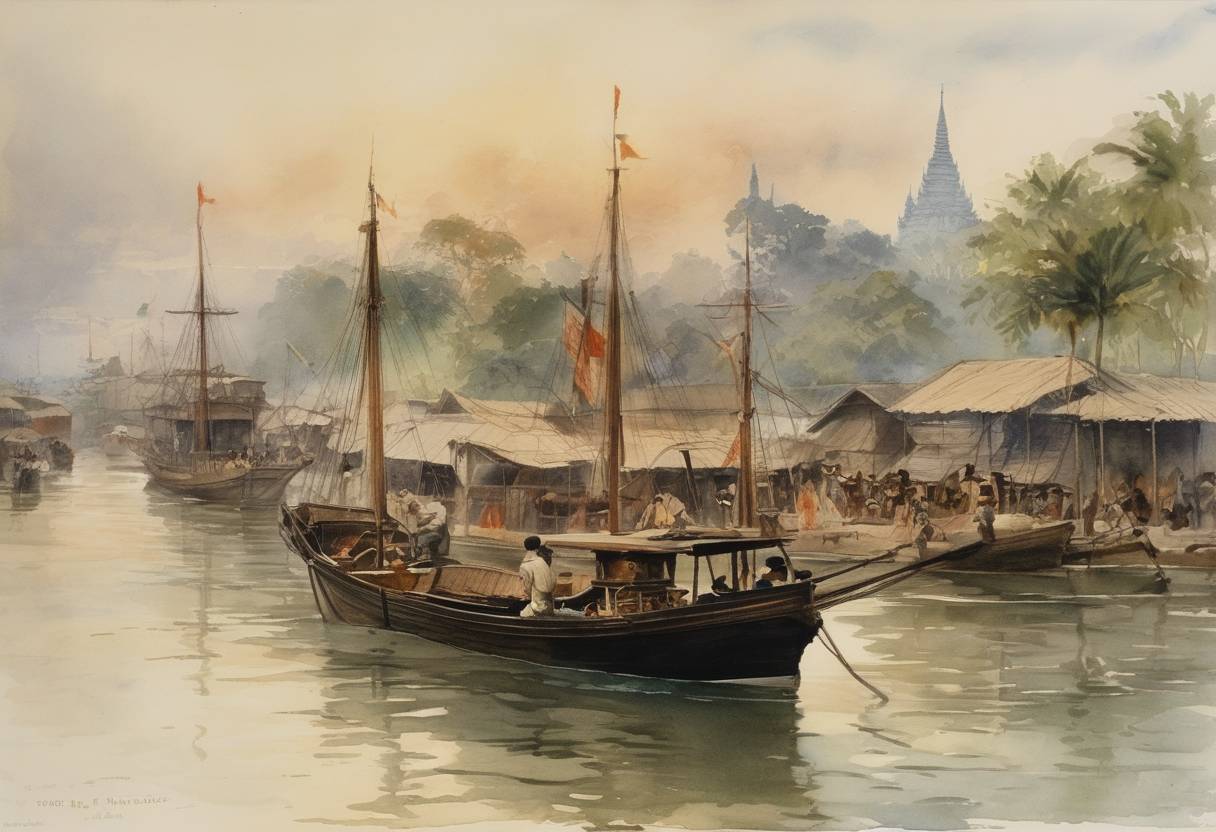
British Ultimatum to Siam on August 3, 1894
On August 3, 1894, the British government issued an ultimatum to the Kingdom of Siam (modern-day Thailand). This demand was a significant event stemming from the geopolitical tension in Southeast Asia during the late 19th century, notably after the conclusion of the Franco-Siamese War.
Context of the Ultimatum
- Franco-Siamese War (1893): The Franco-Siamese War had recently concluded, initiated over contested territories in Laos between France, which was expanding its colonial empire in Indochina, and Siam, which was attempting to maintain its sovereignty and control over its territories.
- France’s Influence: As a result of the war, France gained control over parts of Laos, significantly increasing its influence in the region and posing a strategic threat to British interests, particularly concerning British Burma.
The Ultimatum
- British Concerns: The British, keen to protect their colonial interests, particularly in Burma, were wary of French advances in the region. The expansion of French power threatened the balance of power that Britain was attempting to maintain in Southeast Asia.
- Demands: The ultimatum demanded that Siam cede certain territories, mostly in the Malay Peninsula, and comply with a series of conditions to ensure that British interests were safeguarded, and any advantage to France was mitigated.
Broader Implications
- Balance of Power: This move by Britain reflects the broader geopolitical maneuvering and colonial rivalry between European powers in Southeast Asia.
- Diplomatic Relations: The ultimatum highlighted the delicate diplomatic dance that Siam had to perform as it balanced relationships with European powers to maintain its sovereignty and territorial integrity.
- Survival Tactics: Siamese King Chulalongkorn implemented significant reforms and engaged in complex diplomacy with both France and Britain to ensure the kingdom was not colonized, successfully keeping Siam independent throughout the colonial period.
Aftermath
- Siamese Strategy: In the years following, Siam continued to modernize and reform its military, administrative, and economic systems to reduce the threat of foreign domination.
- Long-term Impact: The events of this time period set the stage for the 20th century where Siam/Thailand steadily transformed into a more centralized and resilient nation-state amid colonial pressures.
The British ultimatum to Siam on August 3, 1894, is a pivotal example of the colonial pressures and diplomatic strategies of the era, reflecting the challenges faced by non-European states in maintaining their sovereignty against expanding European empires.