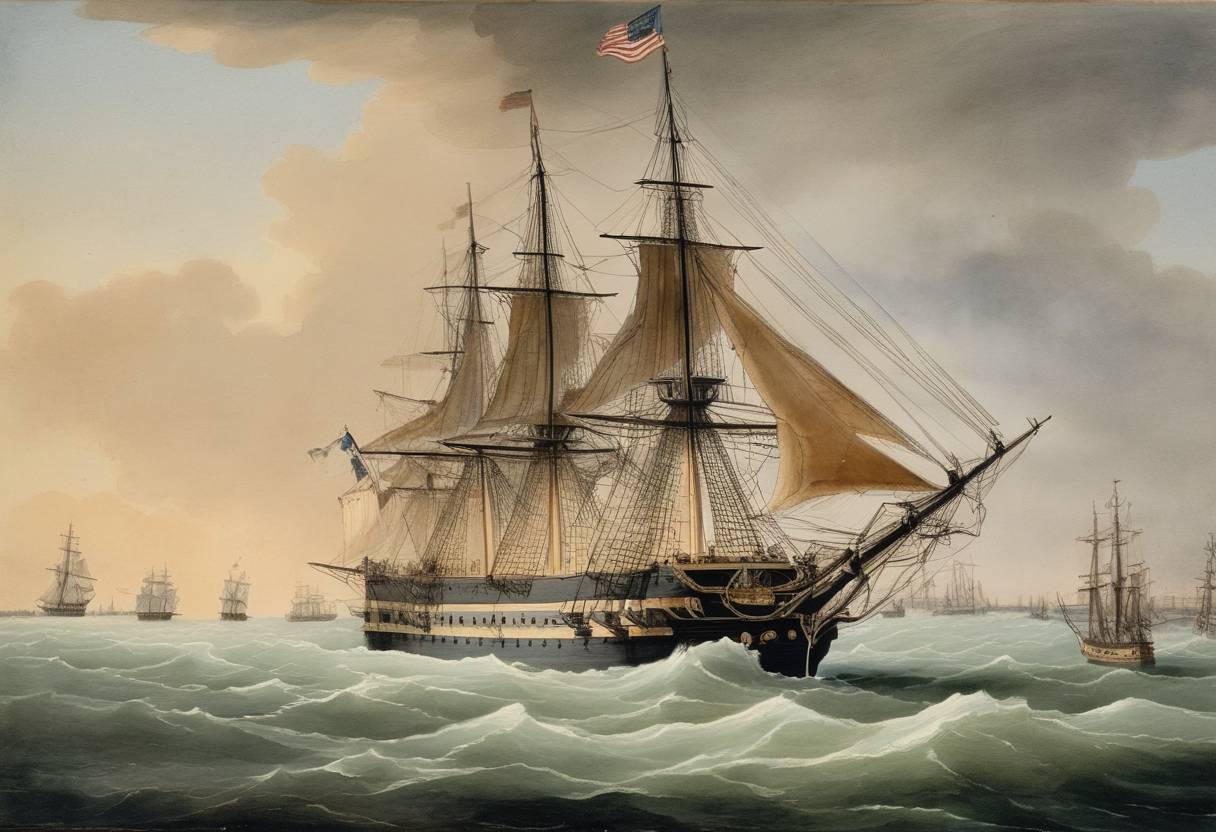
The Navy Act of 1794
On March 30, 1794, President George Washington signed the Navy Act, a significant legislative measure that laid the groundwork for the establishment of the United States Navy. The act authorized the construction of six frigates, addressing the need for a standing maritime force to protect the burgeoning nation’s interests.
Context and Background
Following the American Revolutionary War, the United States had largely dismantled its naval forces due to financial constraints and a reduction in immediate threats. However, by the early 1790s, concerns about piracy and international trade security reached critical levels. American merchant vessels were increasingly threatened by the Barbary pirates operating along the North African coast, as well as by British and French forces amid the Napoleonic Wars.
Passage of the Act
Recognizing the necessity of naval protection, Secretary of War Henry Knox advocated for the rebuilding of the navy. The U.S. Congress subsequently debated various proposals, culminating in the Navy Act of 1794. This act provided for a substantial allocation of funds to construct the frigates, each designed to carry 44 guns and be capable of long-range voyages. This legislation marked a decisive shift toward reestablishing a formidable naval presence.
The Six Frigates
The Navy Act specifically authorized the construction of six frigates, which would become the cornerstone of the new U.S. Navy:
- USS United States
- USS Constellation
- USS Constitution
- USS Chesapeake
- USS Congress
- USS President
These ships were designed by the naval architect Joshua Humphreys and were intended to be larger and more heavily armed than typical frigates at the time, giving them the dual capability of speed and firepower.
Significance and Aftermath
The Navy Act of 1794 was pivotal in ensuring the security of American trade and sovereignty. The construction of the frigates facilitated not only the protection of U.S. maritime interests but also underscored the nation’s commitment to maintaining a competent and adaptive military. USS Constitution, one of the original six, famously earned the nickname “Old Ironsides” and remains a symbol of American naval heritage.
The signing of this act marked the official establishment of a permanent naval force, ensuring the U.S. could project power and defend its interests on the high seas. This initiative initiated a legacy of naval strength that would expand as the nation grew, influencing U.S. military policies for centuries thereafter.