Mount Vesuvius Eruption of April 7, 1906
1906 · Naples, Italy
Mount Vesuvius erupts and devastates Naples, Italy.
November 23, 1733
The 'Gentleman’s Magazine' reports an eruption of Mount Vesuvius, a significant volcanic event in Italy.
Naples, Italy | Gentleman's Magazine
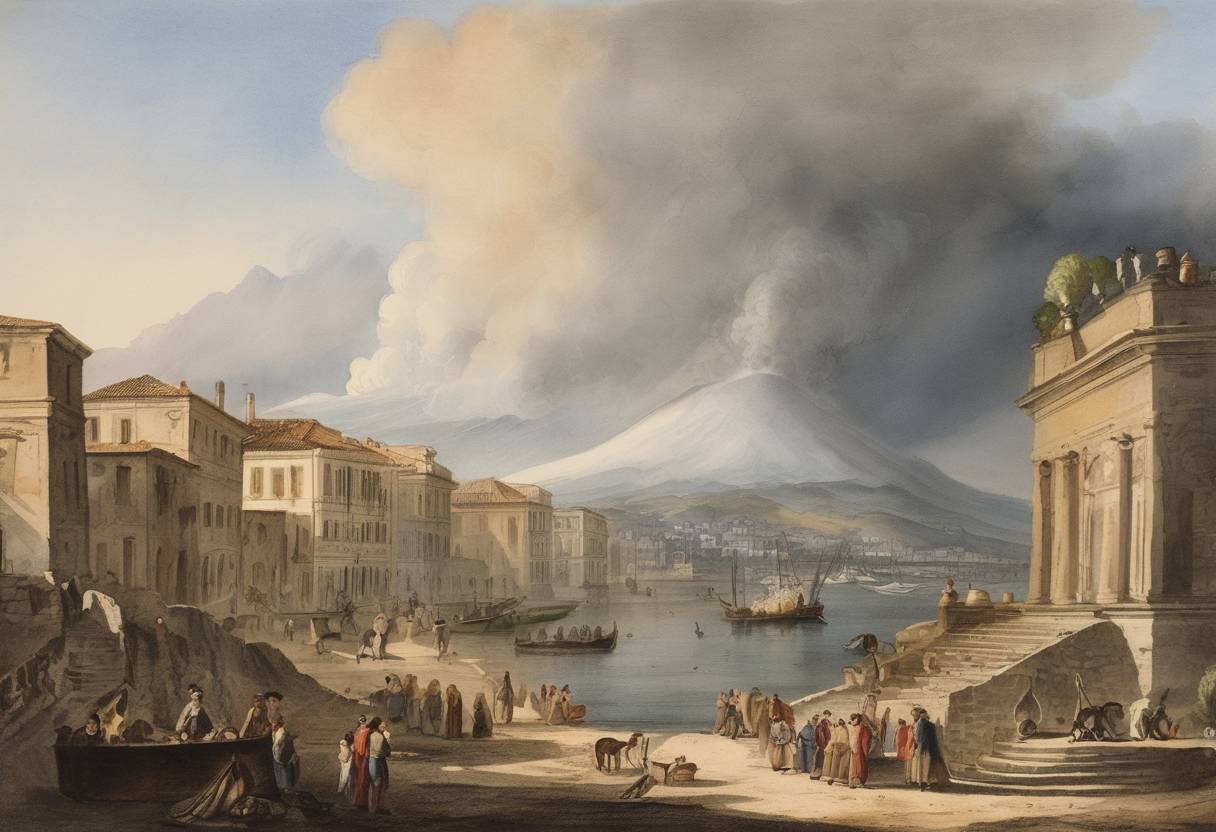
On November 23, 1733, Mount Vesuvius, Italy, experienced a significant volcanic eruption, as reported by various contemporary sources, including the ‘Gentleman’s Magazine’. Vesuvius, famous for its catastrophic eruption in 79 AD that buried the cities of Pompeii and Herculaneum, continued to be active throughout history. The eruption in 1733 was one of several significant eruptions of this infamous volcano.
Mount Vesuvius is a stratovolcano located on the Gulf of Naples in southern Italy. It is part of the Campanian volcanic arc, a region known for its geological activity due to the subduction of the African plate beneath the Eurasian plate. Its eruptions have had a lasting impact on the region both economically and socially.
The ‘Gentleman’s Magazine’, a periodical which provided contemporary accounts of events from around the world, noted the eruption in its publication. While details may vary due to the nature of record-keeping at that time, reports from November 1733 indicate that the eruption was marked by the emission of ash and smoke. The eruption likely caused some alarm among local populations who still lived with the memories of previous catastrophic volcanic activities.
Eruptions of Vesuvius during this period were often characterized by explosive activity, ash fallout, and lava flows, affecting surrounding areas’ agricultural land and settlements. The exact scale of the 1733 event in comparison to others during the 18th century remains less documented, but such volcanic activity nonetheless played a critical role in shaping the cultural and physical landscape of the Campania region.
Life around Vesuvius was heavily influenced by these periodic eruptions. The communities around its base had learned to adapt to the threat of volcanic activity. The frequent eruptions during this century provided continual reminders of the volatility of the region and influenced everything from agricultural practices to architectural styles designed to withstand seismic tremors and ash fallout.
This event served as yet another testament to the power of Mount Vesuvius and highlighted the constant threat that the volcano posed to the safety and stability of nearby populations. Subsequently, monitoring Vesuvius became an important activity, contributing to an early understanding of volcanic behavior that would lay the foundations for modern volcanology.
The eruption is part of the larger tapestry of Vesuvius’s historical activity. Each event has contributed to the scientific understanding of stratovolcano systems. The study of these eruptions has informed disaster preparedness and response strategies that are crucial for the dense populations now residing around the volcano. Today, Vesuvius remains one of the most closely monitored volcanoes in the world due to its history and the potential threat to the nearby metropolitan area of Naples.
Source: volcano.si.edu