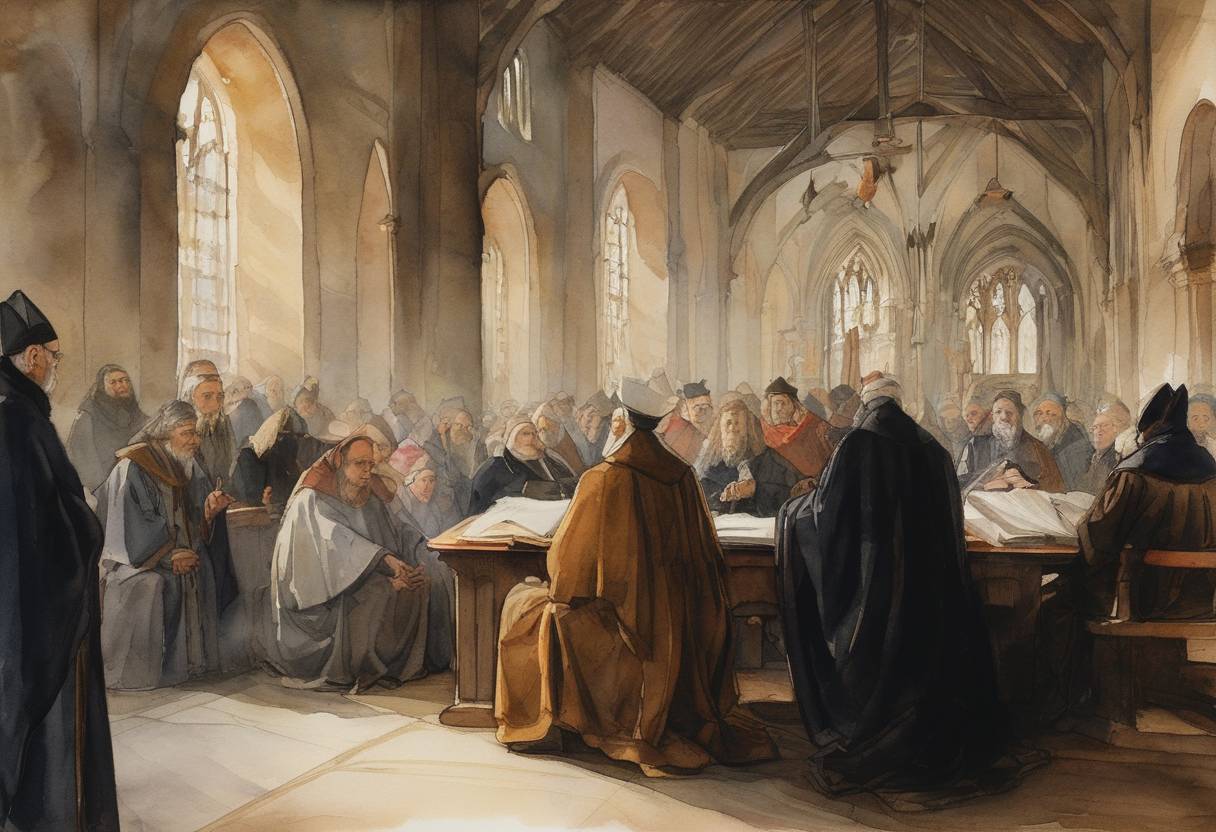
The Synod of Breslau: February 9, 1267
The Synod of Breslau, which convened on February 9, 1267, was a significant ecclesiastical assembly under the leadership of Bishop Thomas of Wrocław. This synod was part of a broader movement within the medieval Catholic Church aimed at addressing various issues related to clerical conduct and religious practices, during a time marked by efforts to reform and centralize church authority.
Context and Background
By the mid-13th century, the Catholic Church was undergoing a period of introspection and change, spurred by earlier reforms of the Gregorian reform movement. These reforms sought to address corruption and increase the moral and spiritual authority of the Church. In Silesia, where Wrocław (Breslau) is located, these issues were particularly pronounced due to the region’s political fragmentation and cultural diversity.
Key Agenda and Decisions
The Synod of Breslau focused on several key issues:
Clerical Conduct: The synod tackled problems associated with clerical immorality and lax discipline among priests. Measures were introduced to improve clerical discipline and ensure adherence to the vows of celibacy and poverty.
Liturgical Practices: One of the major topics was standardizing and improving liturgical practices to ensure that religious services adhered to the regulations set by the church hierarchy. This included recommendations for the uniform celebration of mass and sacraments.
Educational Reforms: Emphasis was placed on improving the education of the clergy, mandating that they receive adequate theological and pastoral training to better serve their congregations.
Administrative Reforms: Efforts were made to strengthen the administrative structures within the diocese. This included streamlining the responsibilities of parish leaders and enhancing the effectiveness of church councils.
Impact and Aftermath
The decisions made at the Synod of Breslau had lasting impacts on the local religious landscape. The reforms contributed to a more cohesive and disciplined ecclesiastical structure in Wrocław and surrounding areas. By addressing both moral and administrative concerns, the synod played a pivotal role in promoting ecclesiastical renewal that would influence other regions in Central Europe.
While the reforms aimed for immediate implementation, their full effect on church practices and lay people took years, if not decades, to manifest. The synod’s work laid a foundation for future ecclesiastical assemblies throughout Poland and the broader Holy Roman Empire, helping to shape the medieval Catholic Church’s evolving structure.