Israel Hands Over Control of Jericho to the Palestinian Authority
2005 · Jericho, Palestine
Israel officially handed over control of Jericho to the Palestinian Authority as part of the peace process.
January 19, 1997
Yasser Arafat returned to Hebron after more than 30 years and joined celebrations over the signing of the Hebron Protocol, which called for the redeployment of Israeli troops in Hebron.
Hebron, Palestine | Palestinian Authority, Israeli government
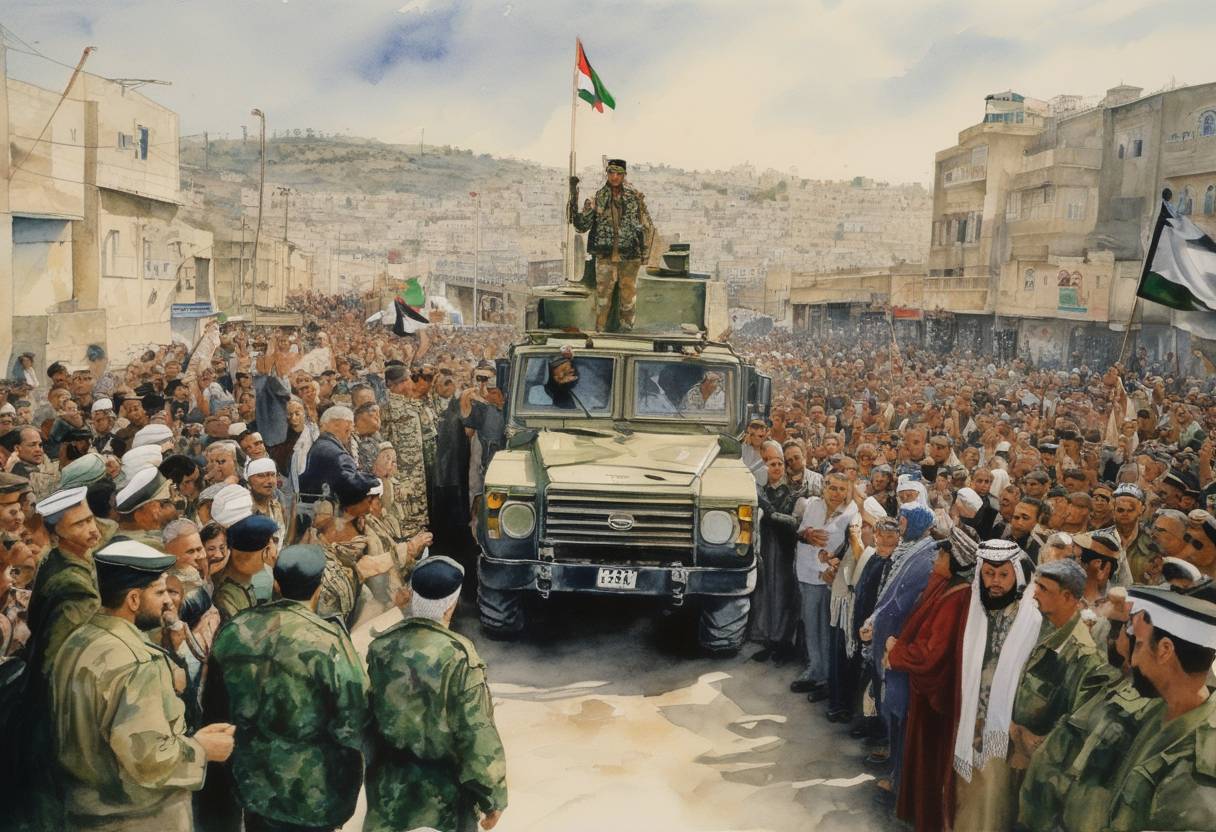
On January 19, 1997, Yasser Arafat, the leader of the Palestine Liberation Organization and the President of the Palestinian Authority, made a significant and symbolic return to the city of Hebron after more than three decades. This return was celebrated amidst public festivities following the signing of the Hebron Protocol, a crucial development in the Israeli-Palestinian peace process.
The Hebron Protocol was an agreement reached as part of the broader Oslo Accords framework, designed to advance peace negotiations and address the contentious issue of Hebron. On January 15, 1997, Israeli Prime Minister Benjamin Netanyahu and Yasser Arafat finalized the protocol, which mandated the redeployment of Israeli Defense Forces (IDF) from parts of Hebron, one of the largest cities in the West Bank and the only Palestinian city with a Jewish enclave in the midst of its population.
The Hebron Protocol was a pivotal moment in the ongoing peace efforts between Israelis and Palestinians, marking the first instance of the IDF formally stepping back from a major West Bank city as part of negotiated agreements. Hebron had been a focal point of tension and conflict, with deep historical and religious significance to both Jews and Muslims.
Arafat’s return to Hebron was not only a political milestone but also a powerful symbol to Palestinians, reflecting progress toward greater autonomy and control over their cities as envisioned in the Oslo Accords. For many Israelis, the redeployment evoked concern for the security of the Hebron Jewish community but was a necessary step in attempting to realize a viable peace agreement.
The success of the Hebron Protocol hinged on the effective implementation of its provisions and the ability of both parties to adhere to their commitments. While it represented a moment of optimism, challenges remained in the broader peace process. Future negotiations often faced setbacks due to mutual mistrust, ongoing violence, and political dynamics within both Israeli and Palestinian communities.
The developments in Hebron in 1997 continue to impact the region—illustrating the complexity and enduring nature of the Israeli-Palestinian conflict.
Source: www.nytimes.com