The Hay-Bunau-Varilla Treaty: November 18, 1903
1903 · Washington, D.C., United States
The Hay-Bunau-Varilla Treaty was signed, granting the United States the rights to build the Panama Canal.
August 2, 1858
The United Kingdom and the United States signed the Clayton–Bulwer Treaty, which resolves some territorial disputes between the two countries, particularly regarding Central America and the construction of any future canal across the Isthmus of Panama.
Washington, D.C., United States | Government of the United States and Government of the United Kingdom
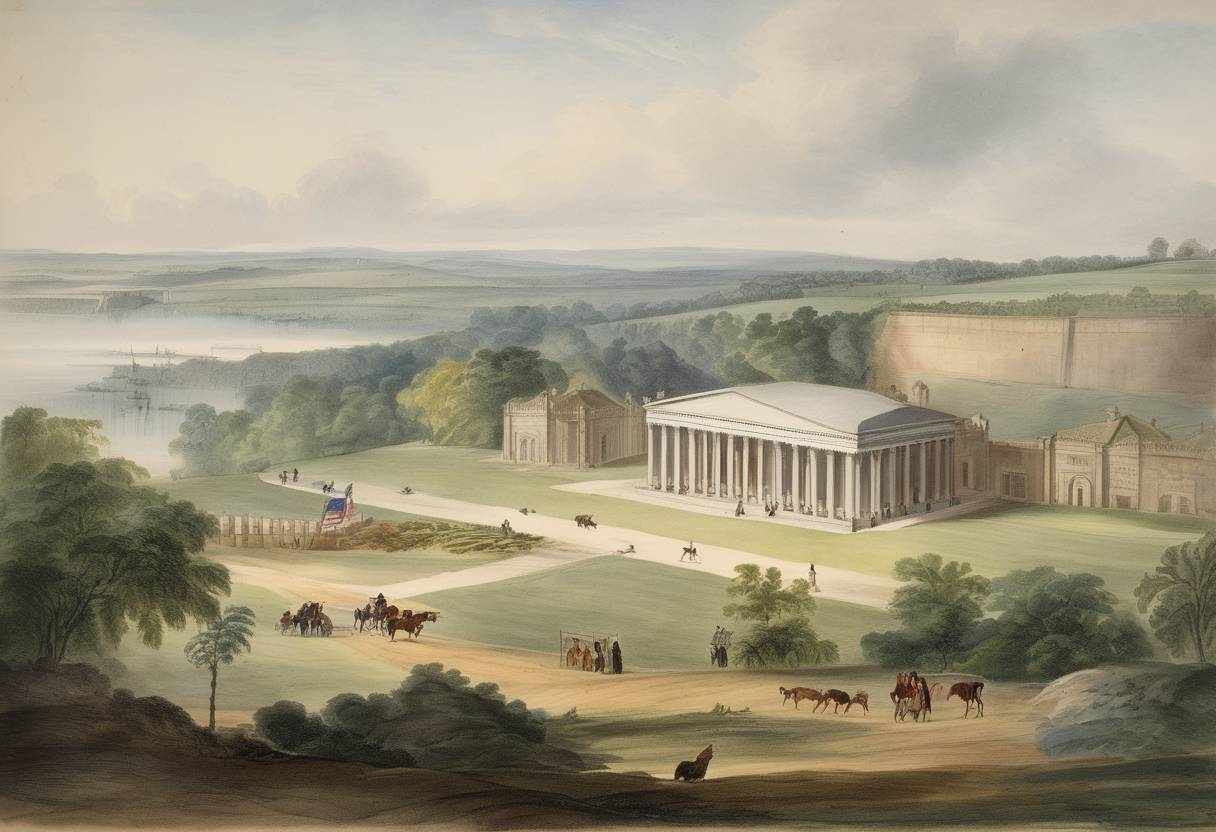
The Clayton–Bulwer Treaty was signed on April 19, 1850. There appears to be a discrepancy in the date you provided, as no relevant treaties involving the UK and US with a similar name were signed on August 2, 1858. Nevertheless, this treaty, concluded in 1850, was a significant agreement between the United Kingdom and the United States that aimed to address territorial disputes over Central America.
During the mid-19th century, both the United States and the British Empire were interested in establishing a route across Central America that would facilitate international maritime trade. The potential construction of a canal through the Isthmus of Panama was of particular interest due to its strategic significance in connecting the Atlantic and Pacific Oceans.
Neutrality of the Canal: The treaty stipulated that neither the United States nor the United Kingdom would fortify, colonize, or exercise exclusive control over any canal that might be constructed across Central America, ensuring its neutral availability to all nations.
Joint Effort in Construction: Both nations agreed that any canal, though undertaken under neutral conditions, would be a joint British-American endeavor if realized.
Soveignty and Control: Neither country would seek to extend their control over any part of Central America or secure exclusive rights over the proposed canal routes.
The Clayton–Bulwer Treaty highlighted the importance of Central America’s geographic position and the emerging global focus on the future construction of a canal. It reflects the diplomatic efforts to avoid conflict over imperial interests in a region seen as critical to future global maritime commerce.
Later Developments: The treaty eventually became a source of tension, as U.S. interests in constructing the canal independently increased. This led to the Hay-Pauncefote Treaty in 1901, which effectively superseded the Clayton–Bulwer Treaty, allowing the United States to construct and control the Panama Canal.
Historical Impact: The initial agreement underscored early cooperative strategies between imperial powers and influenced the eventual design and administration of one of the most important maritime infrastructures of the 20th century.
Source: en.wikipedia.org