The Opening of the Golden Gate Bridge to Pedestrian Traffic
1937 · San Francisco, United States
The Golden Gate Bridge in San Francisco, California, is opened to pedestrian traffic.
January 5, 1933
Construction of the Golden Gate Bridge begins.
San Francisco, United States | Golden Gate Bridge, Highway and Transportation District
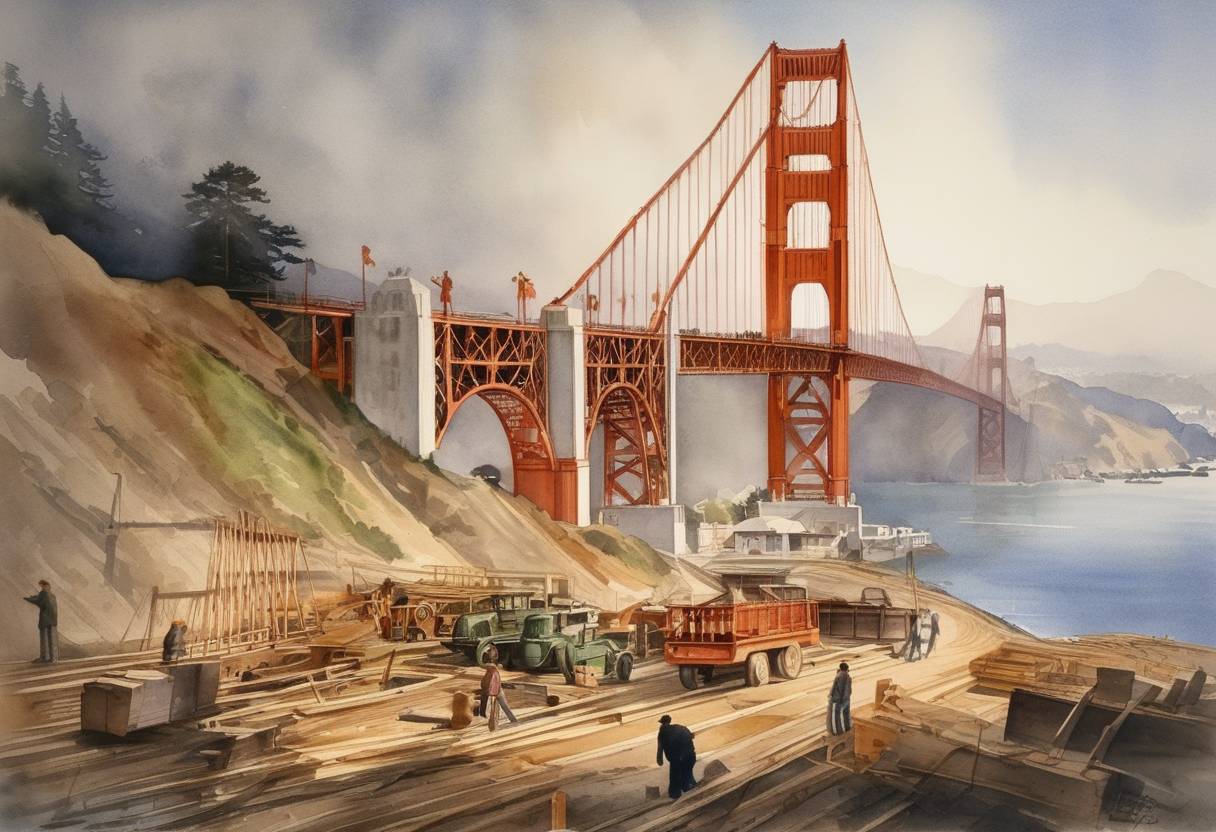
On January 5, 1933, the construction of the Golden Gate Bridge began, marking the commencement of one of the most iconic engineering projects in the United States. The bridge was proposed to span the Golden Gate Strait, the mile-wide channel between San Francisco Bay and the Pacific Ocean, linking the city of San Francisco to Marin County to the north.
Prior to the construction of the bridge, San Francisco was served primarily by ferry boats that operated across the bay since the mid-1800s. The idea of a bridge to connect San Francisco to Marin County had been discussed as early as the 1870s, but it faced significant challenges. These included the daunting engineering obstacles presented by the strait’s strong currents, depth, and frequent fog, as well as opposition from the U.S. military, which was concerned about the impact on naval operations and from ferry operators worried about competition.
The construction project was led by chief engineer Joseph Strauss, who initially designed a hybrid cantilever-suspension bridge. However, following discussions with consulting engineers and designers such as Leon Moisseiff, Irving Morrow, and Charles Alton Ellis, the design evolved into a full suspension bridge, which Justin elevates for its aesthetics and technical benefits. The bridge’s main span would measure 4,200 feet, making it the longest suspension span in the world upon completion.
The project gained momentum at a time when America was in the depths of the Great Depression. The construction of the Golden Gate Bridge provided jobs to thousands of workers and was funded by local bonds, which were initially difficult to sell. Eventually, the bonds found financial backing from A.P. Giannini, founder of the Bank of America, who was confident in the potential and necessity of the bridge.
The construction faced numerous challenges, including treacherous waters, high winds, and thick fog. Safety innovations were also a significant aspect of the construction process, such as the implementation of a net beneath the bridge, which saved the lives of nineteen workers who became known as the “Halfway to Hell Club.”
The construction of the Golden Gate Bridge was completed in 1937, four years after it began. Upon its completion, it was heralded as a masterwork of engineering and a testament to human ingenuity and perseverance. The bridge not only facilitated transportation but also became a symbol of San Francisco and an enduring landmark recognized worldwide.
The successful construction of the Golden Gate Bridge marked a significant achievement in civil engineering and had a profound impact on the San Francisco Bay Area, both economically and culturally, establishing an enduring legacy that continues to this day.
Source: www.history.com