1840 · Royal Company Islands (Antarctica), Antarctica
The British exploratory expedition led by Captain James Clark Ross discovered the Royal Company Islands in Antarctica during his expedition to the Southern Ocean.
May 20, 1845
The HMS Erebus and HMS Terror set sail from England on an ill-fated expedition to the Arctic under Captain Sir John Franklin, searching for the Northwest Passage.
Greenhithe, United Kingdom | Royal Navy
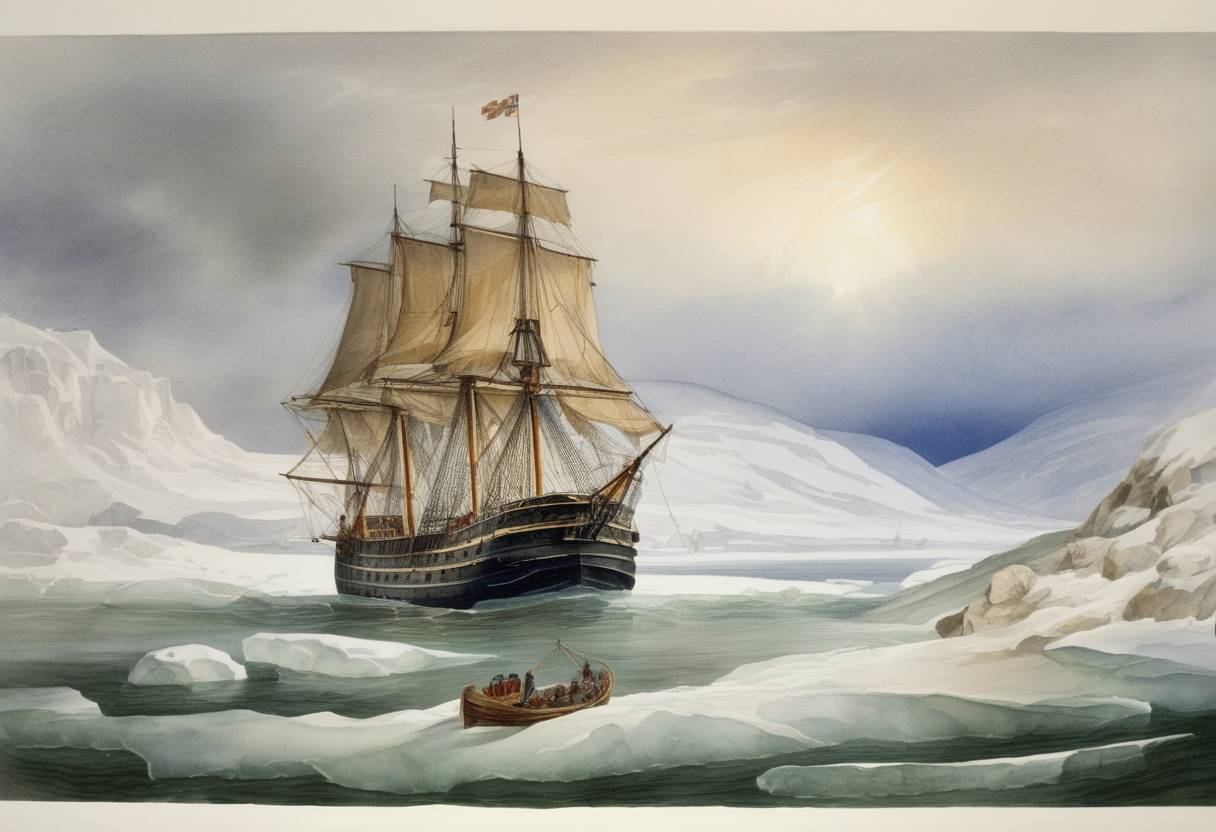
On May 20, 1845, the British Royal Navy vessels HMS Erebus and HMS Terror embarked from Greenhithe, England, on a groundbreaking yet ultimately tragic mission. Commanded by Captain Sir John Franklin, this expedition aimed to chart and navigate a prospective Northwest Passage across the Canadian Arctic. This route held significant importance for trade and naval strategy as it promised a shorter path between the Atlantic and the Pacific Oceans.
The quest to discover the Northwest Passage had been a mariner’s ambition for centuries. Prior to the 19th century, numerous expeditions had attempted the arduous passage, driven by both commercial aspirations and national prestige. By the time of Franklin’s voyage, Britain had emerged as a preeminent naval power, eager to secure a strategic advantage by discovering this elusive route.
Both ships, HMS Erebus and HMS Terror, were sturdy naval bombs equipped for arctic conditions and had previous polar exploration experience. Each was outfitted with substantial provisions and technological advancements of the era, like steam engines and reinforced hulls, designed to endure the harsh ice-laden environment.
The expedition included 129 officers and men. Among them was a diverse array of skilled sailors and seasoned explorers, all handpicked to ensure a high probability of success in surmounting the forbidding Arctic challenges.
The journey commenced with optimism and determination. The ships traveled to the Orkney Islands, then across the Atlantic to Greenland, where they periodically restocked supplies and dispatched their last communications to England. This leg of the journey offered relatively smooth sailing and illustrations of encouraging progress.
After leaving Greenland, the Erebus and Terror vanished into the vast Arctic expanse, leaving a lingering mystery that puzzled the world for over a century. Although dispatches from support ships and later search efforts failed to locate the expedition, Inuit testimony and later archaeological work have provided glimpses into their fate.
Investigations in the late 20th and early 21st centuries uncovered wreck sites and artifacts, revealing that both ships became icebound and that the crews were ultimately lost to the elements, illness, and possible lead poisoning from improperly canned food. The tragedy of the Franklin Expedition remains a stark reminder of both human courage and nature’s unforgiving power.
The loss of HMS Erebus and HMS Terror prompted extensive searches over subsequent decades, indirectly leading to further Arctic exploration and mapping by British and international explorers. These efforts added greatly to the Western understanding of the Polar Regions, contributing to geographical and scientific progress. The narrative of bravery and loss embodied in Franklin’s quest continues to capture public imagination and has left an indelible mark on exploration history.
Source: en.wikipedia.org