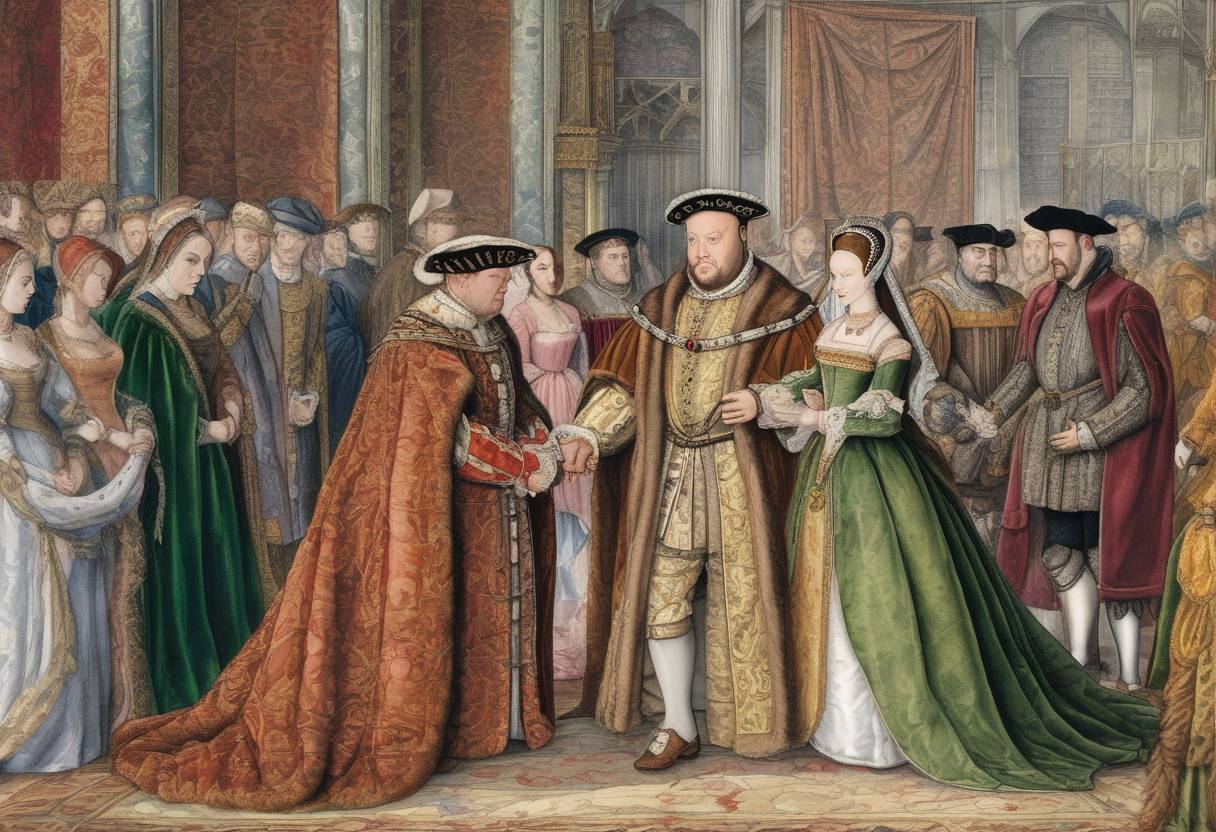
Henry VIII’s Secret Marriage to Anne Boleyn
On January 25, 1533, King Henry VIII of England secretly married Anne Boleyn, marking a pivotal moment in English history. This clandestine union was a significant step in the series of events that led to the English Reformation and the eventual establishment of the Church of England.
Context Leading to the Marriage
Henry’s Desire for a Male Heir: Henry VIII’s marriage to his first wife, Catherine of Aragon, had failed to produce a male heir, which was a source of great concern for the king. His determination to secure a male successor was a driving force behind his decision to seek an annulment of his marriage to Catherine.
Anne Boleyn’s Influence: Anne Boleyn, a lady-in-waiting to Queen Catherine, had captured Henry’s attention and affection. Unlike many of her contemporaries, Anne was well-educated and assertive, qualities that intrigued Henry. Her refusal to become his mistress further fueled his desire to marry her.
Papal Refusal: The Pope’s refusal to annul Henry’s marriage to Catherine of Aragon led to a significant conflict between the English crown and the Catholic Church. This impasse prompted Henry to take drastic measures to achieve his aims.
The Secret Marriage
Private Ceremony: The marriage between Henry and Anne was conducted in secret, likely due to the ongoing negotiations with the Pope and the political sensitivity surrounding the annulment of Henry’s first marriage.
Consequences for the Church: This marriage was a catalyst for Henry’s eventual break with the Roman Catholic Church. In 1534, the Act of Supremacy was passed, declaring Henry the Supreme Head of the Church of England, effectively establishing a separate Anglican Church.
Aftermath and Historical Significance
Coronation of Anne Boleyn: Anne was crowned queen consort on June 1, 1533. However, her reign was short-lived, as she failed to produce a male heir, giving birth to a daughter, Elizabeth, in September 1533.
Downfall and Execution: Anne’s inability to bear a son and the political machinations at court led to her downfall. She was arrested and executed on charges of adultery, incest, and treason in May 1536.
Legacy: The marriage and subsequent events had profound implications for England. The establishment of the Church of England marked the beginning of religious transformation in the country, influencing religious, political, and cultural life for centuries.
Henry VIII’s marriage to Anne Boleyn was not just a personal affair but a turning point that reshaped the religious landscape of England and had lasting effects on the monarchy and the nation.