Execution of Ten Nazi War Criminals: October 16, 1946
1946 · Nuremberg, Germany
Ten Nazi war criminals are executed in Nuremberg following the Nuremberg Trials, marking a significant moment in post-World War II justice.
October 15, 1946
Hermann Göring, a leading member of the Nazi Party, commits suicide the night before his scheduled execution after being convicted at the Nuremberg Trials.
Nuremberg, Germany | Nazi Party
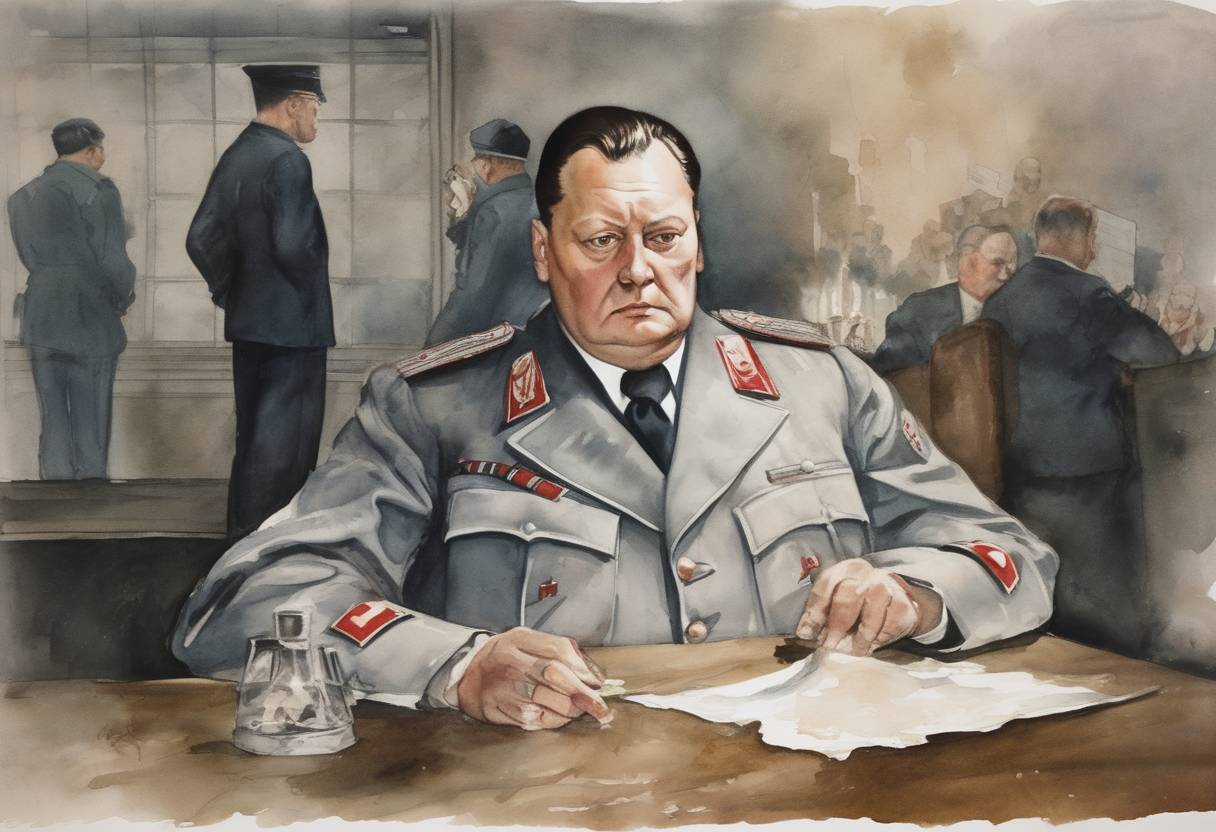
On the night of October 15, 1946, Hermann Göring, a prominent leader of the Nazi Party and a key figure in Adolf Hitler’s regime, committed suicide just hours before his scheduled execution. This event marked a dramatic conclusion to the Nuremberg Trials, where Göring had been convicted of war crimes and crimes against humanity.
Hermann Göring was one of the most powerful figures in Nazi Germany, holding numerous titles, including Commander-in-Chief of the Luftwaffe (German Air Force) and President of the Reichstag. As one of Hitler’s closest associates, he played a significant role in the establishment and execution of Nazi policies, including the persecution of Jews and other minorities.
The Nuremberg Trials were a series of military tribunals held after World War II to bring Nazi war criminals to justice. Göring was the highest-ranking Nazi official to be tried. He faced charges including:
During the trials, Göring was notably defiant, often attempting to justify his actions and those of the Nazi regime. Despite his efforts, he was found guilty on all counts and sentenced to death by hanging.
On the evening of October 15, 1946, Göring took his own life by ingesting a cyanide capsule. The circumstances surrounding how he obtained the poison remain a subject of speculation and investigation. Some theories suggest he had hidden the capsule before his imprisonment, while others propose that it was smuggled to him by a sympathetic guard or visitor.
Göring’s suicide was a significant event, as it denied the Allied powers the opportunity to execute one of the most notorious figures of the Nazi regime. His death underscored the complexities and challenges faced by the Nuremberg Trials in delivering justice for the atrocities committed during the war.
The trials themselves set important precedents for international law, establishing the principle that individuals, including state leaders, could be held accountable for war crimes and crimes against humanity. Göring’s trial and subsequent suicide highlighted the moral and legal reckoning that followed World War II, shaping the post-war order and influencing the development of international human rights law.
In summary, Hermann Göring’s suicide on October 15, 1946, was a dramatic end to his life and a pivotal moment in the aftermath of World War II, reflecting the broader efforts to address the horrors of the Nazi regime and lay the groundwork for future international justice.
Source: en.wikipedia.org