The Dow Jones Industrial Average Closes Below 9,000 Points on October 15, 2008
2008 · New York City, United States
The Dow Jones Industrial Average closed below 9,000 points for the first time since 2003, amid the global financial crisis.
October 19, 1987
The stock market crash known as "Black Monday" occurs, with the Dow Jones Industrial Average falling by 22.6%, the largest one-day percentage decline in history.
New York City, United States | New York Stock Exchange
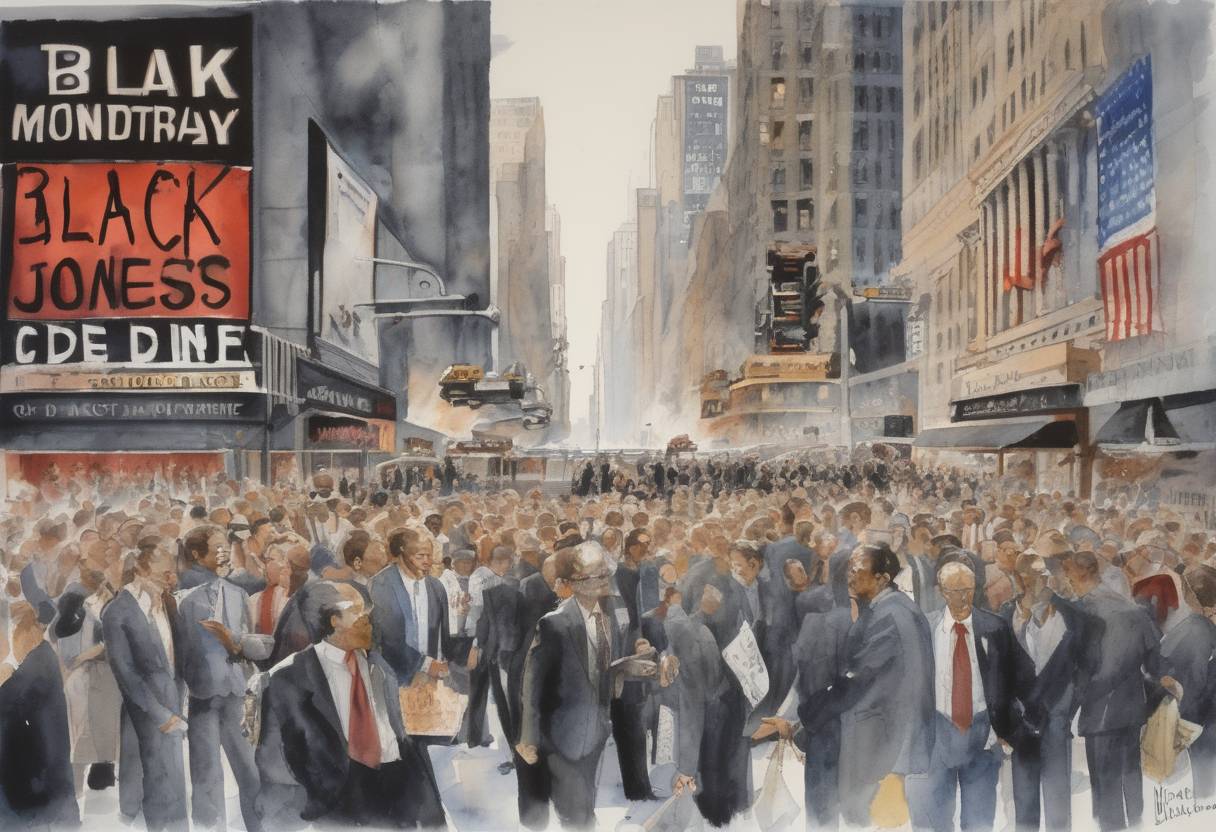
On October 19, 1987, a catastrophic event in financial history unfolded, known as “Black Monday.” On this day, the Dow Jones Industrial Average (DJIA) plummeted by 508 points, a staggering 22.6% decline, marking the largest one-day percentage drop in the history of the index.
The crash of 1987 did not occur in isolation; several factors contributed to the market’s vulnerability:
Economic Conditions: The mid-1980s saw a period of economic expansion, but by 1987, there were signs of overheating. Rising interest rates, trade deficits, and inflationary pressures were causing concern among investors.
Market Speculation: The stock market had experienced a significant bull run in the years leading up to the crash, with the DJIA more than doubling from 1982 to 1987. This rapid increase was partly fueled by speculative trading and leveraged buyouts.
Technological Changes: The introduction of computerized trading systems, including program trading, allowed for rapid execution of large volumes of trades. While these systems increased efficiency, they also contributed to market volatility.
Global Factors: International markets were also experiencing turbulence. The London Stock Exchange had already experienced a significant drop on October 16, 1987, which set the stage for the U.S. market’s decline.
Market Opening: As trading began on October 19, 1987, sell orders flooded the market. The DJIA opened significantly lower, and the selling pressure intensified throughout the day.
Program Trading: Program trading, which involved automated selling of stocks as prices fell, exacerbated the decline. This created a feedback loop, where falling prices triggered more selling.
Investor Panic: As the day progressed, panic spread among investors. The sheer volume of trades overwhelmed the systems of the time, leading to delays and confusion.
Market Recovery: Despite the severity of the crash, the market began to recover relatively quickly. By the end of 1987, the DJIA had regained much of its lost ground.
Regulatory Changes: The crash prompted significant changes in market regulation. The Securities and Exchange Commission (SEC) and other regulatory bodies implemented measures to prevent a recurrence, including circuit breakers to halt trading during extreme volatility.
Impact on Confidence: Black Monday shook investor confidence and highlighted the interconnectedness of global financial markets. It underscored the need for better risk management and oversight.
Black Monday remains a pivotal moment in financial history, serving as a cautionary tale about the risks of market speculation and the potential for technology to amplify market movements. It also demonstrated the resilience of financial systems and the capacity for recovery in the face of severe disruptions.
The lessons learned from Black Monday continue to influence financial regulation and market practices today, ensuring that such an event is less likely to occur in the future.
Source: en.wikipedia.org