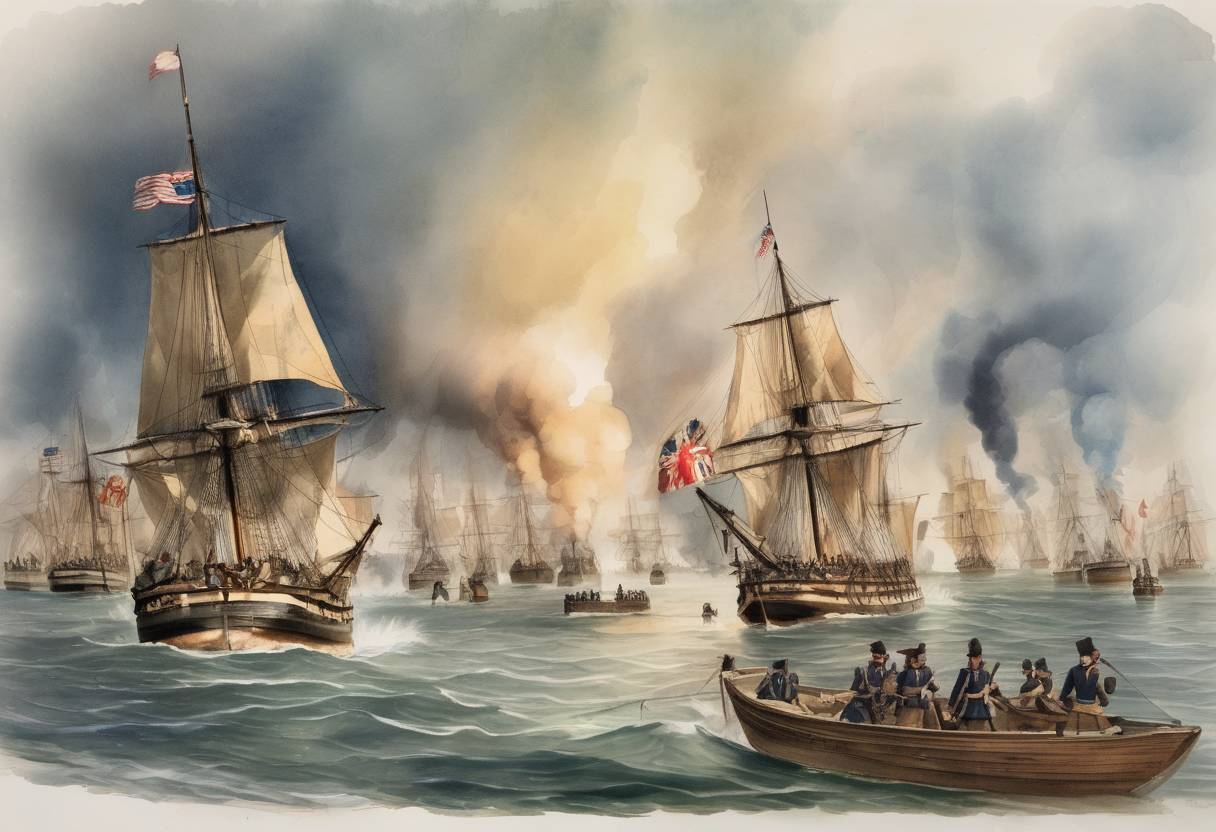
The Battle of the Thames: October 5, 1813
The Battle of the Thames, also known as the Battle of Moraviantown, was a pivotal engagement during the War of 1812, taking place on October 5, 1813. This battle resulted in a significant victory for the United States over British forces and their Native American allies, marking a turning point in the conflict.
Context and Prelude
The War of 1812, fought between the United States and the United Kingdom, was driven by issues such as trade restrictions, impressment of American sailors, and territorial expansion. By 1813, the war had spread to various fronts, including the Great Lakes region.
The Battle of the Thames followed the American victory at the Battle of Lake Erie on September 10, 1813, where Commodore Oliver Hazard Perry’s fleet defeated the British naval forces. This victory secured American control of Lake Erie, forcing the British to retreat from Detroit and withdraw up the Thames River in Upper Canada (modern-day Ontario).
- William Henry Harrison: The American general who led the U.S. forces. His leadership was instrumental in pursuing the retreating British and Native American forces.
- Tecumseh: The renowned Shawnee leader who sought to establish a Native American confederation to resist U.S. expansion. He allied with the British to protect Native lands.
- Major General Henry Procter: The British commander who led the retreat from Detroit and faced criticism for his leadership during the battle.
The Battle
On October 5, 1813, Harrison’s forces, consisting of approximately 3,500 troops, caught up with Procter’s retreating army near Moraviantown. The British and Native American forces, numbering around 1,000, were poorly positioned and low on supplies.
The battle commenced with a swift cavalry charge led by Colonel Richard Mentor Johnson, which broke through the British lines. The British troops, demoralized and outnumbered, quickly surrendered. Tecumseh and his warriors continued to fight fiercely, but Tecumseh was killed during the battle, leading to the collapse of Native resistance.
Aftermath and Significance
The Battle of the Thames had several important consequences:
- American Control: The victory secured American control over the Northwest Territory, bolstering U.S. morale and territorial claims.
- Death of Tecumseh: Tecumseh’s death was a significant blow to Native American resistance. His vision of a united Native confederation effectively ended with his passing.
- Impact on British Strategy: The defeat forced the British to reassess their strategy in North America, leading to a more defensive posture for the remainder of the war.
The battle also elevated William Henry Harrison’s status as a national hero, eventually contributing to his election as the ninth President of the United States in 1840.
In summary, the Battle of the Thames was a decisive moment in the War of 1812, demonstrating the strategic importance of controlling the Great Lakes and highlighting the complex alliances and conflicts between the United States, the United Kingdom, and Native American nations.