Khosrow II Crowned King of Persia - February 3, 590
590 · Ctesiphon, Sasanian Empire
Khosrow II is crowned King of Persia, beginning his reign over the Sasanian Empire.
April 12, 0240
Shapur I becomes king of the Sasanian Empire, succeeding his father Ardashir I. Shapur I is known for his military campaigns against the Roman Empire and his efforts to consolidate and expand the Sasanian Empire.
Ctesiphon, Sasanian Empire | Sasanian Empire
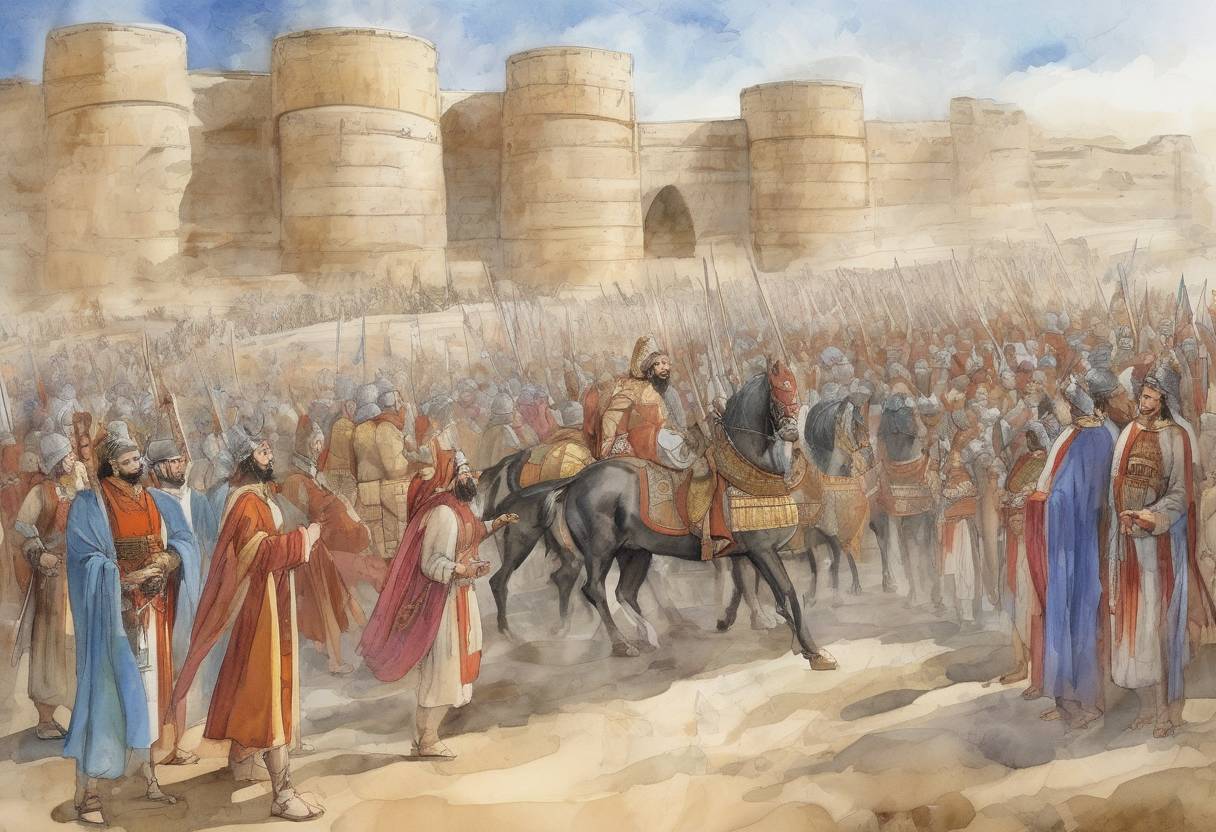
On April 12, 240, Shapur I ascended to the throne of the Sasanian Empire, succeeding his father, Ardashir I. This transition marked a significant moment in the history of the Sasanian Empire, as Shapur I would go on to become one of its most formidable rulers, known for his military prowess and efforts to consolidate and expand the empire.
Ardashir I’s Legacy: Ardashir I, the founder of the Sasanian Empire, had successfully overthrown the Parthian Empire, establishing a new dynasty in Persia. His reign laid the foundations for a centralized state, revitalizing Zoroastrianism as the state religion and initiating administrative reforms.
Shapur I’s Early Life: Born into the nascent Sasanian dynasty, Shapur was groomed for leadership. He gained experience in governance and military affairs under his father’s tutelage, preparing him for the challenges of ruling an empire.
Military Campaigns: Shapur I is particularly noted for his military campaigns against the Roman Empire. His reign saw several significant conflicts, including:
Diplomacy and Administration: Beyond military conquests, Shapur I worked to strengthen the empire internally:
Consolidation of Power: Shapur I’s reign solidified the Sasanian Empire’s power, setting a precedent for future rulers. His successful campaigns against Rome enhanced the empire’s prestige and influence in the region.
Cultural Impact: The period of Shapur I’s rule is often seen as a golden age for Persian culture, with advancements in art, architecture, and literature.
Historical Significance: Shapur I’s reign is a testament to the Sasanian Empire’s resilience and adaptability, showcasing its ability to challenge Rome and assert its dominance in the ancient world.
In summary, Shapur I’s ascension to the throne on April 12, 240, marked the beginning of a dynamic and influential reign that would leave a lasting impact on the Sasanian Empire and its interactions with neighboring powers. His legacy is remembered for both his military achievements and his contributions to the cultural and administrative development of the empire.
Source: en.wikipedia.org