Beginning of Mount Rushmore Sculpting - October 4, 1927
1927 · Keystone, United States
Work on Mount Rushmore begins with the sculpting of the faces of four U.S. presidents.
October 31, 1941
After 14 years of work, Mount Rushmore is completed in South Dakota.
Keystone, United States | National Park Service
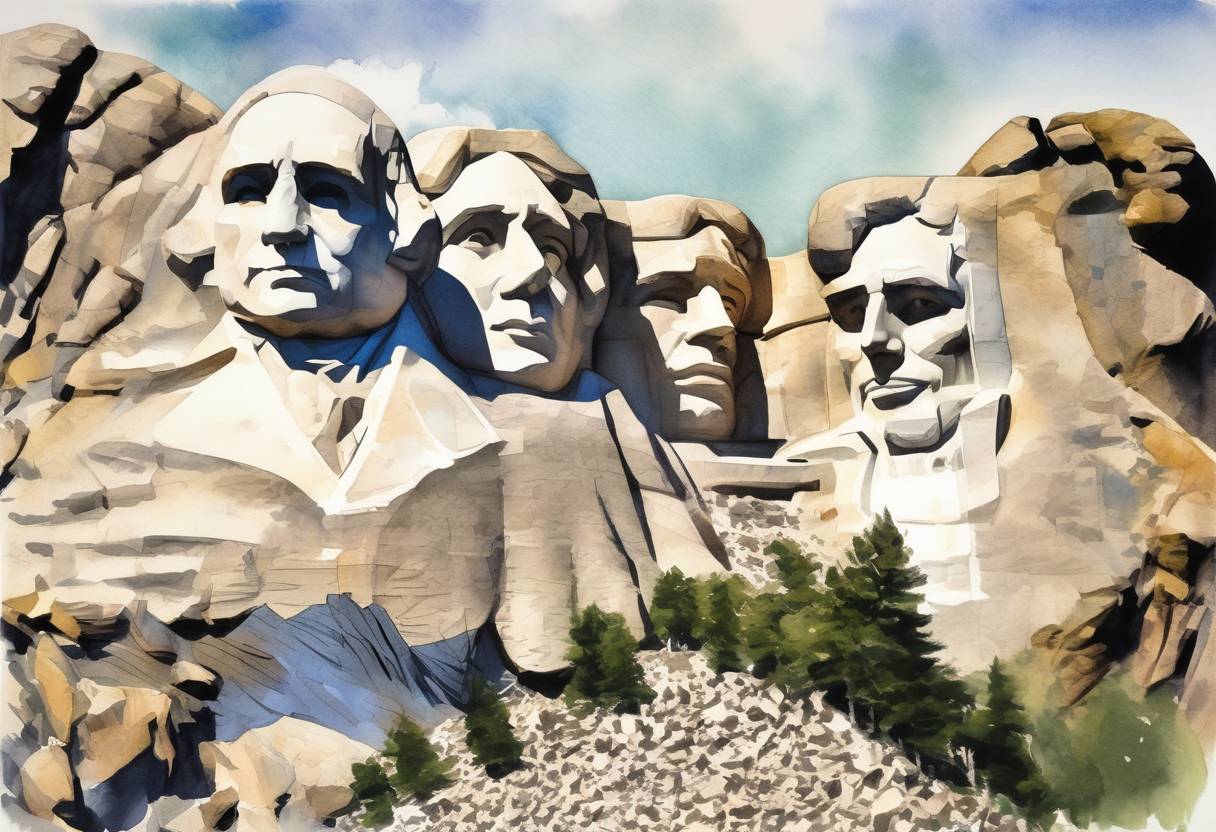
On October 31, 1941, the monumental sculpture of Mount Rushmore was completed in the Black Hills of South Dakota. This iconic American landmark features the 60-foot faces of four U.S. presidents: George Washington, Thomas Jefferson, Theodore Roosevelt, and Abraham Lincoln. The project, which took 14 years to complete, stands as a testament to American history and artistry.
The idea for Mount Rushmore was conceived in the early 1920s by Doane Robinson, a South Dakota historian, who envisioned the project as a way to promote tourism in the region. Initially, Robinson considered carving figures of Western heroes, but sculptor Gutzon Borglum proposed a more national focus by selecting presidents who represented key aspects of American history.
Construction began on October 4, 1927, and involved over 400 workers. The process was arduous and dangerous, involving the removal of large amounts of rock using dynamite, followed by precise carving with drills and chisels. Despite the challenges, including funding issues and the Great Depression, the project continued with support from the federal government.
The completion of Mount Rushmore was marked by the cessation of work due to the onset of World War II and the death of Gutzon Borglum. Although the original plan included more detailed carvings down to the presidents’ waists, the project was declared finished in 1941.
Mount Rushmore has since become a symbol of American history and democracy, attracting millions of visitors annually. It stands as a tribute to the vision and perseverance of those who worked on it and remains a significant cultural and historical landmark in the United States.
The completion of Mount Rushmore marked a significant achievement in American art and engineering. It has sparked discussions about representation and the impact of such monuments on indigenous lands, as the Black Hills are sacred to the Lakota Sioux. These conversations continue to shape the narrative and interpretation of Mount Rushmore in contemporary society.
Source: en.wikipedia.org