NASA’s Pathfinder Space Probe Lands on Mars: July 4, 1997
On July 4, 1997, NASA’s Pathfinder space probe successfully landed on the surface of Mars, marking a significant milestone in space exploration. This mission was a part of NASA’s Discovery Program, which aimed to conduct low-cost, highly focused planetary science investigations.
Background
The Mars Pathfinder mission was launched on December 4, 1996, aboard a Delta II rocket from Cape Canaveral, Florida. The mission’s primary objectives were to demonstrate a low-cost method for delivering a set of scientific instruments to the Martian surface and to gather data on the Martian atmosphere, climate, geology, and the composition of its rocks and soil.
Key Components
Lander (Carl Sagan Memorial Station): The stationary lander was equipped with scientific instruments to analyze the Martian atmosphere and surface. It also served as a communication relay between Earth and the rover.
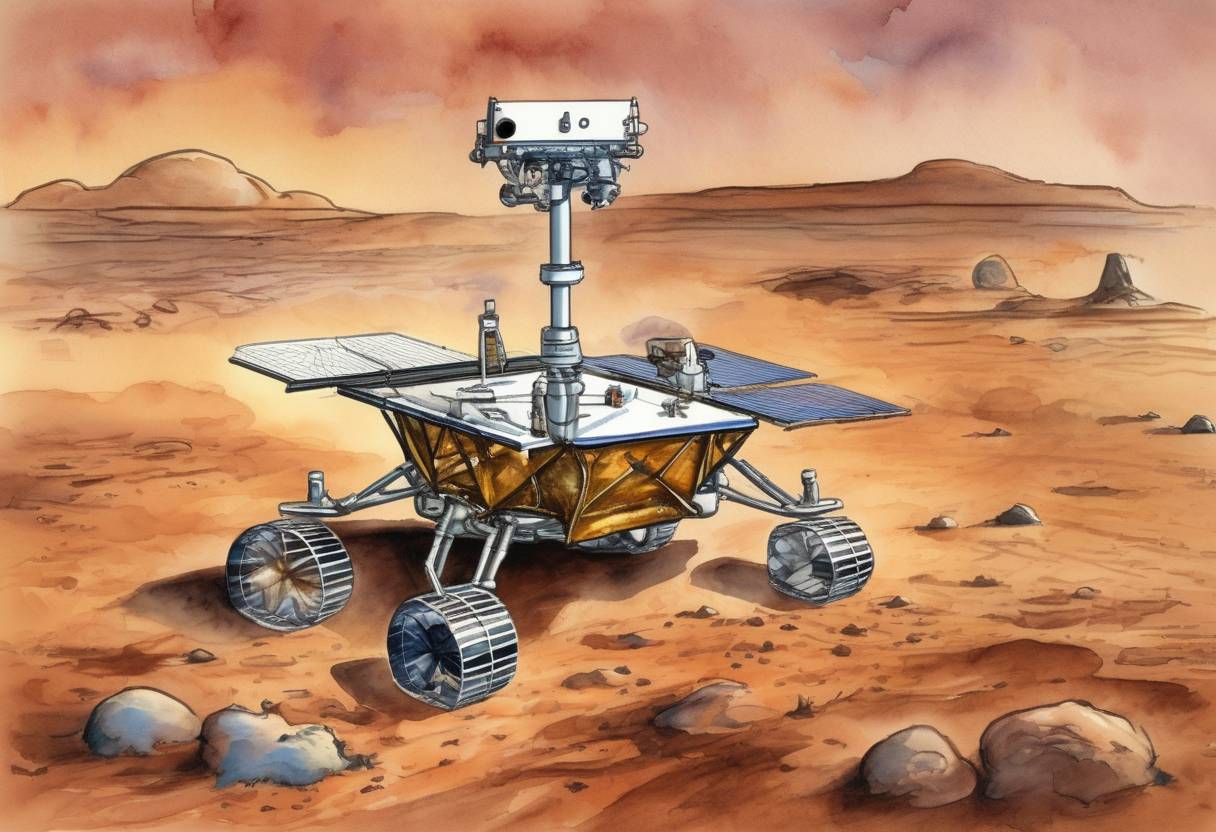
Sojourner Rover: This was the first rover to operate on Mars. Weighing about 11.5 kilograms (25 pounds), Sojourner was designed to explore the Martian terrain, analyze rocks, and gather data on the planet’s surface composition.
Landing and Exploration
Landing Site: The Pathfinder landed in Ares Vallis, a region in the northern hemisphere of Mars known for its outflow channels, which suggested a history of water activity.
Landing Technique: The spacecraft used a novel airbag landing system to cushion its descent, allowing it to bounce and roll to a stop on the Martian surface. This innovative approach was both cost-effective and efficient.
Mission Duration: Although the mission was initially planned to last for 30 days, the lander and rover exceeded expectations. The lander operated until September 27, 1997, while the Sojourner rover continued to send data until September 27, 1997.
Scientific Achievements
Atmospheric Data: Pathfinder provided valuable information about the Martian atmosphere, including temperature, pressure, and wind measurements.
Geological Insights: The mission offered insights into the planet’s geology, revealing a variety of rock types and providing evidence of past water activity.
Technological Demonstration: The success of the airbag landing system and the performance of the Sojourner rover paved the way for future Mars missions, including the Mars Exploration Rovers (Spirit and Opportunity) and the Mars Science Laboratory (Curiosity).
Broader Significance
The Mars Pathfinder mission was a landmark achievement for NASA and planetary exploration. It demonstrated the feasibility of low-cost missions to Mars and significantly advanced our understanding of the Red Planet. The mission’s success also captured the public’s imagination, reigniting interest in Mars exploration and setting the stage for subsequent missions that continue to explore and study Mars today.