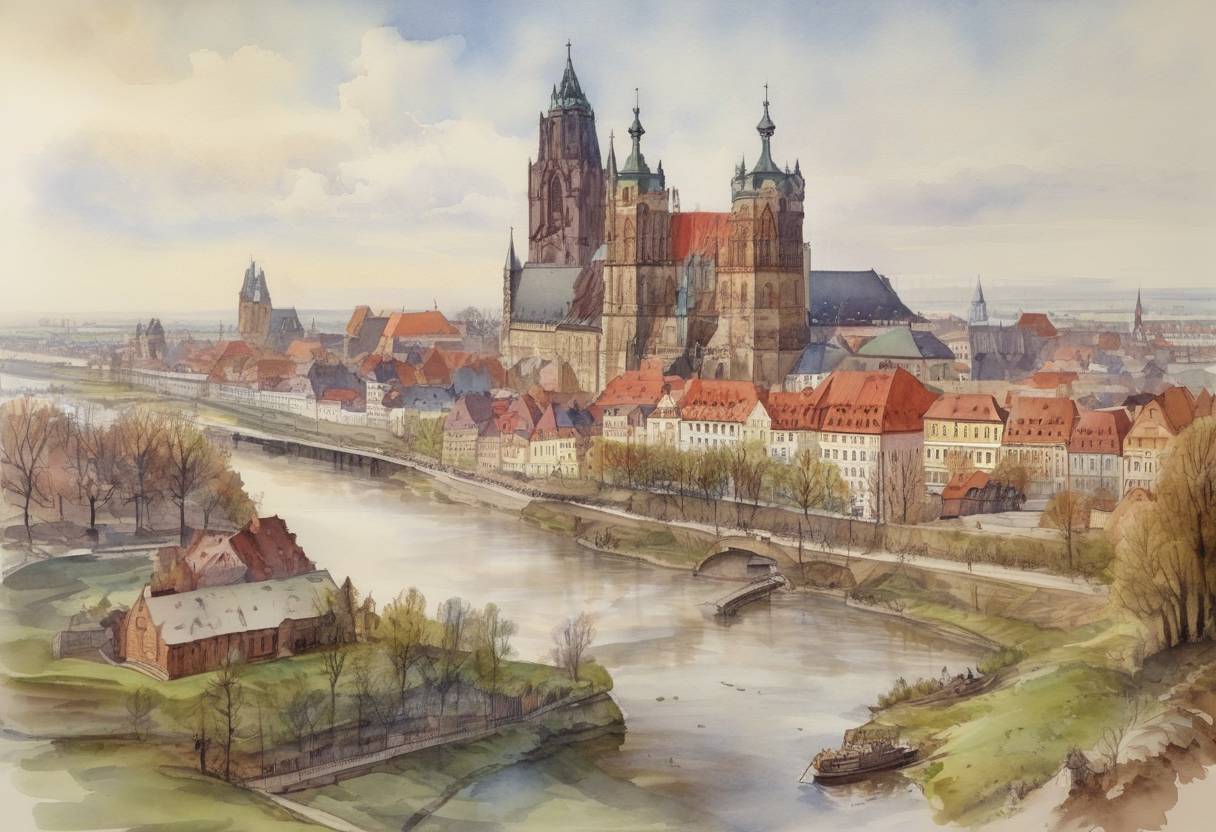
March 31, 988: Magdeburg Becomes an Archbishopric
On March 31, 988, the city of Magdeburg was elevated to the status of an archbishopric by Emperor Otto III. This event marked a significant milestone in the Christianization and political consolidation efforts within the Holy Roman Empire.
Historical Context
Magdeburg, located in present-day Germany, had been a strategic and religious center since its founding by Charlemagne in the 9th century. Its location along the Elbe River made it a crucial point for trade and military operations. The establishment of an archbishopric in Magdeburg was part of a broader strategy to strengthen the influence of the Christian church in the region, which was essential for the consolidation of imperial power.
Key Events Leading Up to the Establishment
Otto I’s Influence: The groundwork for Magdeburg’s elevation was laid by Otto I, the grandfather of Otto III, who had a vision of expanding Christianity into the Slavic territories. Otto I founded a monastery in Magdeburg and sought to make it a religious hub.
Religious and Political Strategy: By the late 10th century, the Holy Roman Empire was actively working to integrate and Christianize the Slavic lands to the east. Establishing an archbishopric in Magdeburg was a strategic move to facilitate this mission.
Significance of the Event
Christianization: The creation of the archbishopric was a pivotal step in the Christianization of the Slavic regions. It provided a base for missionary activities and the spread of Christian teachings.
Political Consolidation: The elevation of Magdeburg to an archbishopric status helped solidify the Holy Roman Empire’s control over the region. It reinforced the authority of the emperor and the church, aligning religious and political interests.
Cultural Impact: As an archbishopric, Magdeburg became a center of learning and culture. It attracted scholars, artists, and clergy, contributing to the cultural and intellectual growth of the empire.
Aftermath and Consequences
Expansion of Influence: The establishment of the archbishopric allowed for greater ecclesiastical influence over the eastern territories, aiding in their integration into the empire.
Legacy: Magdeburg’s status as an archbishopric continued to play a significant role in the religious and political landscape of the region for centuries, influencing the development of the Holy Roman Empire.
In summary, the elevation of Magdeburg to an archbishopric on March 31, 988, was a key event in the history of the Holy Roman Empire, reflecting the intertwined nature of religious and political strategies during this period. It underscored the empire’s commitment to expanding its influence through the spread of Christianity and the consolidation of its territories.