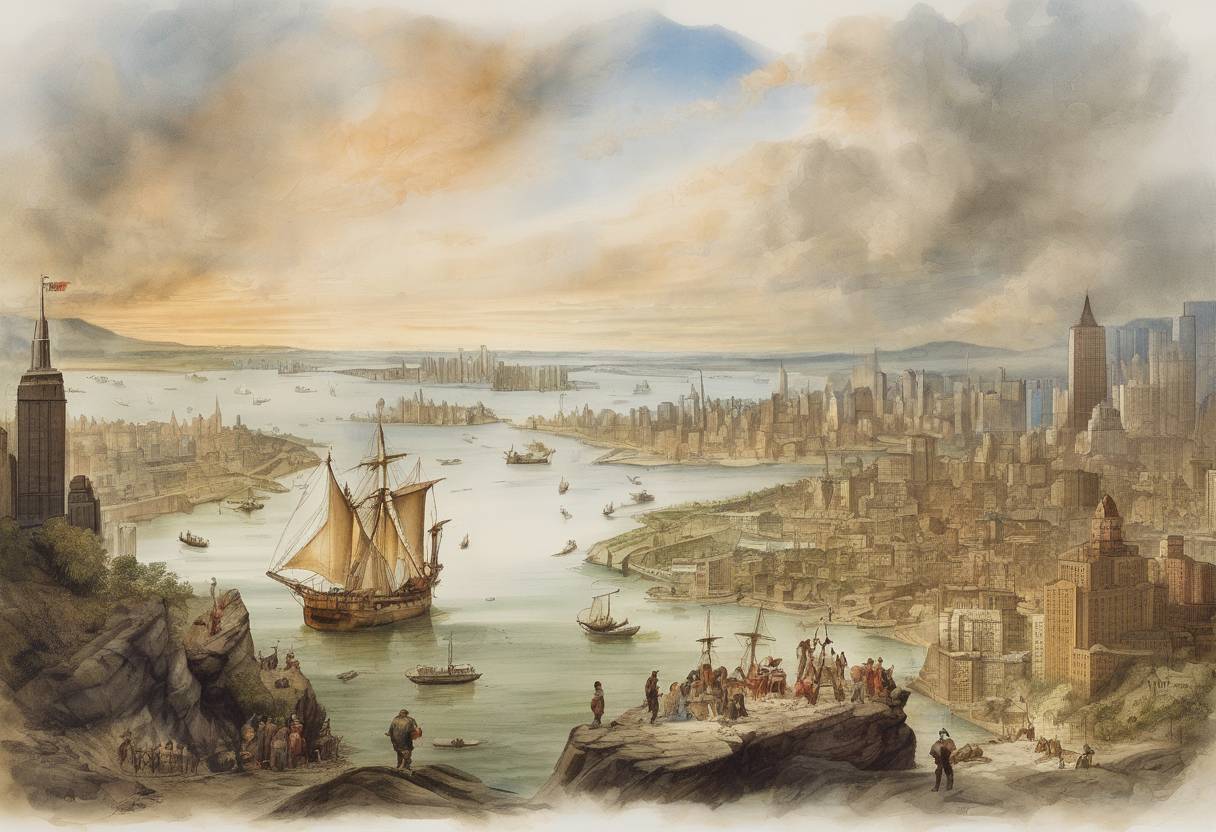
Discovery of Manhattan Island by Henry Hudson on September 11, 1609
On September 11, 1609, the English explorer Henry Hudson, sailing under the Dutch flag aboard the ship Halve Maen (Half Moon), is credited with the European discovery of what is now known as Manhattan Island. This event marked a significant moment in the history of exploration and the eventual European colonization of the Americas.
Background
Henry Hudson was an experienced navigator and explorer, initially seeking a northwest passage to Asia. His voyage in 1609 was sponsored by the Dutch East India Company, which hoped to find a shorter route to the lucrative spice markets of Asia. After being blocked by ice in the Arctic, Hudson turned his ship westward, exploring the North American coast.
Discovery of Manhattan
As Hudson sailed along the Atlantic coast, he entered what is now New York Harbor on September 11, 1609. He navigated the river that would later bear his name, the Hudson River, and anchored near the island of Manhattan. This exploration laid the groundwork for Dutch claims to the region, which would later become the colony of New Netherland.
Indigenous Peoples
At the time of Hudson’s arrival, the area around Manhattan was inhabited by the Lenape people, an Algonquian-speaking indigenous group. The Lenape had lived in the region for thousands of years, with a society organized into small, autonomous communities. They engaged in agriculture, hunting, and fishing, and had established trade networks with neighboring tribes.
The Lenape referred to the island as “Mannahatta,” meaning “island of many hills.” Their initial encounters with Hudson and his crew were marked by curiosity and cautious interaction. However, these early contacts would eventually lead to significant disruptions in their way of life due to European colonization, trade, and the introduction of new diseases.
Aftermath and Historical Significance
Hudson’s exploration of the region paved the way for Dutch colonization. In 1624, the Dutch established a permanent settlement on Manhattan, which they named New Amsterdam. This settlement would later become New York City after the English seized control in 1664.
The arrival of Europeans had profound and lasting impacts on the indigenous populations. The Lenape and other native groups faced displacement, loss of land, and cultural upheaval as European settlers expanded their territories.
Hudson’s voyage is a pivotal moment in the Age of Exploration, highlighting the complex interactions between European explorers and indigenous peoples. It also underscores the beginning of significant cultural and demographic changes in North America, setting the stage for the development of one of the world’s most iconic cities.
Hudson’s legacy is a reminder of the dynamic and often challenging history of exploration and colonization, with effects that continue to resonate in contemporary society.