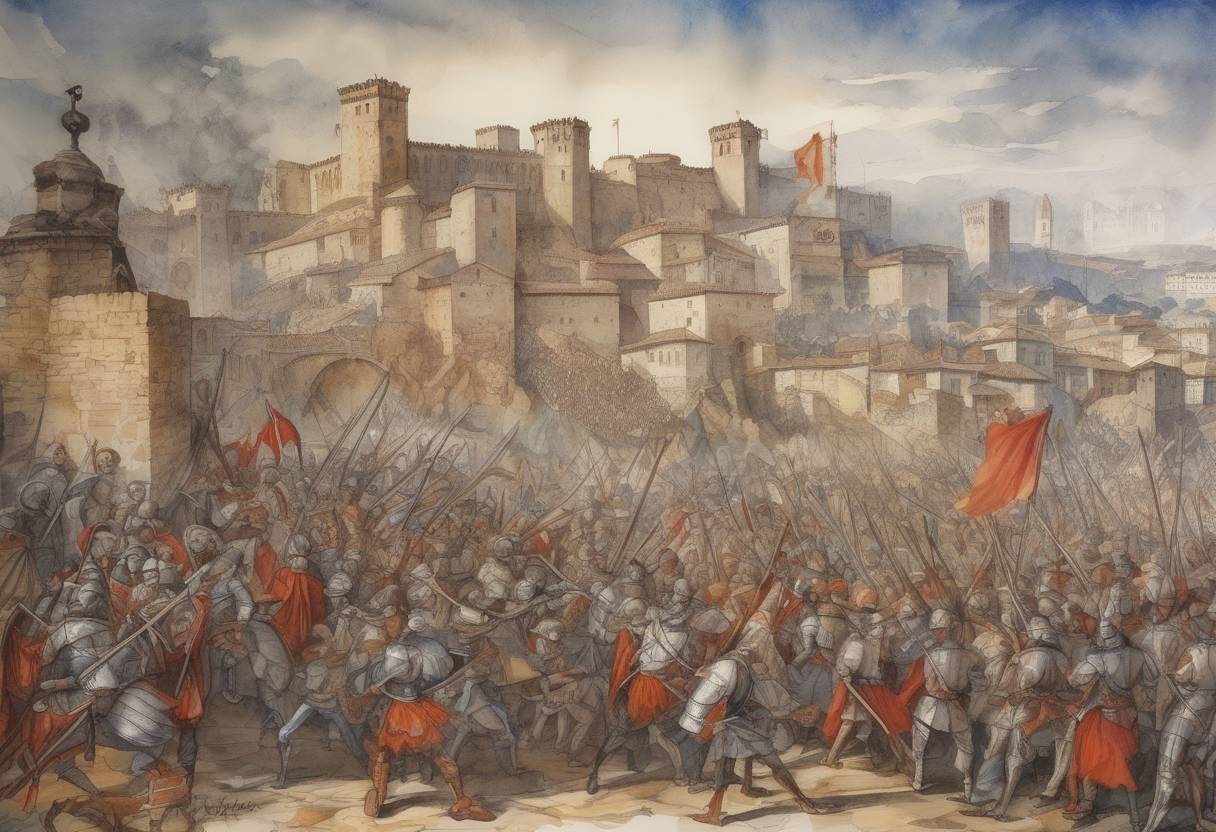
The Revolt of the Comuneros: April 16, 1520
The Revolt of the Comuneros was a significant uprising in the Kingdom of Castile against the rule of Charles V, Holy Roman Emperor, which began on April 16, 1520. This revolt was primarily driven by dissatisfaction with Charles’s policies and the influence of foreign advisors in his court.
Background
- Charles V’s Ascension: Charles V became King of Spain in 1516 and was elected Holy Roman Emperor in 1519. His reign was marked by a focus on his broader European empire, often at the expense of Spanish interests.
- Economic Strain: The Spanish crown’s financial demands increased due to Charles’s imperial ambitions, leading to heavy taxation and economic pressure on the Castilian populace.
- Foreign Influence: Charles’s reliance on Flemish and other non-Spanish advisors alienated many Castilian nobles and commoners, who felt marginalized in their own governance.
Key Events Leading to the Revolt
- Cortes of Santiago and Corunna (1520): Charles convened these assemblies to secure funds for his imperial coronation. The heavy-handed manner in which these funds were extracted further fueled discontent.
- Departure for Germany: Charles left for Germany to assume his role as Holy Roman Emperor, leaving his regent, Adrian of Utrecht, in charge. This move was seen as neglecting Spanish affairs.
The Revolt
- Initial Uprising: The revolt began in the city of Toledo on April 16, 1520, quickly spreading to other cities such as Segovia, Salamanca, and Valladolid.
- Formation of the Santa Junta: The rebels formed a revolutionary government known as the Santa Junta, which sought to address grievances and reform governance. It was composed of representatives from various cities.
- Demands: The Comuneros demanded the removal of foreign advisors, reduction of taxes, and greater autonomy for Castilian cities.
Consequences and Aftermath
- Battle of Villalar (April 23, 1521): The revolt culminated in the Battle of Villalar, where royalist forces decisively defeated the Comuneros. Key leaders, including Juan de Padilla, were captured and executed.
- Suppression and Reconciliation: Following the defeat, Charles V worked to reconcile with the Castilian cities, implementing some reforms to address grievances while reasserting royal authority.
- Long-term Impact: The revolt highlighted the tensions between central authority and local autonomy, influencing future governance in Spain. It also underscored the challenges of managing a diverse empire.
The Revolt of the Comuneros remains a pivotal moment in Spanish history, reflecting the complexities of governance and the struggle for power between the monarchy and its subjects.