The Ratification of the United States Bill of Rights
1791 · Richmond, United States
The United States Bill of Rights becomes law when ratified by the Virginia General Assembly.
November 20, 1789
New Jersey becomes the first U.S. state to ratify the Bill of Rights.
Trenton, United States | United States Congress
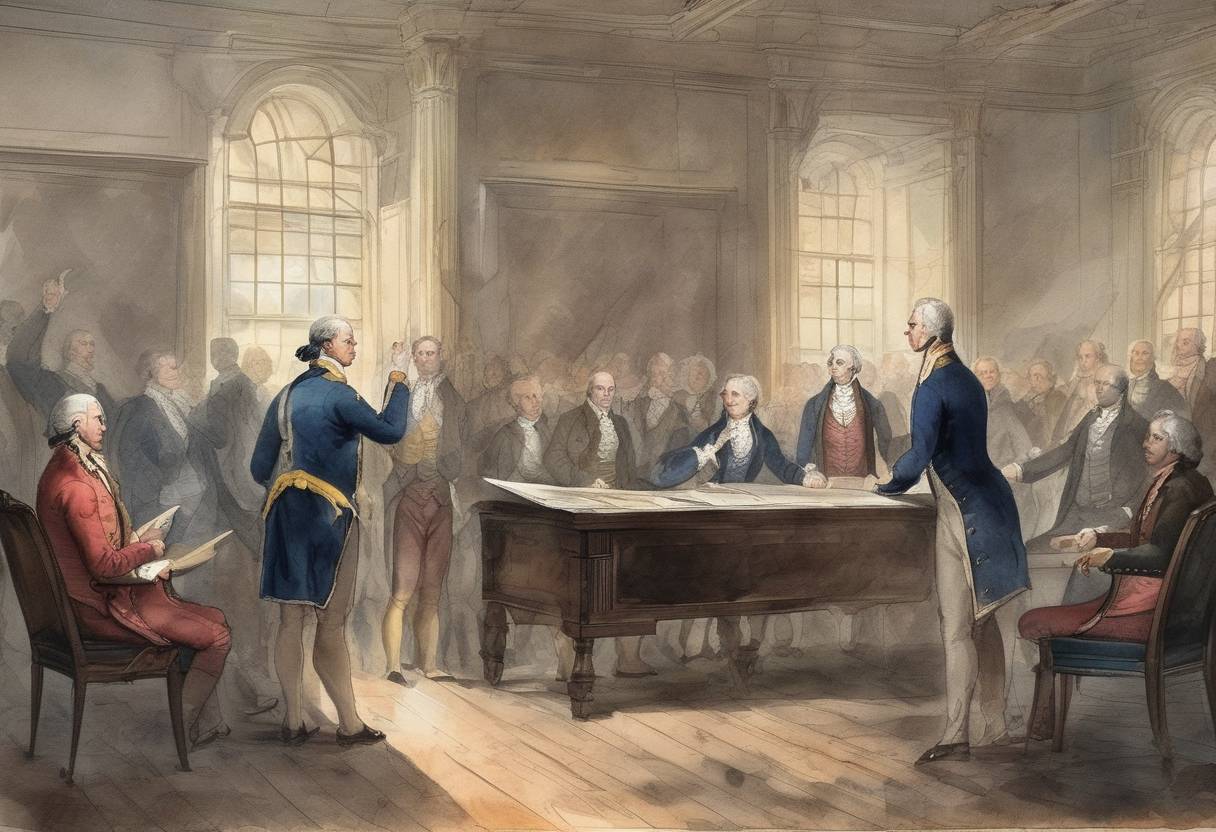
On November 20, 1789, New Jersey became the first U.S. state to ratify the Bill of Rights, marking a significant moment in American history. This event was a crucial step in the process of ensuring the protection of individual liberties and addressing the concerns of Anti-Federalists who feared the new Constitution granted too much power to the federal government.
The Constitution and Its Critics: The U.S. Constitution, drafted in 1787 and ratified by the necessary nine states by 1788, did not initially include a bill of rights. This omission was a major point of contention for many Anti-Federalists, who argued that without explicit protections, citizens’ freedoms could be at risk.
James Madison’s Role: In response to these concerns, James Madison, a key architect of the Constitution, introduced a series of amendments in the First Congress in 1789. These amendments aimed to safeguard individual liberties and limit government power.
Drafting and Proposal: The proposed amendments, known as the Bill of Rights, consisted of twelve articles. They were introduced to Congress on June 8, 1789, and after much debate and revision, ten of these articles were approved by Congress on September 25, 1789.
Content: The Bill of Rights includes fundamental protections such as freedom of speech, religion, and the press (First Amendment), the right to bear arms (Second Amendment), and protections against unreasonable searches and seizures (Fourth Amendment), among others.
First to Ratify: New Jersey’s ratification on November 20, 1789, was a pioneering move, setting a precedent for other states. The state’s legislature recognized the importance of these amendments in protecting citizens’ rights and ensuring a balance of power between the federal government and the states.
Influence on Other States: New Jersey’s action encouraged other states to follow suit, leading to the eventual ratification by the required three-fourths of the states by December 15, 1791, when the Bill of Rights officially became part of the Constitution.
Foundation of American Liberties: The ratification of the Bill of Rights laid the foundation for American civil liberties and has been a cornerstone of American democracy ever since.
Enduring Legacy: The principles enshrined in the Bill of Rights continue to influence legal interpretations and civil rights movements, underscoring their enduring relevance in American society.
New Jersey’s early ratification of the Bill of Rights exemplifies the state’s commitment to individual freedoms and its pivotal role in shaping the foundational laws of the United States.
Source: en.wikipedia.org